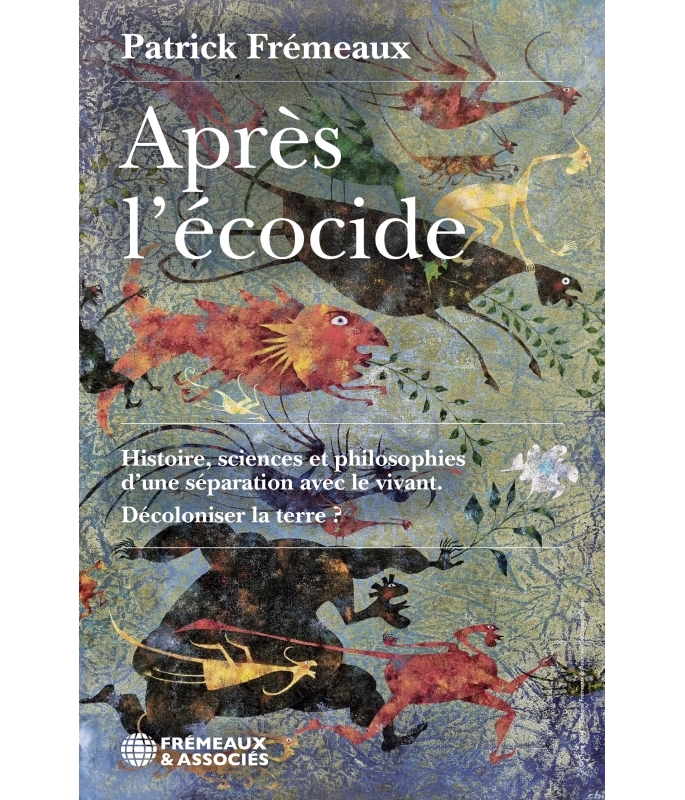




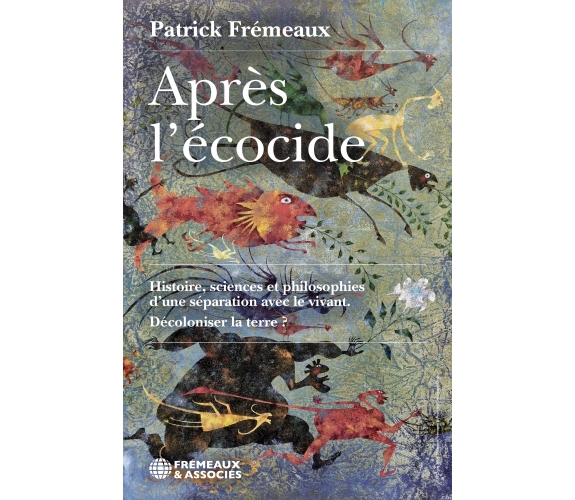

Après l'écocide begins with a realization that can no longer be ignored: the massive destruction of living systems is no longer a looming threat, but a process already underway. The collapse of biodiversity, climate disruption, the artificialization of environments, the disappearance of soundscapes, and the psychological distress linked to the loss of the living world—these symptoms are multiple, convergent, and well documented. Yet despite the abundance of scientific warnings, something continues to resist any real transformation in the way we live. This book seeks to understand what, in our intellectual, scientific, political, and sensory history, has made ecocide possible. Moving beyond strictly technical or moralizing approaches, Patrick Frémeaux offers a wide-ranging inquiry into a foundational rupture: the modern separation between nature and culture, between humans and non-humans, between knowledge and the sensible, between science and lived experience. Drawing on all the disciplines he publishes—philosophy, anthropology, scientific ecology, bioacoustics, the social sciences, artistic practices, and field engagement—he recounts his journey of encounters and reflection, weaving connections among thinkers, researchers, practitioners, and mediators. Each, in their own way, questions the conditions of a world that has become uninhabitable—while also exploring the possibilities for reinvention that remain. After Ecocide is neither a ready-made solutions manual nor an ideological manifesto. It is a book that shifts our perspective. It invites us to recognize that the ecological crisis is also—and perhaps first and foremost—a crisis of thought, sensibility, and narrative.
Dominique Bourg
Emeritus Professor of Environmental Sciences, University of Lausanne
Patrick Frémeaux co-publishes, with Claude Colombini, the Frémeaux – Presses Universitaires de France audio lectures devoted to the humanities. Founding manager of Forêts et Campagnes d’Avenir, a citizen-based forestry and rural collective dedicated to the protection of the living world, he promotes one of the world’s first audio-naturalist catalogues, notably drawing on the Jean-Claude Roché collection. He is also a publisher of books and audiobooks devoted to major contemporary issues, having published in particular Yves Coppens, Vladimir Jankélévitch, Hubert Reeves, Pablo Servigne, Dominique Bourg, Edgar Morin, and Bruno Latour.
582 PAGES