


 |
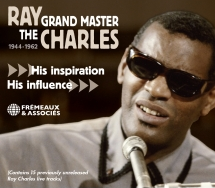
Ray Charles - The Grand Master His Inspiration / His Influence 1944-1962 |
- Our Catalog
- Philosophy
- Philosophers of the 20th century and today
- History of Philosophy (PUF)
- Counter-History and Brief Encyclopedia by Michel Onfray
- The philosophical work explained by Luc Ferry
- Ancient thought
- Thinkers of yesterday as seen by the philosophers of today
- Historical philosophical texts interpreted by great actors
- History
- Books (in French)
- Social science
- Historical words
- Audiobooks & Literature
- Our Catalog
- Jazz
- Blues
- Rock - Country - Cajun
- French song
- World music
- Africa
- France
- Québec / Canada
- Hawaï
- West Indies
- Caribbean
- Cuba & Afro-cubain
- Mexico
- South America
- Tango
- Brazil
- Tzigane / Gypsy
- Fado / Portugal
- Flamenco / Spain
- Yiddish / Israel
- China
- Tibet / Nepal
- Asia
- Indian Ocean / Madagascar
- Japan
- Indonesia
- Oceania
- India
- Bangladesh
- USSR / Communist songs
- World music / Miscellaneous
- Classical music
- Composers - Movie Soundtracks
- Sounds of nature
- Our Catalog
- Youth
- Philosophy
- News
- How to order ?
- Receive the catalog
- Manifesto
- Dictionnary




- Our Catalog
- Philosophy
- Philosophers of the 20th century and today
- History of Philosophy (PUF)
- Counter-History and Brief Encyclopedia by Michel Onfray
- The philosophical work explained by Luc Ferry
- Ancient thought
- Thinkers of yesterday as seen by the philosophers of today
- Historical philosophical texts interpreted by great actors
- History
- Books (in French)
- Social science
- Historical words
- Audiobooks & Literature
- Our Catalog
- Jazz
- Blues
- Rock - Country - Cajun
- French song
- World music
- Africa
- France
- Québec / Canada
- Hawaï
- West Indies
- Caribbean
- Cuba & Afro-cubain
- Mexico
- South America
- Tango
- Brazil
- Tzigane / Gypsy
- Fado / Portugal
- Flamenco / Spain
- Yiddish / Israel
- China
- Tibet / Nepal
- Asia
- Indian Ocean / Madagascar
- Japan
- Indonesia
- Oceania
- India
- Bangladesh
- USSR / Communist songs
- World music / Miscellaneous
- Classical music
- Composers - Movie Soundtracks
- Sounds of nature
- Our Catalog
- Youth
- Philosophy
- News
- How to order ?
- Receive the catalog
- Manifesto
- Dictionnary
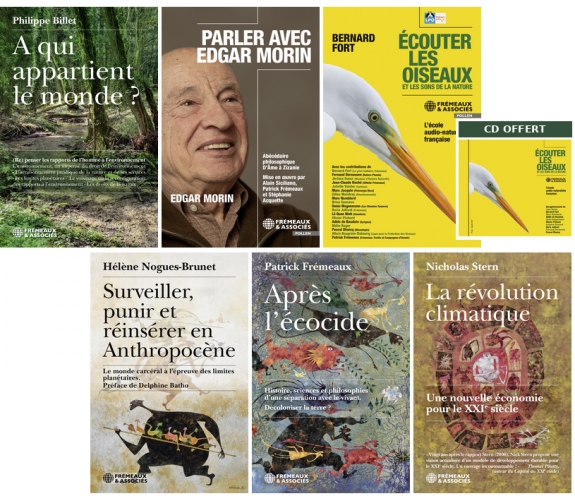
Ecosystèmes : Enjeux scientifiques
Réf. : FAL3255 / FAPO3365 / FAPO3315 / FAL3415 / FAL3405 / FAL3460 / FA719
Artistic Direction : BERNARD FORT
Label : FREMEAUX & ASSOCIES ,
Total duration of the pack : 1 hours 5 minutes
Nbre. CD : 1
- - Recommandé par Blast
- - SELECTION ALTERNATIVES ECONOMIQUES
- - Recommandé par France Culture
- - Recommandé par L'Oiseau Mag (LPO)
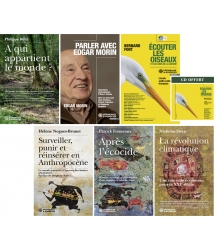
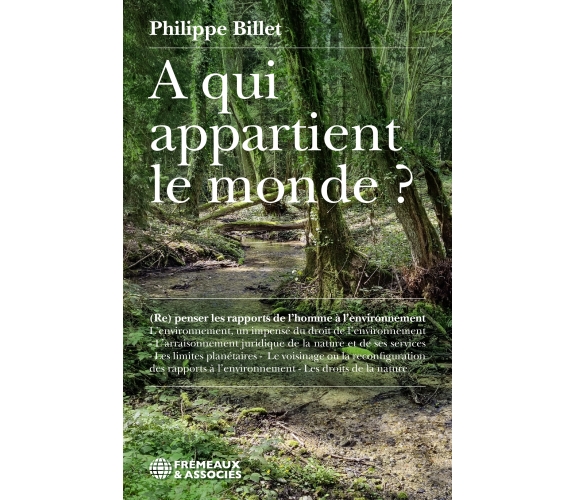
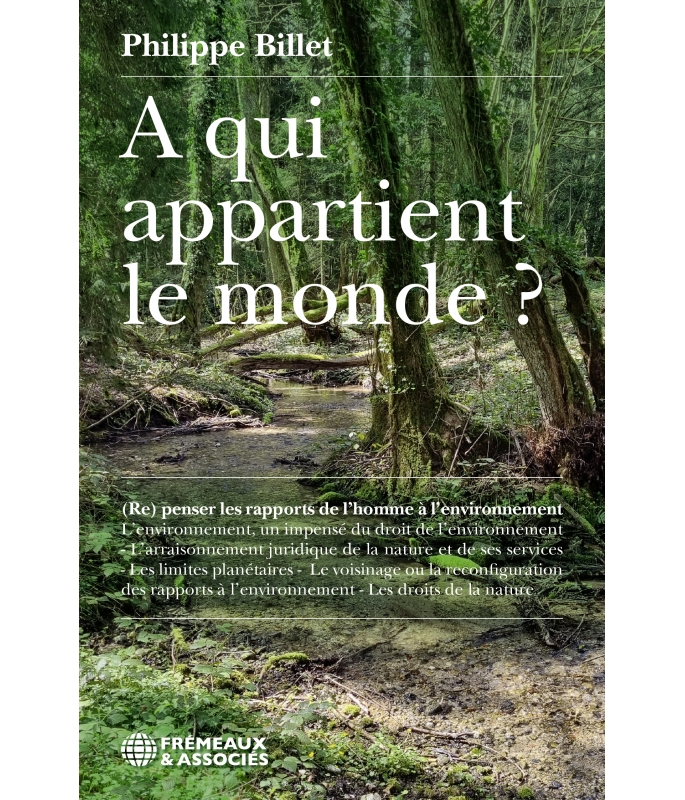
Recognizing rights for nature: a contradiction in terms? Law is one of the foundations of life in society. It transforms our ethical ideals into shared rules and makes equality before the law the basis of inclusion, regardless of origins, gender, orientation, or disability. As the heir to a long history, it also aims to pacify human relations and to curb the excesses of a development model based on limitless growth, now confronted with the scarcity of resources and the fragility of the living world. Yet, paradoxically, the environment remains a blind spot of environmental law. In seeking to protect nature, the law has often reduced it to a set of resources or services useful to humans, thereby contributing to a form of legal guardianship over living beings. This approach is now showing its limits in the face of planetary boundary overshoot, which highlights the mismatch between our legal frameworks and ecological realities.
It therefore becomes necessary to rethink our relationship with the environment—not as a mere object of law, but as a neighbor with whom we must coexist. This reconfiguration of the link between humanity and ecosystems opens the way to new legal models, particularly through the recognition of the rights of nature. In this work, Philippe Billet, a specialist in environmental law, offers a clear and committed reflection on the role of law: not only as a tool for protecting nature, but also as a means of protecting humanity from its own excesses, by fundamentally rethinking its relationship with the living world. 264 pages book, in French.
L’ENVIRONNEMENT, UN IMPENSÉ DU DROIT DE L’ENVIRONNEMENT - L’ARRAISONNEMENT JURIDIQUE DE LA NATURE ET DE SES SERVICES - LES LIMITES PLANÉTAIRES - LE VOISINAGE OU LA RECONFIGURATION DES RAPPORTS À L’ENVIRONNEMENT - LES DROITS DE LA NATURE
LIVRE 264 PAGES
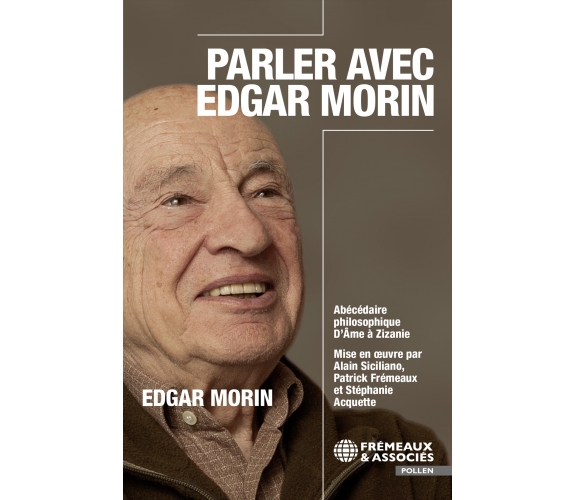
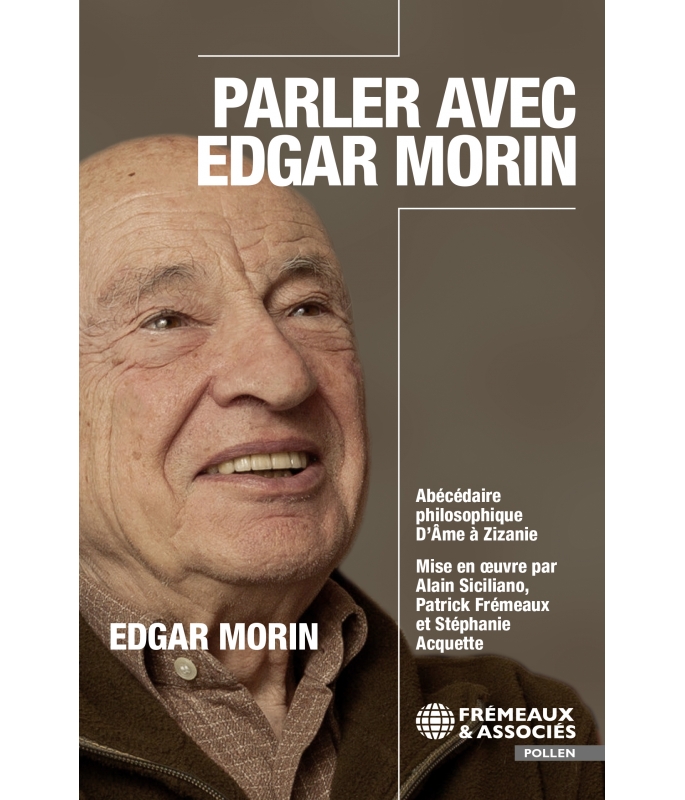
Talking with Edgar Morin is a rare experience of free conversation, like over lunch, with no other purpose than to share a moment of lively thought. This book takes the form of an alphabetical dictionary, from Âme (Soul) to Zizanie (Discord). Each word becomes a pretext for reflection, a path to the thinker's work and life.
With his fluid and engaging voice, Edgar Morin leads us towards an unadulterated knowledge, capable of grasping the complexity of reality. Far from compartmentalized knowledge, science, poetry, politics, friendship, sensuality, and resistance are all intertwined and nourish thought. A unique testimony from one of the greatest contemporary thinkers.
Patrick Frémeaux
Edgar Morin (born in 1921) is a major philosopher and sociologist, author of the monumental work La Méthode (Seuil), which profoundly renewed our understanding of complexity. A member of the Resistance during the Occupation and an undisciplined thinker, he has always kept his distance from established academic frameworks and rigid ideologies. His work encompasses popular culture as well as globalization, education, and contemporary ethical and political challenges. His career and ideas are presented in L'Entretien (Le Monde - Frémeaux & Associés), a veritable introduction to his work through his life. Through his struggles and reflections, Edgar Morin emerges as one of the great minds of the 20th and 21st centuries.
Translated with DeepL.com (free version)
198 PAGES
Le livre est diffusé par Pollen, pour toute commande en librairie :
- Dilicom ou commande@pollen-diffusion.com
- Et pour obtenir plus d’information et des conditions commerciales : communication@pollen-diffusion.com
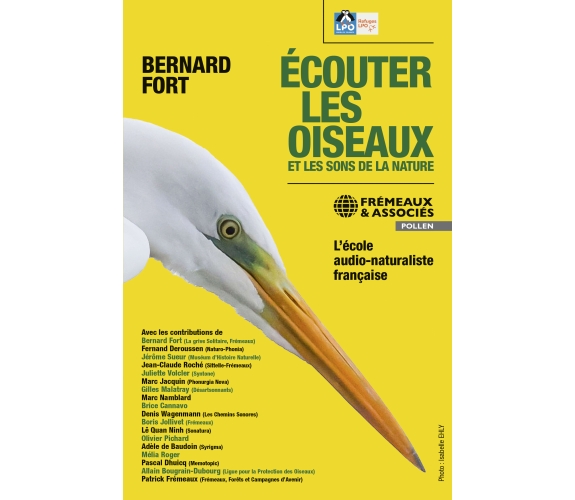
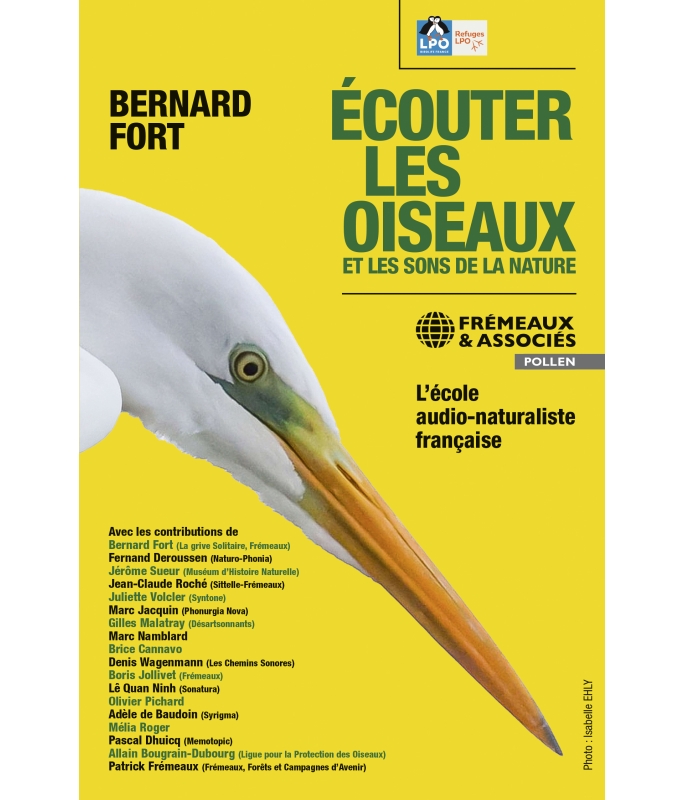
Écouter les oiseaux et les sons de la nature ('Listening to Birds and the Sounds of Nature') is a sensitive work devoted to a practice that is still too little recognized: audio-naturalism. Born in the 1960s with Jean Roché, founder of the French school of listening to living nature, audio-naturalism made sound a genuine tool for understanding natural environments, long before the concept of biodiversity became central to public debate.
At the crossroads of science, art, and philosophy, this book retraces the genealogies, founding figures, and contemporary developments of this discipline, from the embodied listening of soundscapes to the emergence of eco-acoustics. Bringing together naturalists, sound recordists, researchers, artists, and philosophers, this work explores sonic landscapes. It examines the techniques, forms of expression, and ethical dimensions of listening, while situating audio-naturalism within the major contemporary reflections on living systems.
This book is intended for all those who wish to understand, through listening, what connects humanity to the living world — and why learning to listen has today become an act of knowledge, responsibility, and transmission.
Patrick FRÉMEAUX
708 PAGES
AVEC LES CONTRIBUTIONS DE BERNARD FORT (LA GRIVE SOLITAIRE, FRÉMEAUX) • FERNAND DEROUSSEN (NATURO-PHONIA) • JÉRÔME SUEUR (MUSÉUM D’HISTOIRE NATURELLE) • JEAN-CLAUDE ROCHÉ (SITTELLE-FRÉMEAUX) • JULIETTE VOLCLER (SYNTONE) • MARC JACQUIN (PHONURGIA NOVA) • GILLES MALATRAY (DÉSARTSONNANTS) • MARC NAMBLARD • BRICE CANNAVO • DENIS WAGENMANN (LES CHEMINS SONORES) • BORIS JOLLIVET (FRÉMEAUX) • LÊ QUAN NINH (SONATURA) • OLIVIER PICHARD • ADÈLE DE BAUDOIN (SYRIGMA) • MÉLIA ROGER • PASCAL DHUICQ (MEMOTOPIC) • ALLAIN BOUGRAIN-DUBOURG (LIGUE POUR LA PROTECTION DES OISEAUX) • PATRICK FRÉMEAUX (FRÉMEAUX, FORÊTS ET CAMPAGNES D’AVENIR)
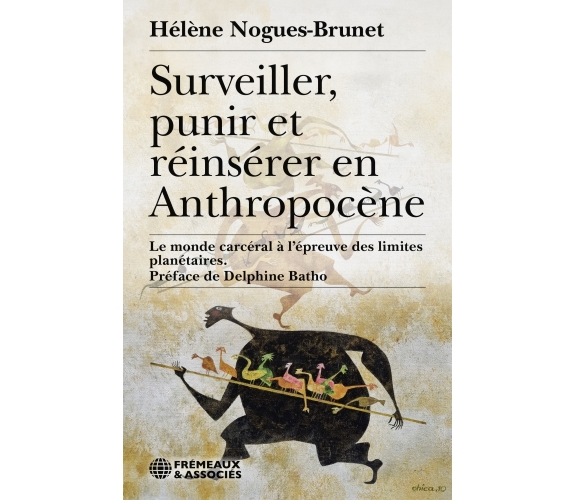
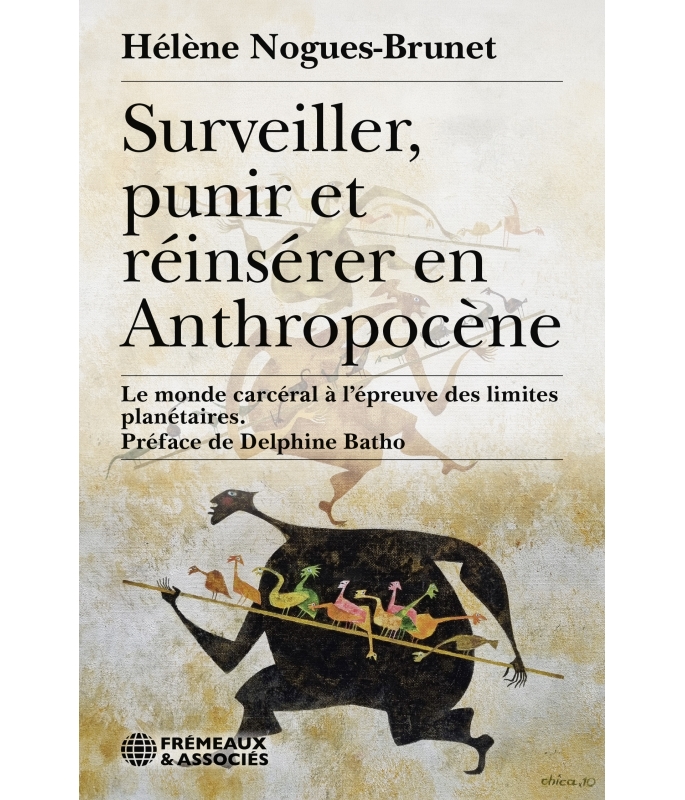
At a time of socio-ecosystemic upheavals in the Anthropocene, the prison emerges as a privileged observatory of the tensions running through our societies. Long conceived as a mere instrument of punishment, it has, since Michel Foucault, been understood as a political apparatus in which surveillance, discipline, and the production of subjectivities are exercised. But what becomes of this enclosed space when global warming weakens its infrastructure, exacerbates vulnerabilities, and redefines the very conditions of life under constraint?
Hélène Nogues-Brunet examines how the climate crisis is reshaping the entire system of incarceration. How do prison staff perceive the evolution of their role, caught between security demands, human responsibility, and new ecological constraints? In light of the ethical legacy of Simone Veil and contemporary analyses of carceral power, this work shows that the quality of confinement remains a major indicator of democratic maturity. To think about prison today is to think about the other in their alterity, and society as a whole through its margins—but also to prepare our institutions for the challenges of the climate century.
Patrick FRÉMEAUX
A life sciences engineer, Hélène Nogues-Brunet began her career in applied research in human health. Committed as an elected official to issues of citizenship and ecological transition, she has developed expertise at the intersection of public action and systemic transformation. Graduating in 2025 with a Master of Science in Strategy & Design for the Anthropocene, she has deepened her engagement with the thought of Bruno Latour and drawn on the conceptual and methodological framework of ecological redirection, analyzing the habitability of our environments, the future of our infrastructures, and the era of the Anthropocene.
LIVRE 336 PAGES
« Les générations futures n’ont pas de lobby. »
Le Principe responsabilité (Le Cerf 1979), Hans JONAS
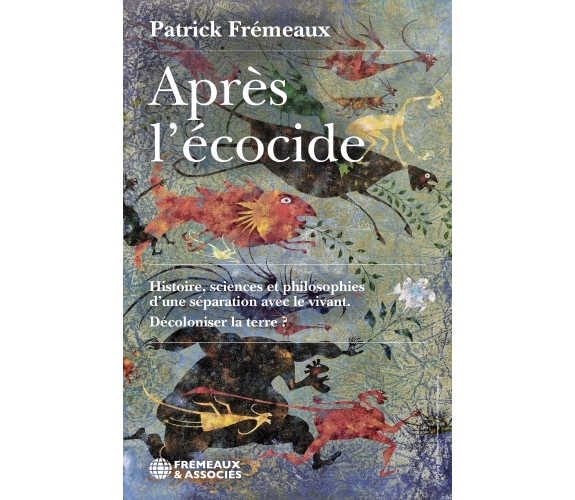
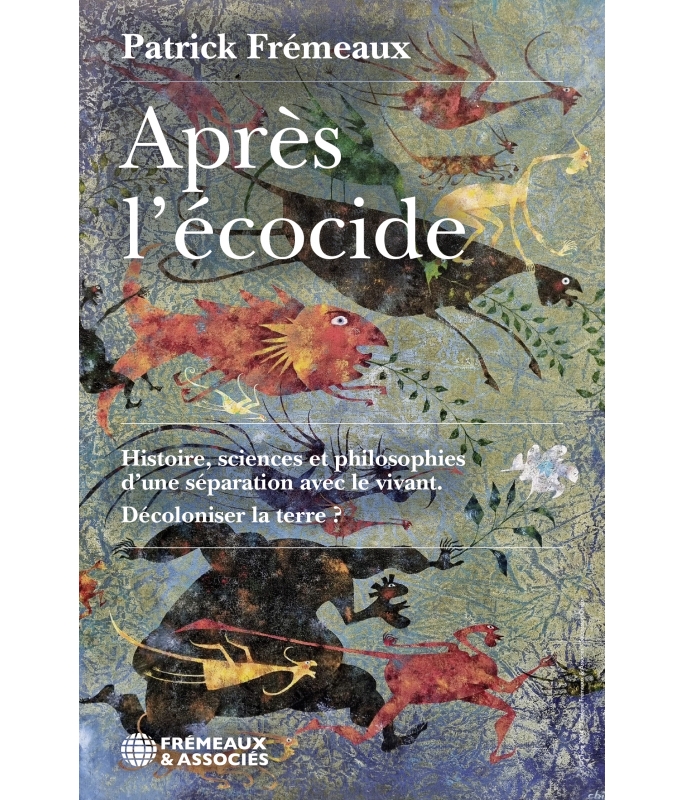
"Après l’écocide" part d’un constat désormais impossible à contourner : la destruction massive du vivant n’est plus une menace à venir, mais un processus déjà engagé. Effondrement de la biodiversité, dérèglement climatique, artificialisation des milieux, disparition des paysages sonores, troubles psychiques liés à la perte du monde vivant : les symptômes sont multiples, convergents, documentés. Pourtant, malgré l’abondance des alertes scientifiques, quelque chose continue de résister à la transformation réelle de nos manières de vivre. Ce livre cherche à comprendre ce qui, dans notre histoire intellectuelle, scientifique, politique et sensible, a rendu l’écocide possible. À rebours des approches strictement techniques ou moralisatrices, Patrick Frémeaux propose une enquête transversale sur une rupture fondatrice : la séparation moderne entre nature et culture, entre humains et non-humains, entre savoir et sensible, entre science et expérience vécue. En croisant toutes les disciplines qu’il édite, philosophie, anthropologie, écologie scientifique, bioacoustique, sciences sociales, pratiques artistiques et engagements de terrain, il raconte son cheminement de rencontres et réflexion et met en correspondance les penseurs, chercheurs, praticiens et passeurs. Tous interrogent, chacun à leur manière, les conditions d’un monde devenu inhabitable — mais aussi les possibilités de réinvention qui subsistent. Après l’écocide" n’est ni un livre de solutions clés en main, ni un manifeste idéologique. C’est un livre de déplacement du regard. Il invite à reconnaître que la crise écologique est aussi — et peut-être d’abord — une crise de la pensée, de la sensibilité et des récits.
Dominique BOURG, Professeur émérite des sciences de l’environnement à l’université de Lausanne
Patrick Frémeaux édite avec Claude Colombini les cours audio Frémeaux – Presses Universitaires de France, consacrés aux sciences humaines. Gérant fondateur de Forêts et Campagnes d’Avenir, groupement forestier et rural citoyen dédié à la protection du vivant, il défend un des premiers catalogues audio-naturalistes au monde, notamment grâce au fonds de Jean‑Claude Roché. Il est enfin éditeur de livres et de livres audio consacrés aux grands enjeux, publiant notamment Yves Coppens, Vladimir Jankélévitch, Hubert Reeves, Pablo Servigne, Dominique Bourg, Edgar Morin ou Bruno Latour.
582 PAGES
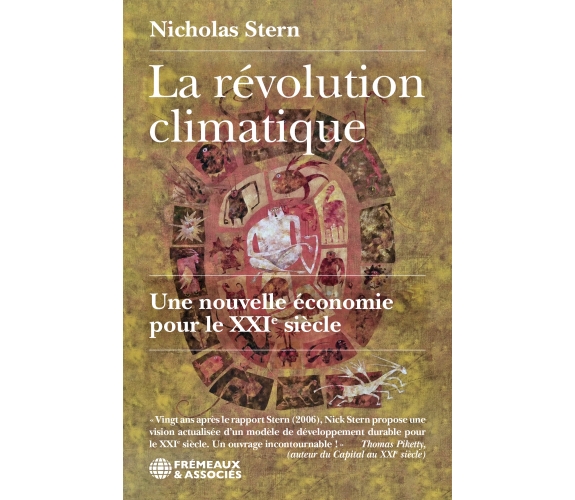
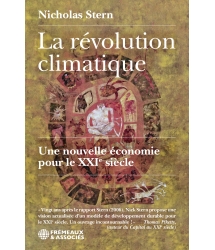
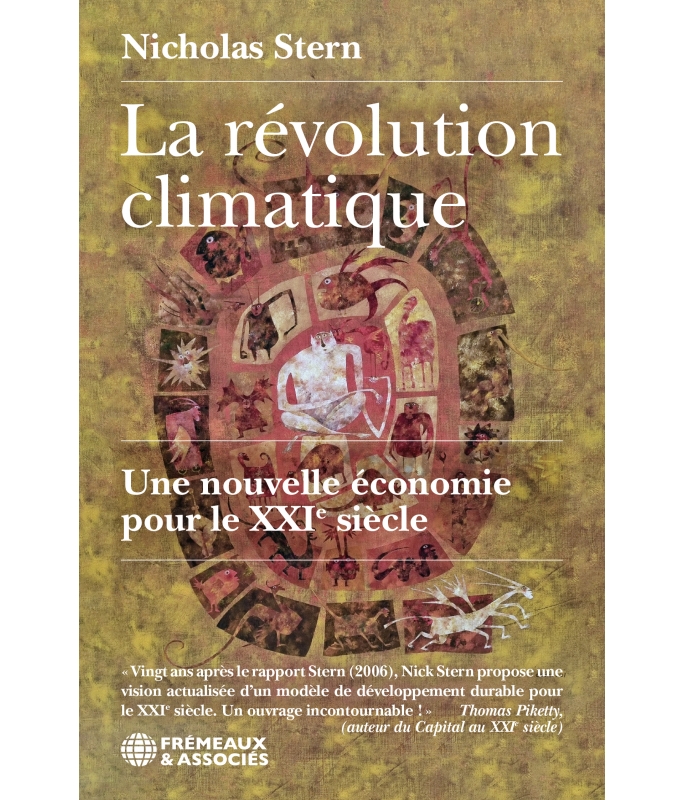
The world stands at a decisive turning point: the next decade will determine whether we can avoid major climate, ecological, and economic crises, and whether we can pave the way toward sustainable and inclusive prosperity. In The Climate Revolution, the consequence of the nineteenth-century Industrial Revolution, Nicholas Stern shows that there is no inherent conflict between climate action and economic growth, but rather the potential for a profound convergence between the two objectives.
Twenty years after the Stern Review and building on the Paris Agreement, he highlights the progress that has been made while pointing to the inadequacy of current action. Drawing on economics, finance, and the social sciences, he proposes a transformation based on investment, innovation, and institutions suited to the challenge.
Patrick FRÉMEAUX
Nicholas Stern, Chief Economist at the European Bank (1994–1999), Vice President at the World Bank, and Head of the Government Economic Service in the United Kingdom (2003–2007), has profoundly influenced contemporary thinking through the Stern Review on the Economics of Climate Change (2006), which demonstrated that the cost of inaction on climate change far exceeds the cost of taking action.
A professor at the London School of Economics, he heads its Grantham Research Institute on Climate Change and the Environment. He also co-chaired, with Joseph Stiglitz, the International Commission on Carbon Prices (2017). His work has had a profound influence on public policy and international climate negotiations.
792 PAGES
TRAD. STÉPHANIE ACQUETTE
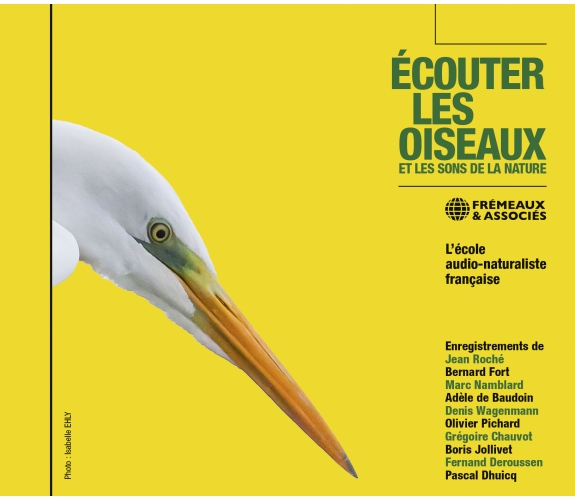
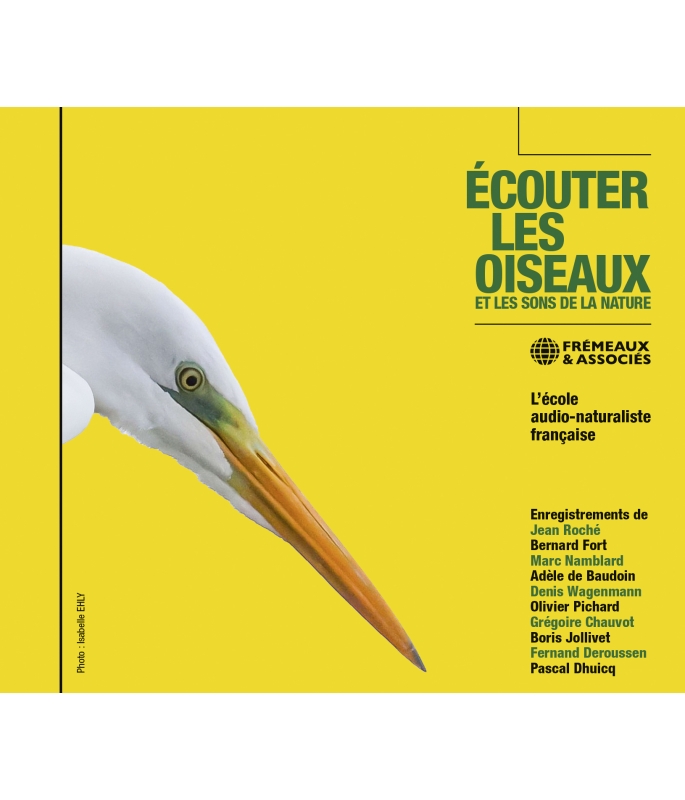
This CD accompanies and mirrors the book “Listening to Birds and the Sounds of Nature” by Bernard Fort, offering a sensitive and demanding journey through the French audio-naturalist school, from its pioneers to its contemporary practitioners.
From Jean Roché to Fernand Deroussen, from Bernard Fort to Marc Namblard, from Denis Wagenmann to Olivier Pichard, from Boris Jollivet to Pascal Dhuicq, and extending to the critical and post-naturalist approaches of Adèle de Baudouin, Grégoire Chauvot, and Mélia Roger, each listening piece affirms a singular way of inhabiting the world through sound. Forests, reed beds, deserts, clear-cut landscapes, wetlands, and nocturnal environments become territories of attention. Here, recording nature is by turns observation, narrative, composition, patient listening, and testimony. A disc designed to teach us how to listen to birds and animals — and, through them, to the environments that sustain them.
Patrick Frémeaux
JEAN ROCHÉ FORÊTS ET LAC AMÉRICAINS, ENREGISTRÉ ENTRE 1969 ET 1976, BOIS ET MARÉCAGES AMAZONIENS DE L’EXTRÊME SUD VÉNÉZUÉLIEN, VENEZUELA • JEAN ROCHÉ GONOLECK À VENTRE BLANC (LANIARIUS AETHIOPICUS), LAC NAKURU, KENYA DE L’OUEST • BERNARD FORT PLUIE EN FORÊT, MAI 1995, MONT SAINT HILAIRE, MONTÉRÉGIES (QUÉBEC), CANADA • MARC NAMBLARD BRAME DU CERF : RÉPIT DANS UNE SOUILLE. (TITRE ALTERNATIF : UNE SOUILLE À L’ORÉE DU BRAME), 18 SEPTEMBRE 2025, VERS 19 H, VALLÉE DU NEUNÉ (VOSGES), FRANCE • ADÈLE DE BAUDOUIN ECOTONE – AQUATIC, 2022, PARC NATUREL RÉGIONAL DU HAUT-JURA (JURA), FRANCE • DENIS WAGENMANN « ÉMULATION », CAPTATION DU 12 JUIN 2021 À 8H14, LE PUECH DE FOURNOULÈS, SUD CANTAL (CANTAL), FRANCE • OLIVIER PICHARD, BUTOR ÉTOILÉ ET OISEAUX DES ROSELIÈRES DU LAC DE MADINE, 12 MAI 2024, (MEUSE), FRANCE • GRÉGOIRE CHAUVOT ET MÉLIA ROGER ENGOULEVENT D’EUROPE DANS UNE COUPE RASE, 2021, HAUT-BEAUJOLAIS (RHÔNE), FRANCE • BORIS JOLLIVET, « NO MAN’S LAND », PIÈCE SONORE, 2026 • FERNAND DEROUSSEN, VOYAGES EN SONS NATURE - LAC IRIKI, 04 AVRIL 2025, MAROC • PASCAL DHUICQ, L’OISEAU DES POÈTES, 17 AVRIL 2025, MÉMOTOPIC-NATURE, ÉTANG DU BLIZON (INDRE), FRANCE.
RÉALISATION : BERNARD FORT

-
PisteTitleMain artistAutorDurationRegistered in
-
1Forêts et lac américains, bois et marécages amazoniens de l’extrême Sud vénézuélien, 1969 - 1976Jean RochéSons de la nature00:09:242026
-
2Gonoleck à ventre blanc (Laniarius aethiopicus), Lac Nakuru, Kenya de l’OuestJean RochéSons de la nature00:02:272026
-
3Pluie en forêt, mai 1995, Mont Saint Hilaire, Montérégies (Québec), CanadaBernard FortSons de la nature00:12:022026
-
4Brame du cerf : répit dans une souille, 18 sept. 2025, Vallée du Neuné (Vosges), FranceMarc NamblardSons de la nature00:06:592026
-
5Ecotone – Aquatic, 2022, Parc Naturel Régional du Haut-Jura, FranceAdèle De BaudouinSons de la nature00:05:072026
-
6« Émulation », Captation de 8h14, 12 juin 2021, Le Puech de Fournoulès, Sud Cantal, FranceDenis WagenmannSons de la nature00:03:342026
-
7Butor étoilé et oiseaux des roselières du lac de Madine, 12 mai 2024, Lac de Madine (Meuse), FranceOlivier PichardSons de la nature00:05:032026
-
8Engoulevent d’Europe dans une coupe rase, 2021, Haut-Beaujolais (Rhône), FranceGrégoire Chauvot, Mélia RogerSons de la nature00:04:052026
-
9« No man’s Land », pièce sonore, 2026Boris JollivetSons de la nature00:04:032026
-
10Voyages en sons nature - Lac Iriki, 04 avril 2025, Lac Iriki, MarocFernand DeroussenSons de la nature00:07:542026
-
11L’oiseau des poètes, MémoTopic-Nature, 17 avril 2025, Étang du Blizon (Indre), FrancePascal DhuicqSons de la nature00:05:012026
by
Phone
at 01.43.74.90.24
by
to Frémeaux & Associés, 20rue Robert Giraudineau, 94300 Vincennes, France
in
Bookstore or press house
(Frémeaux & Associés distribution)
at my
record store or Fnac
(distribution : Socadisc)
I am a professional
Bookstore, record store, cultural space, stationery-press, museum shop, media library...