
 |
Ray Charles - The Grand Master His Inspiration / His Influence 1944-1962 |
- Our Catalog
- Philosophy
- Philosophers of the 20th century and today
- History of Philosophy (PUF)
- Counter-History and Brief Encyclopedia by Michel Onfray
- The philosophical work explained by Luc Ferry
- Ancient thought
- Thinkers of yesterday as seen by the philosophers of today
- Historical philosophical texts interpreted by great actors
- History
- Books (in French)
- Social science
- Historical words
- Audiobooks & Literature
- Our Catalog
- Jazz
- Blues
- Rock - Country - Cajun
- French song
- World music
- Africa
- France
- Québec / Canada
- Hawaï
- West Indies
- Caribbean
- Cuba & Afro-cubain
- Mexico
- South America
- Tango
- Brazil
- Tzigane / Gypsy
- Fado / Portugal
- Flamenco / Spain
- Yiddish / Israel
- China
- Tibet / Nepal
- Asia
- Indian Ocean / Madagascar
- Japan
- Indonesia
- Oceania
- India
- Bangladesh
- USSR / Communist songs
- World music / Miscellaneous
- Classical music
- Composers - Movie Soundtracks
- Sounds of nature
- Our Catalog
- Youth
- Philosophy
- News
- How to order ?
- Receive the catalog
- Manifesto
- Dictionnary
My Shopping Cart
Total (tax incl.)
€0.00
Subtotal
Free
Shipping
Total product(s)
0 items
Shipping
Free
Selected for you

Benefit a discount
on this product
Ecosystèmes : Enjeux scientifiques
Re-penser les rapports de l’homme à l’environnement. Un...
CD Version
€159.99
Digital Version
€111.94
Roots of Soul - Remastered
RAY CHARLES, FATS DOMINO, NINA SIMONE
CD Version
€119.00
Digital Version
€79.95
Django Reinhardt - The 40 CDs from the Complete (Season 1, 2 and 3)
THE COMPLETE WORKS 1928-1938THE COMPLETE WORKS...
CD Version
€199.00
Digital Version
€149.95

To discover Jazz (Includes an audiobook in French)
UN COURS PARTICULIER DE LAURENT CUGNYLA QUINTESSENCE DU JAZZ
CD Version
€89.00
Digital Version
€55.95
Selected for you
The leading publisher of musical heritage and the Sound Library



My Shopping Cart
Total (tax incl.)
€0.00
Subtotal
Free
Shipping
Total product(s)
0 items
Shipping
Free
Selected for you
Benefit a discount
on this product
Ecosystèmes : Enjeux scientifiques
Re-penser les rapports de l’homme à l’environnement. Un...
CD Version
€159.99
Digital Version
€111.94
Roots of Soul - Remastered
RAY CHARLES, FATS DOMINO, NINA SIMONE
CD Version
€119.00
Digital Version
€79.95
Django Reinhardt - The 40 CDs from the Complete (Season 1, 2 and 3)
THE COMPLETE WORKS 1928-1938THE COMPLETE WORKS...
CD Version
€199.00
Digital Version
€149.95
To discover Jazz (Includes an audiobook in French)
UN COURS PARTICULIER DE LAURENT CUGNYLA QUINTESSENCE DU JAZZ
CD Version
€89.00
Digital Version
€55.95
Selected for you
- Our Catalog
- Philosophy
- Philosophers of the 20th century and today
- History of Philosophy (PUF)
- Counter-History and Brief Encyclopedia by Michel Onfray
- The philosophical work explained by Luc Ferry
- Ancient thought
- Thinkers of yesterday as seen by the philosophers of today
- Historical philosophical texts interpreted by great actors
- History
- Books (in French)
- Social science
- Historical words
- Audiobooks & Literature
- Our Catalog
- Jazz
- Blues
- Rock - Country - Cajun
- French song
- World music
- Africa
- France
- Québec / Canada
- Hawaï
- West Indies
- Caribbean
- Cuba & Afro-cubain
- Mexico
- South America
- Tango
- Brazil
- Tzigane / Gypsy
- Fado / Portugal
- Flamenco / Spain
- Yiddish / Israel
- China
- Tibet / Nepal
- Asia
- Indian Ocean / Madagascar
- Japan
- Indonesia
- Oceania
- India
- Bangladesh
- USSR / Communist songs
- World music / Miscellaneous
- Classical music
- Composers - Movie Soundtracks
- Sounds of nature
- Our Catalog
- Youth
- Philosophy
- News
- How to order ?
- Receive the catalog
- Manifesto
- Dictionnary
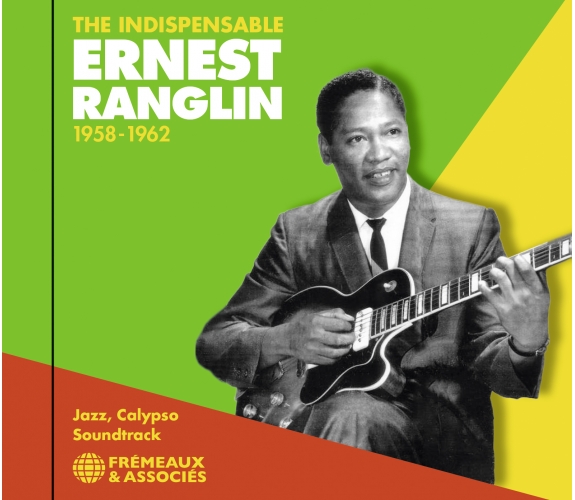
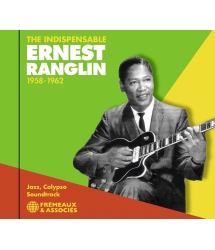
The Indispensable Ernest Ranglin 1958-1962
Ref.:
FA5920
Jazz, calypso, soundtrack
Ernest Ranglin
Ref.: FA5920
EAN : 3561302592022
Artistic Direction : BRUNO BLUM
Label : FREMEAUX & ASSOCIES
Total duration of the pack : 1 hours 18 minutes
Nbre. CD : 1
Select a version :
Thanks to this pack, you get a 16.67 %
discount or €4.99
This product is already in your shopping cart
A digital version of this product is already in your shopping cart
Shipped within 24 to 48 hours.
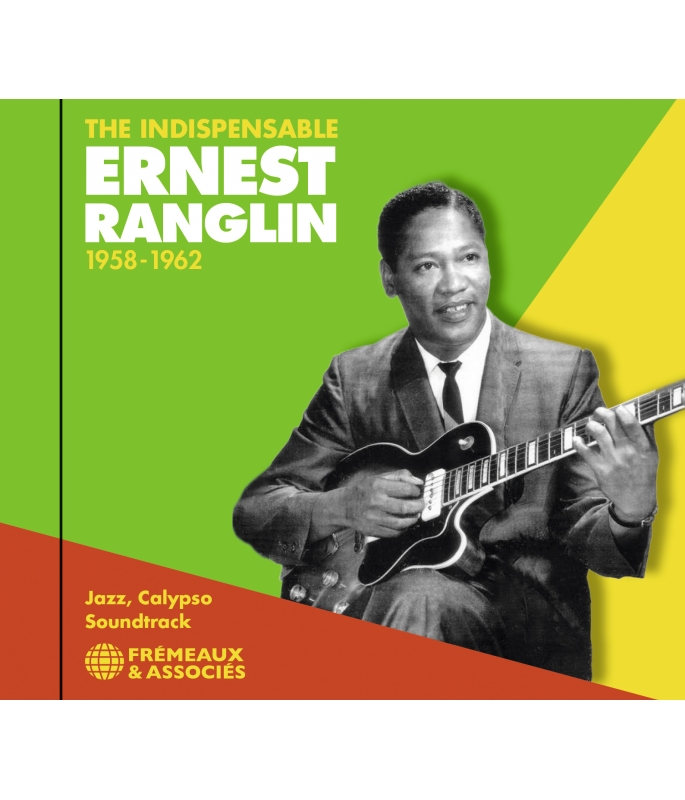
Jazz, calypso, soundtrack
Presentation
Ernest Ranglin is one of the legendary and greatest Jamaican Jazz guitar players. He first recorded with blues and calypso artists as well as for the James Bond Dr. No film soundtrack. This anthology gathers the cream of these dazzling early recordings, some of his best, and finally reissues his world class, ultra rare debut jazz album — the second ever album issued on the Island label and produced by the famous Chris Blackwell.
Patrick FRÉMEAUX
Ernest is the greatest musician ever out of Jamaica. Jamaica has produced some pretty incredible musicians. Jazz musicians. A lot of them. But I think Ernest is really the best. - Chris BLACKWELL, Island Records
THE WRIGGLERS
1. BLOODSHOT EYES 3’16
2. CALYPSO MEDLEY:
Solas Market/Water Come a Mi Eye 3’38
[Come Back Liza]
3. DON’T TOUCH ME TOMATO 3’14
4. LIMBO 2’10
THEOPHILUS BECKFORD
5. GEORGIE AND THE OLD SHOE 2’37
6. JACK AND JILL SHUFFLE 3’02
7. DON’T WANT ME NO MORE 2’49
8. SHE’S GONE 2’43
9. THAT’S ME 2’45
10. SILKY - Clue J and his Blues Blasters 2’50
11. JAMAICA BLUES - Azie Lawrence 2’49
12. I WANT TO BE IN LOVE - Azie Lawrence 3’42
THE ERNEST RANGLIN TRIO
13. ERNIE’S DELIGHT 4’49
14. TENDERLY 8’38
15. DRINK TO ME ONLY WITH THINE EYES 3’33
16. ERNIE’S TUNE 3’48
17. POLKA DOTS AND MOONBEAMS 5’48
18. ONE FOR FRED 4’55
19. DAHOUD 4’08
20. YELLOW BIRD - Sonny Bradshaw Quartet 2’49
21. EXODUS - The Cecil Lloyd Group 2’57
22. THE BOY’S CHASE - Monty Norman 1’33
[From the “Dr. No” film soundtrack)
DIRECTION ARTISTIQUE : BRUNO BLUM
To Discover
JAMAICA JAZZ 1931-1962
ROLAND ALPHONSO • DON DRUMMOND • TOMMY McCOOK • RICO...
CD Version
€29.99
Digital Version
€19.95
USA JAMAICA, THE ROOTS OF SKA - (1942-1962)
RHYTHM AND BLUES SHUFFLE
CD Version
€29.99
Digital Version
€19.95
Bob Marley & The Wailers 1967-1972 - Soul Revolution
CD Version
€26.00
Digital Version
€17.99
Caraïbes / Etats-Unis, du calypso au ska 1944-1972 (2 CD)
Calypso, mambo, pop, mento, rhythm and blues,...
CD Version
€29.99
Digital Version
€19.95
Caraïbes / Etats-Unis - Du calypso au ska
Un livre de Bruno Blum
CD Version
€28.00
Digital Version
€19.99
To Discover
JAMAICA JAZZ 1931-1962
ROLAND ALPHONSO • DON DRUMMOND • TOMMY McCOOK • RICO...
CD Version
€29.99
Digital Version
€19.95
USA JAMAICA, THE ROOTS OF SKA - (1942-1962)
RHYTHM AND BLUES SHUFFLE
CD Version
€29.99
Digital Version
€19.95
Bob Marley & The Wailers 1967-1972 - Soul Revolution
Paper Version
€26.00
Digital Version
€17.99
Caraïbes / Etats-Unis, du calypso au ska 1944-1972 (2 CD)
Calypso, mambo, pop, mento, rhythm and blues, biguine,...
CD Version
€29.99
Digital Version
€19.95
Caraïbes / Etats-Unis - Du calypso au ska
Un livre de Bruno Blum
Paper Version
€28.00
Digital Version
€19.99
Press
« Le Jamaïcain Ernest Ranglin a été élu « Jazz Guitarist of the Year » (« guitariste de jazz de l’année ») par Melody Maker en 1964, alors qu’il se produisait pendant neuf mois au Ronnie Scott’s Club de Londres. À peu près à la même époque, il a également arrangé dans un style ska une chanson R’n’B pour la jeune chanteuse jamaïcaine Millie Small. À ce jour, « My Boy Lollipop » s’est vendu à plus de sept millions d’exemplaires.Ernest n’était pas un nouveau venu sur la scène musicale. Les notes de Bruno Blum qui accompagnent ce coffret proposent un aperçu détaillé de ses débuts, et la période couverte par ces enregistrements permet de retrouver les différents styles populaires à un moment crucial de l’évolution musicale de la Jamaïque.Les premiers morceaux sont interprétés par Denzil Laing & The Wrigglers, un groupe qui joue du mento, la musique traditionnelle de l’île, souvent assimilée au calypso. Et, pour ajouter encore un peu à la confusion, ces morceaux étaient à l’origine sortis sur le label Kalypso. Le premier titre est « Bloodshot Eyes », une reprise aux accents caribéens du célèbre succès country repris en 1951 dans une version R’n’B par Wynonie Harris.Le blues devient plus présent avec plusieurs morceaux inspirés du jump blues des années 1950, interprétés par Theophilus Beckford, lui-même influencé par Rosco Gordon. Ernest y joue une fois encore une guitare remarquable et très personnelle. Il participe également à « Silky », un instrumental de blues entraînant interprété par Clue J. & The Blues Blasters. On y retrouve aussi le regretté tromboniste Rico Rodriguez, qui deviendra plus tard un membre régulier de l’orchestre de Jools Holland.L’album complet « Guitar In Ernest » présente le guitariste dans une formation de trio de jazz, montrant pourquoi les lecteurs de Melody Maker l’avaient tant apprécié. C’est à la fois une musique de grande qualité et un document historique, puisque cet album fut le deuxième LP publié par Island Records, le label de Chris Blackwell.Le disque se termine ensuite par quelques sélections diverses, dont plusieurs morceaux issus de la bande originale du film de James Bond « Doctor No ».L’album n’est donc pas exclusivement consacré au blues, mais il contient de remarquables enregistrements de blues et illustre parfaitement pourquoi Ernest Ranglin fut également une figure importante de la scène musicale londonienne des années 1960. »Par Norman DARWEN – BLUES IN BRITAIN
“Ernest Ranglin is now 93 years old, but these recordings come from the very beginning of his long, and varied, recording career. He was there right at the beginning of the record business in his native Jamaica, playing jazz, R’n’B and mento, the island’s calypso-like folk form. This set from the French label presents all these facets of his talent. It contains all of his very first LP from 1961, the second album ever released by the Island label, later home of Bob Marley and many rock groups. It is a jazz album, with his fluid and sometimes extremely rapid jazz-picking backed by just bass and drums - in places he sounds like Kenny Burrell, a big favourite of Otis Rush. The mento titles also include a Jamaican version of ‘Bloodshot Eyes’, drawing on blues shouter Wynonie Harris’s 1951 hit version of what was originally a country song. It was a very popular recording on the island in the 50s.Then there are the blues and R’n’B titles of singer/ pianist Theophilus Beckford, whose loose blues shuffles owe a lot to US bluesman Rosco Gordon; it is not a sound that is heard very often. Ernest’s guitar breaks are extremely impressive on these titles, the brassy blues instrumental ‘Silky’ by Clue J. & The Blues Blasters, and a couple of titles by vocalist Azie Lawrence. The album may not be all blues, but plenty of blues numbers are included and Ernest’s guitar work is wonderful throughout. “By Norman DARWEN – TWOJ BLUES (POLAND)
“This is the foundation of Jamaican recorded music played by the acknowledged master guitarist Ernest Ranglin. Born in Manchester and raised in Kingston, he joined the Val Bennett Orchestra at the age of 15, and even as early as 1964 he was recognised as the “Best Jazz Guitarist” by the UK’s Melody Maker music weekly. He had also played on and arranged Millie’s huge selling ska hit “My Boy Lollipop’ the previous year.The music here though predates those successes in Europe though. There are four tracks by mento outfit Denzil Laing & The Wrigglers, from an album released by Kalypso in 1958; Bloodshot Eyes is a cover of American jump-blues singer Wynonie Harris’s 1951 hit cover of Hank Penny’s country hit Bloodshot Eyes, and features excellent guitar work by Ernest – but the others are certainly very listenable mento.Then it’s on to Theophilus Beckford and his Jamaican R’n’B sound with several characteristic shuffles and again some excellent breaks by Ernest; She’s Gone‘ is still recognisably influenced by the American sound but the dawn of ska is certainly evident in the rhythm guitar work on this release from the very beginning of the 60s. Beckford drops out for Clue J.s Silky but Roland Alphonso, Ernest, Monty Alexander, and Drumbago are still there, and trombonist Rico Rodriguez is added at the beginning of his very long career. A couple of tracks by Azie Lawrence conclude this section, including his bouncy immigrant’s lament, Jamaica Blues.Next up is Ernest’s 1961 release, Guitar In Ernest, in its entirety, the second album to be issued by the famed Island Records (not to be confused with a later set) and produced by Chris Blackwell. This is definitely a jazz album, in a trio format (just guitar, bass and drums) showcasing the kind of sounds he was playing in the hotels – it’s also an extremely accomplished jazz guitar record; take a listen to Ernie’s Delight.This educational, entertaining release then concludes with several seemingly unrelated tracks – the Caribbean standard Yellow Bird so beloved of steel bands and recorded here with Sonny Bradshaw, Exodus by the Cecil Lloyd Group, first issued on the album Jazz Jamaica From The Workshop and sometimes suggested as an influence on Bob Marley’s later number – in truth, maybe one or two phrases, possibly – and the closer, arranged by Ernest, the percussion and breakneck guitar The Boy’s Chase, from the soundtrack of the James Bond film, Dr. No, which brought Jamaica to a wider audience.Ernest has been one of the key figures of Jamaican recorded music almost from the very beginning, and this set shows some of his earliest outings on record. Recommended, of course, but just don’t come to it expecting reggae!”By Norman DARWEN – REGGAE VIBES
Tracklist
-
PisteTitleMain artistAutorDurationRegistered in
-
1Bloodshot EyesErnest RanglinHank Penny00:03:161958
-
2Calypso Medley - Solas Market/Water Come a Mi EyeErnest RanglinInconnu00:03:381958
-
3Don’t Touch Me TomatoErnest RanglinInconnu00:03:141927
-
4LimboErnest RanglinInconnu00:02:101958
-
5Georgie And The Old ShoeErnest RanglinTheophilus Beckford00:02:371960
-
6Jack And Jill ShuffleErnest RanglinTheophilus Beckford00:03:021960
-
7Don’t Want Me No MoreErnest RanglinTheophilus Beckford00:02:491960
-
8She’s GoneErnest RanglinTheophilus Beckford00:02:431960
-
9That’s MeErnest RanglinTheophilus Beckford00:02:451960
-
10SilkyErnest RanglinCluett Johnson00:02:501960
-
11Jamaica BluesErnest RanglinAzie Lawrence00:02:491960
-
12I Want To Be In LoveErnest RanglinAzie Lawrence00:03:421960
-
13Ernie’s DelightErnest RanglinErnest Ranglin00:04:491961
-
14TenderlyErnest RanglinWalter Gross00:08:381961
-
15Drink To Me Only With Thine EyesErnest RanglinBen Jonson (Paroles originales)00:03:331961
-
16Ernie’s TuneErnest RanglinDexter Keith Gordon00:03:481961
-
17Polka Dots And MoonbeamsErnest RanglinJimmy Van Heuse & Johnny Burke00:05:481961
-
18One For FredErnest RanglinErnest Ranglin00:04:551961
-
19DahoudErnest RanglinErnest Ranglin00:04:081961
-
20Yellow BirdErnest RanglinOswald Durand00:02:491961
-
21ExodusErnest RanglinErnest Gold00:02:571962
-
22The Boy’s Chase (From the “Dr. No” film soundtrack)Ernest RanglinMonty Norman00:01:331962
Booklet
THE INDISPENSABLE
ERNEST RANGLIN 1958-1962
By Bruno Blum
In 1958, Jamaican music was only just beginning to be recorded. The first person to produce records there was Stanley Motta, an electrical appliances shopkeeper who cut some acetate records in the backroom of his shop and had the records pressed in London because there was not yet a press in Kingston. There was a demand for the local mento music and these very early Jamaican records were sold in hotels, where mento bands, decked with straw hats, tight bermuda shorts and lace jabot shirts with fringes were singing traditional ‘exotic’ songs, backed by banjos, acoustic guitars and percussion. They had their pictures taken with American tourists, who called mento music “calypso”, a somewhat trendier name (calypso is really Trinidad and Tobago’s music, which is similar but distinct[1]) and wanted to bring home a souvenir.
Motta then created the MRS label in 1952, and began to sell the records he had produced in Kingston to hotels[2]. For the recording sessions he used the best musicians available in the city, including guitar player Ernest Ranglin (born in Manchester, Jamaica, on June 19, 1932) – his first recordings. Ranglin also played in hotels – but he played jazz. Precocious and self-taught, he had joined the Val Bennett band as early as 1947, aged fifteen, before finding himself a member of the Eric Deans Orchestra, the most prestigious jazz orchestra in Jamaica at the time. There he met long-time friend and collaborator, pianist Monty Alexander, with whom he worked regularly after that. Ernest Ranglin had decided he wanted to be the best and he worked seriously on modern jazz, learning on his own with books about be-bop (the hard-to-play modern jazz) and studying Charlie Parker and Dizzy Gillespie in particular.
THE WRIGGLERS
Ken Khouri then opened Federal, the first real studio in Jamaica. Like Stanley Motta before him, he started producing some records in the remarkable mento style. The first two mento albums, cut for Khouri and his Kalypso label, came out under the name The Wrigglers, and Ernest Ranglin shines on them, with a couple of breathtaking solos included here: Bloodshot Eyes was an old rock hit, initially a country music smash for Hank Penny, covered by many artists, including Wynonie Harris, and still hip in the Caribbean in 1958. Singer Denzil Laing let Ernest Ranglin express himself without restraint on this song (unlike on the other, more traditional mento album tracks).
Ranglin played a key role in the three other Wrigglers tunes here, bringing a jazz approach that was fully anchored in the neat, brilliant local mento tradition. This is found on Solas Market, where buying bananas at the market is the topic and which was also recorded by several mento artists of that time. He struck again on the romantic Water Come a mi Eye, renamed “Come Back Liza” by Harry Belafonte on his famous 1956 version[3]. Don’t Touch Me Tomato is a traditional song by an unknown composer, a double-entendre, bawdy tune also recorded by Phyllis Dillon and Josephine Baker. Bob Marley’s mother said it was the first song her son ever sang.
Limbo is the name of the Caribbean dance tradition where people pass under a bar balanced on two upright posts, bending down backwards and getting lower and lower to the sound of singing and maracas. Several more versions of this song, including one by Bo Diddley, are included on the Roots of Funk 1947-1962 anthology in this series. Always precise and inspired, Ranglin’s contributions show his guitar mastery at the age of 26.
CLUE J AND THE BLUES BLASTERS
“At the time, the music that was very popular in Jamaica was mostly from America, mostly from New Orleans.”
- Chris Blackwell
“A lot of people did those tunes, Louis Prima was one, Bill Doggett, I loved Louis Jordan… a lot of these people would listen to this rhythm and blues.”
- Ernest Ranglin
Like Motta, “Coxson” Dodd and “Duke” Reid used Ernest Ranglin for their early recordings. His reputation already preceded him. The “shuffle” rhythm and blues style at the root of ska (a new Jamaican genre that appeared in 1963) was very popular in the sound system parties that rocked Jamaican bar dances in the 1950s[4].
“Somebody like Domino, for example, was hugely popular in Jamaica and his style of playing had a kind of shuffle sort of rhythm to it. I think ska emerged from that shuffle rhythm except the accent was more on the off than on the onbeat[5].”
- Chris Blackwell
“We took the ska beat from the shuffle[6].”
- Ernest Ranglin
“Just as the swing and backbeat of Fats Domino’s 1949 song “The Fat Man” helped set up rock and roll, the bouncing beat of his 1959 hit “Be My Guest” helped create ska[7].”
- Chris Blackwell[8]
To meet the requirements of their disc jockeys, Coxson and the Duke hired some of the best musicians on the island (such as pianist Theophilus Beckford and bassist Cluett Johnson, who’d all played on mento records for tourists) to produce the very first Jamaican blues records: Clue J and the Blues Blasters were born and Ernest Ranglin was their guitarist and arranger. He played on the first Jamaican record of the genre, produced by Coxson in 1956: “Easy Snapping” by singer and pianist Theophilus Beckford. It was tested on sound system dancefloors for a couple of years, with privately cut records used by disc jockeys only, until the 45 rpm single was finally pressed and put on sale in 1958 or early ’59.
It was an immediate success and Coxson produced a few more compelling Theophilus Beckford tracks included here. On them, Ernest Ranglin shows his luminous, versatile brand of lead guitar, a blend of jazz, mento and blues licks. He shines on Silky, a rock instrumental where Clue J and the Blues Blasters improvised a one-take quick B-side, supposed to be of lesser importance. This was without taking into account Rico Rodriguez and Ernest Ranglin’s solo work, which flies right from the intro in his own personal style, using very fast notes (eighth notes) every bit as good (and fast) as in Alvin Lee’s recordings with Ten Years After a decade later. A few Azie Lawrence tunes were then cut in a style blending shuffle, blues, jazz and mento in 1961. Two of these highlight Ernest Ranglin playing in his peculiar blues mode. But his true virtuoso dimension still remained to be captured on record.
CHRIS BLACKWELL
After his studies ended in London, a young White Jamaican from a well-to-do background had a passion for jazz, which was a hip, trendy music in the 1950s.
“I came back to Jamaica in the mid-Fifties and I was really looking to see what jazz there was in Jamaica. There were quite a few good players at that time in Jamaica, jazz musicians. But the person who really stood out for me was Ernest Ranglin.”
“And he was really unknown outside of Jamaica. I just felt if Ernie came to England I might be able to get him going… If you went out to any clubs and bars, clubs I would say, which were mostly within hotels, at the time, you would hear jazz or you would hear Latin music, Cuban music, you heard a lot of Cuban music[9].”
- Chris Blackwell
In 1958, after he’d met and hung out with Miles Davis, who fascinated him, and after working with rookie producers Clement “Coxson” Dodd and Arthur “Duke” Reid, to whom he used to sell rhythm and blues and jazz records he’d bought in the U.S. for their sound system “blues parties”, Blackwell supplied records to juke-boxes around the island. And like Dodd and Reid, he dreamt of moving on to the next step: living the music producer adventure to its full extent.
Chris Blackwell (born in London on June 22, 1937) was just twenty when he started his career as a producer, investing in Lance Hayward’s first album. Hayward was a blind jazz pianist who’d come from the Bermuda archipelago to play a residency series of gigs at Montego Bay’s Half Moon hotel in Jamaica[10].
“I don’t suppose we sold as many as 200 albums – and those were mostly in the hotel itself as a souvenir[11].”
His first production was a now very scarce record, for which he created the Island Records label. It put him on track for what was to come.
In December, 1958, Chief Minister Norman Manley (under the tutelage of the British colonial authorities) created the Jamaica Broadcasting Corporation (JBC) radio station (across the street from the Island Records office on Halfway Tree), which broadcast live music, as was the fashion then. Ernest Ranglin became its official guitar player. He played for years in Sonny Bradshaw’s band. Bradshaw was a band leader and trumpet player who directed JBC’s jazz orchestra. The band used the best musicians on the island, including Monty Alexander, Joe Harriott, Harold McNair, Dizzy Reece (many of the overlooked recordings by these great musicians can be found in the Jamaica Jazz set issued in this series) and Dwight Pinkney… Ranglin hung out and played with all of the island’s most illustrious players and this fine, laid-back version of Yellow Bird, a Caribbean classic recorded with Sonny Bradshaw’s team, is one of the few recorded traces left from that time.
Just like his partners, Coxson and Duke Reid, who discovered an amazing number of first rate Jamaican artists, Chris Blackwell had a lot of intuition. At first, he set up a licensing deal to release his colleagues’ earliest productions in England and produced some boogie woogie/shuffle, too. His first local hit, Laurel Aitken’s “Boogie in my Bones” in 1958, (issued on Starlite Records in London) was done with the same team and was released around the same time as Theophilus Beckford’s “Easy Snapping” (which is included on the Jamaica – Rhythm and Blues set in this series). This record sealed Chris Blackwell’s destiny. Not only was he White, but the main difference between him and the other Jamaican producers is that he decided to go for the British market. His round trips to London inclined him to develop export and English pressings of Jamaican music. He already had a competitor: Emil Shalit (Melodisc and Blue Beat labels) who got an exclusive deal with Prince Buster. More producers, such as sound engineer Graeme Goodall, were heading in the same direction. So Blackwell founded Island Records in London.
GUITAR IN ERNEST
In 1962, Blackwell settled in London, where he pressed the productions of his Jamaican friends. But before he left his country behind, he financed Guitar in Ernest, Ernest Ranglin’s extraordinary debut album, reissued here for the first time since 1961.
“Ernest is the greatest musician ever out of Jamaica. Jamaica has produced some pretty incredible musicians. Jazz musicians. A lot of them. But I think Ernest is really the best… He was the first person that I’d ever heard play, you know, octaves at the same time on the guitar. Wes Montgomery got famous for this but Ernest is the first I ever heard playing that way[12] [note: Wes Montgomery recorded his first album in 1959].”
By all accounts, Chris Blackwell’s career is out of the ordinary. Between 1962 and 1964 he spent two years licensing Coxson’s Jamaican productions (ND Records, Worldisc, Studio One, Coxsone labels), Duke Reid’s (Treasure Isle) and a few others for his own Island and R&B labels in the UK. Among which were Bob Marley’s very first single, the “Judge Not/Do You
Still Love Me” shuffle[13], produced by novice Leslie Kong, who also launched Jimmy Cliff in England through Blackwell’s connections (none of which were successful at all). Blackwell then produced Millie’s “My Boy Lollipop”, a 1964 international ska hit arranged by Ernest Ranglin, who also played the guitar on it. The song sold six million copies, which put Blackwell on the happening scene of international pop music, leaving behind Jamaican productions until 1967, when he founded Trojan Records, who have been taking care of the Jamaican end of the business ever since.
Blackwell is, of course, well-known for signing Bob Marley & The Wailers in 1972 and producing their output after that, helping them to reach huge, worldwide success, which followed years of poverty[14].
Very few copies of Ernest Ranglin’s Island album were pressed in 1961 and it had not yet been reissued, until now, but Blackwell convinced Ranglin to come to England and arranged to launch his jazz career at Ronnie Scott’s famous jazz club. The least you can say is he had taste: after Millie, the White Jamaican signed and produced Steve Winwood, Traffic, Free, King Crimson, Cat Stevens, Nick Drake, Emerson Lake and Palmer, Fairport Convention, Sparks, Jimmy Cliff, Roxy Music, Linton Kwesi Johnson, Burning Spear, Black Uhuru, Steel Pulse, Aswad, Grace Jones, Ali Farka Touré, King Sunny Ade… and U2. And many more, including Ernest Ranglin.
Although virtually unknown, Guitar in Ernest is an important record because the best Jamaican musicians of the 1950s were rarely recorded and the album carries a dazzling quality and original guitar style. It ranks with the greatest guitar players of the genre, such as his hero Charlie Christian, Wes Montgomery, Django Reinhardt, Kenny Burrell, Les Paul, Barney Kessel, Elek Bacsik, Mickey Baker and Tal Farlow[15].
At 29, Ernest Ranglin’s virtuosity reached a peak on Tenderly, on which he deployed many inventive flourishes, revealing a mature, elaborate style built playing night after night in hotel clubs on top of daytime studio sessions. His clean Gibson sound, his very efficient rhythmic licks, shot machine-gun like, the use of fast, harmonised guitar chords in a hard-to-play melodic process Barney Kessel was famous for, fast tempos, impeccable, inspired renditions… this is world class.
His signature very fast notes, like gunfire and his very melodic style make this record an absolute gem that belongs with other jazz masterpieces - little known, but not forgotten. It contains several well-picked standards and compositions such as Dahoud (in Arabic “daoud” means “the beloved”) and even a fine album cover by expressionist painter Karl Parboosingh.
JAZZ JAMAICA
Coxson Dodd was becoming successful with his shuffle records (as from 1963, his shuffle-derived ska productions used Ranglin, who founded the Skatalites, as arranger and guitar player). In earnest, Ernest also arranged several of Bob Marley’s early tunes, including “It Hurts to Be Alone” sung by Junior Braithwaite, to which he contributed a fine guitar solo. However, just as Chris Blackwell did, Coxson dreamt of producing some jazz. Like him, he had travelled to the USA and collected jazz records, too. So he put together a band with the island’s best jazz musicians, including pianist Cecil Lloyd, trombonist Don Drummond and saxophonist Roland Alphonso, to cut the historic Jazz Jamaica album, yet another peak in Jamaican jazz. It was issued for Jamaica’s Independence Day on August 6, 1962 and includes a sumptuous, lush version of Ernest Gold’s standard, Exodus. The soundtrack of Otto Preminger’s 1960 film of the same name includes Gold’s version.
The film depicts the history of Nazi concentration camp survivors who tried to reach the land of Israel, from where they were driven back by British forces, followed by the French, who drove them out of the port of Marseille before finally sending them back to Germany aboard the Exodus. The return to the Promised Land theme struck a chord in Jamaican Rastamen musicians (such as trombonist Drummond here) who, like the zionist Jews, dreamt of returning to the Promised Land of Zion (which they believe is in Ethiopia). Ranglin does not play on all the tracks but the rest of this indispensable album was also reissued in this series[16].
There are several Jamaican versions of this tune, including a more famous one by The Skatalites (with Ranglin on guitar, in 1963), which in turn inspired one of Bob Marley’s masterpieces, the 1977 Exodus album, which echoed Moses’ and his People’s Biblical exodus.
This set closes with The Boy’s Chase, an excerpt from the James Bond film Dr. No, which was shot in Jamaica with Chris Blackwell taking care of the location scouting. Blackwell’s mother, Blanche Lindo, was the mistress of James Bond books’ author, Ian Fleming, and the young Chris got the job. He also obviously had his say regarding the film’s music, as Ernest Ranglin plays on all the tracks.
Bruno Blum
With thanks to Yves Calvez, Clement “Coxson” Dodd, Chris Blackwell and Chris Carter for proofreading.
© Frémeaux & Associés 2026
THE INDISPENSABLE ERNEST RANGLIN 1958-1962
DISCOGRAPHY
THE WRIGGLERS
- BLOODSHOT EYES - Denzil Laing and the Wrigglers
(Herbert Clayton Penny aka Hank Penny)
Denzil Laing, v; Ernest Ranglin-g; The Wrigglers-v; probably Cluett Johnson-b; unknown-d. Produced and recorded by Kenneth Lloyd Khouri as Ken Khouri. Recorded at Federal Studio, 220 Foreshore Rd, Hagley Park, Kingston, Jamaica.
Jamaica Fabulous Island in the Sun - Denzil Laing and the Wigglers Sing Again, Kalypso FR 1002, 1958.
- CALYPSO MEDLEY: Solas Market/Water Come a Mi Eye [Come Back Liza] - The Wrigglers
(unknown)
Denzil Laing, v; possibly Roland Alphonso-saxophone; Ernest Ranglin-g; The Wrigglers-v; probably Cluett Johnson-b; unknown-perc & d. Produced and recorded by Kenneth Lloyd Khouri as Ken Khouri. Recorded at Federal Studio, 220 Foreshore Rd, Hagley Park, Kingston, Jamaica.
The Wrigglers Sing Calypso at the Arawak Hotel, Kalypso 1958.
- DON’T TOUCH ME TOMATO - The Wrigglers
(unknown)
Same as above.
Note: On June 9, 1927, Sam Manning, a Trinidadian settled in New York City, recorded a similar song, albeit with a different melody and lyrics, named “Touch Me All About, But Don’t Touch me Dey” (Victor 80777).
- LIMBO - The Wrigglers
(unknown)
Same as 2.
THEOPHILUS BECKFORD WITH CLUE J
& HIS BLUES BLASTERS
- GEORGIE AND THE OLD SHOE
(Theophilus Beckford)
- JACK AND JILL SHUFFLE
(Theophilus Beckford)
- DON’T WANT ME NO MORE
(Theophilus Beckford)
- SHE’S GONE
(Theophilus Beckford)
- THAT’S ME - Theo Beckford & The City Slickers
(Theophilus Beckford)
Theophilus Beckford, v; Clue J & His Blues Blasters aka The City Slickers: Roland Alphonso-ts; Ernest Ranglin-g; Aubrey Wellington Adams or Montgomery Bernard Alexander as Monty Alexander-p; Cluett Johnson-ac b; Arkland Parks as Drumbago-d. Produced by Clement Seymour Dodd as Sir Coxsone. Worldisc 1960-1961.
- SILKY - Clue J and his Blues Blasters
(Cluett Johnson)
Same as above, and Emmanuel Rodriguez as Rico-tb; Aubrey Wellington Adams-org: Theophilus Beckford out.
- JAMAICA BLUES - Azie Lawrence & The Carib Serenaders
(Azie Lawrence)
Azie Lawrence-v; Ernest Ranglin-g; b, perc, d. Melodisc 45-1563, 1960.
- I WANT TO BE IN LOVE - Azie Lawrence
(Azie Lawrence)
Same as above. Melodisc 45-1572, 1960.
THE ERNEST RANGLIN TRIO
- ERNIE’S DELIGHT
(Ernest Ranglin)
- TENDERLY
(Walter Gross)
- DRINK TO ME ONLY WITH THINE EYES
(unknown)
Note: Instrumental version. The original lyrics were by Benjamin Jonson aka Ben Jonson.
- ERNIE’S TUNE
(Dexter Keith Gordon)
- POLKA DOTS AND MOONBEAMS
(Jimmy Van Heuse, Johnny Burke)
- ONE FOR FRED
(Ernest Ranglin)
- DAHOUD
(Ernest Ranglin)
Ernest Ranglin-g; Thaddeus Mowatt as Thaddy Mowatt-ac b; Clarence Bean as Tootsie Bean-d. Produced by Chris Blackwell, spring of 1961. Recorded by Desmond Elliott at Federal Studio, Kingston, Jamaica. Guitar in Ernest, Island Records C.B. 23, 1961.
- YELLOW BIRD - The Sonny Bradshaw Quartet
(Oswald Durand, Michel Mauléart Monton)
Cecil Valentine Bradshaw as Sonny Bradshaw-tp; Ernest Ranglin-g; probably Montgomery Bernard Alexander as Monty Alexander-p; possibly Thaddeus Mowatt as Thaddy Mowatt-ac b; possibly Clarence Bean as Tootsie Bean-d. Produced by Arthur Reid aka Duke Reid. Duke 45/DK 1003, 1961.
Note: the original French version was written around 1893 in Haiti and named “Choucoune”.
- EXODUS - The Cecil Lloyd Group
(Ernest Gold, born Ernst Sigmund Goldner)
Billy Cooke-tp; Roland Alphonso-ts; Tommy McCook-ts; Donald Drummond as Don Drummond-tb; Ernest Ranglin-g; Cecil Lloyd Knott as Cecil Lloyd-p; Lloyd Mason-b; Carl McLeod-d. Produced by Clement Seymour Dodd as Coxson Dodd or Sir Coxsone. Federal Studio, Kingston, Jamaica, 1962. From Jazz Jamaica From the Workshop, Port-O-Jam PJL 01, 1962.
- THE BOY’S CHASE - Monty Norman
(Monty Norman aka Monty Noserovitch)
[From the “Dr. No” film soundtrack)
Ernest Ranglin-g, arr. CTS Studios, Bayswater, London, June, 1962.
[1]. Read the booklet and listen to Trinidad-Calypso 1939-1959, FA5348, in this series.
[2]. Read the booklet and listen to Jamaica-Mento 1951-1958, FA5275, in this series.
[3]. Read the booklet and listen to Harry Belafonte – Calypso-Mento- Folk 1954-1957, FA5234, in this series.
[4]. Read the booklet and listen to USA Jamaica - Roots of Ska 1942-1962 - Rhythm and Blues Shuffle, FA5396, in this series.
[5]. Christoffer “Salzy” Salzgeber, Roots of Reggae: The Ernest Ranglin Story (documentary film, 2006).
[6]. Ibid.
[7]. “Be My Guest” is included on the 6-CD The Indispensable Fats Domino 1949-1962, FA5692, set in this series.
[8]. Chris Blackwell with Paul Morley, The Islander, My Life in Music and Beyond, p. 46. Nine Eight Books, London, 2022.
[9]. Read the booklet and listen to USA Cuba-Son 1926-1962, FA5752, Cuba-Mambo 1949-1962, FA5915, and Cha Cha Chá 1953-1962, FA5925, in this series.
[10]. Read the booklet and listen to Jamaica-Jazz 1931-1962 in this series, on which a track is sung by Totlyn Jackson, a Jamaican singer backed by Lance Hayward. Another excerpt from Lance Hayward’s ultra rare Island album is included on Bermuda-Gombey & Calypso 1953-1960, FA5374, in this series.
[11]. Chris Blackwell with Paul Morley, ibid.
[12]. Christoffer “Salzy” Salzgeber, Roots of Reggae: The Ernest Ranglin Story (documentary film, 2006).
[13]. “Judge Not” and “Do You Still Love Me” were both reissued on Roots of Ska 1942-1962, FA5396, and Les Musiques des Caraïbes – du Vaudou au Ska, FA5799, respectively, in this series.
[14]. Bruno Blum, Roger Steffens & Leroy Jodie Pierson, Bob Marley & the Wailers 1967-1972 – Soul Revolution, la biographie discographique par les historiens du reggae, FAL3215 (Frémeaux et Associés, 2024).
[15]. Read the booklet and listen to Electric Guitar Story – Country Jazz Blues R&B Rock 1935-1962, FA5421, in this series.
[16]. Read the booklet and listen to Jamaica - Jazz 1931-1962, FA5636, in this series.
Toute la collection Caribbean
View all products
The Indispensable Ernest Ranglin 1958-1962
Jazz, calypso, soundtrack
CD Version
€19.99
Digital Version
€9.95
Caraïbes / Etats-Unis, du calypso au ska 1944-1972 (2 CD)
Calypso, mambo, pop, mento, rhythm and blues, biguine,...
CD Version
€29.99
Digital Version
€19.95
ILAN-ILAN
KOKODA
CD Version
€19.99
Digital Version
€9.95
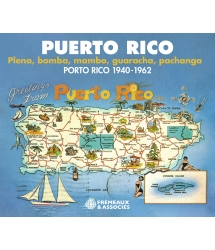
Puerto Rico : plena, bomba, mambo, guaracha, pachanga 1940-1962
CORTIJO • ISMAEL RIVERA • EDDIE PALMIERI • CUARTETO...
CD Version
€29.99
Digital Version
€19.95