
 |
Ray Charles - The Grand Master His Inspiration / His Influence 1944-1962 |
- Our Catalog
- Philosophy
- Philosophers of the 20th century and today
- History of Philosophy (PUF)
- Counter-History and Brief Encyclopedia by Michel Onfray
- The philosophical work explained by Luc Ferry
- Ancient thought
- Thinkers of yesterday as seen by the philosophers of today
- Historical philosophical texts interpreted by great actors
- History
- Books (in French)
- Social science
- Historical words
- Audiobooks & Literature
- Our Catalog
- Jazz
- Blues
- Rock - Country - Cajun
- French song
- World music
- Africa
- France
- Québec / Canada
- Hawaï
- West Indies
- Caribbean
- Cuba & Afro-cubain
- Mexico
- South America
- Tango
- Brazil
- Tzigane / Gypsy
- Fado / Portugal
- Flamenco / Spain
- Yiddish / Israel
- China
- Tibet / Nepal
- Asia
- Indian Ocean / Madagascar
- Japan
- Indonesia
- Oceania
- India
- Bangladesh
- USSR / Communist songs
- World music / Miscellaneous
- Classical music
- Composers - Movie Soundtracks
- Sounds of nature
- Our Catalog
- Youth
- Philosophy
- News
- How to order ?
- Receive the catalog
- Manifesto
- Dictionnary
My Shopping Cart
Total (tax incl.)
€0.00
Subtotal
Free
Shipping
Total product(s)
0 items
Shipping
Free
Selected for you

Benefit a discount
on this product
Ecosystèmes : Enjeux scientifiques
Re-penser les rapports de l’homme à l’environnement. Un...
CD Version
€159.99
Digital Version
€111.94
Roots of Soul - Remastered
RAY CHARLES, FATS DOMINO, NINA SIMONE
CD Version
€119.00
Digital Version
€79.95
Django Reinhardt - The 40 CDs from the Complete (Season 1, 2 and 3)
THE COMPLETE WORKS 1928-1938THE COMPLETE WORKS...
CD Version
€199.00
Digital Version
€149.95

To discover Jazz (Includes an audiobook in French)
UN COURS PARTICULIER DE LAURENT CUGNYLA QUINTESSENCE DU JAZZ
CD Version
€89.00
Digital Version
€55.95
Selected for you
The leading publisher of musical heritage and the Sound Library



My Shopping Cart
Total (tax incl.)
€0.00
Subtotal
Free
Shipping
Total product(s)
0 items
Shipping
Free
Selected for you
Benefit a discount
on this product
Ecosystèmes : Enjeux scientifiques
Re-penser les rapports de l’homme à l’environnement. Un...
CD Version
€159.99
Digital Version
€111.94
Roots of Soul - Remastered
RAY CHARLES, FATS DOMINO, NINA SIMONE
CD Version
€119.00
Digital Version
€79.95
Django Reinhardt - The 40 CDs from the Complete (Season 1, 2 and 3)
THE COMPLETE WORKS 1928-1938THE COMPLETE WORKS...
CD Version
€199.00
Digital Version
€149.95
To discover Jazz (Includes an audiobook in French)
UN COURS PARTICULIER DE LAURENT CUGNYLA QUINTESSENCE DU JAZZ
CD Version
€89.00
Digital Version
€55.95
Selected for you
- Our Catalog
- Philosophy
- Philosophers of the 20th century and today
- History of Philosophy (PUF)
- Counter-History and Brief Encyclopedia by Michel Onfray
- The philosophical work explained by Luc Ferry
- Ancient thought
- Thinkers of yesterday as seen by the philosophers of today
- Historical philosophical texts interpreted by great actors
- History
- Books (in French)
- Social science
- Historical words
- Audiobooks & Literature
- Our Catalog
- Jazz
- Blues
- Rock - Country - Cajun
- French song
- World music
- Africa
- France
- Québec / Canada
- Hawaï
- West Indies
- Caribbean
- Cuba & Afro-cubain
- Mexico
- South America
- Tango
- Brazil
- Tzigane / Gypsy
- Fado / Portugal
- Flamenco / Spain
- Yiddish / Israel
- China
- Tibet / Nepal
- Asia
- Indian Ocean / Madagascar
- Japan
- Indonesia
- Oceania
- India
- Bangladesh
- USSR / Communist songs
- World music / Miscellaneous
- Classical music
- Composers - Movie Soundtracks
- Sounds of nature
- Our Catalog
- Youth
- Philosophy
- News
- How to order ?
- Receive the catalog
- Manifesto
- Dictionnary
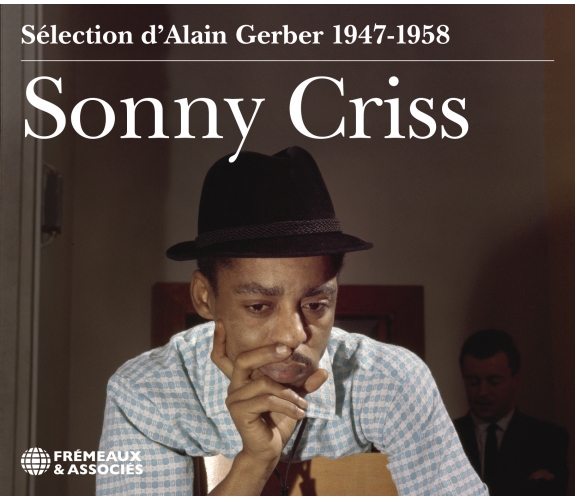
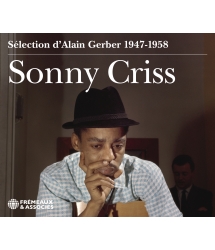
Sonny Criss - 1947-1958
Ref.:
FA5913
Selection d’Alain Gerber - Le volcan et la bougie
Sonny Criss
Ref.: FA5913
EAN : 3561302591322
Artistic Direction : Alain Gerber, Jean Buzelin et Jean-Paul Ricard
Label : Frémeaux & Associés
Total duration of the pack : 2 hours 24 minutes
Nbre. CD : 2
Select a version :
Thanks to this pack, you get a 20.00 %
discount or €9.99
This product is already in your shopping cart
A digital version of this product is already in your shopping cart
Shipped within 24 to 48 hours.
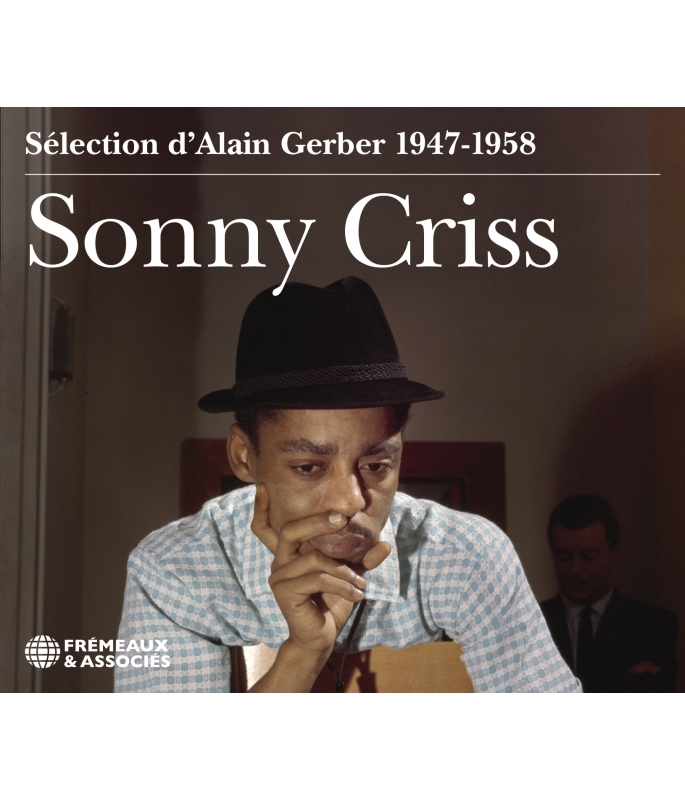
Selection d’Alain Gerber - Le volcan et la bougie
Distinctions
Recommended by :
- - CHOC Jazz Magazine
Presentation
Sonny Criss is an unsung hero in the history of jazz. A brilliant alto saxophonist of the bebop era, his unparalleled talent
nevertheless remained in the shadow of Charlie Parker. Published at the same time as Alain Gerber's biographical novel Ne laissez pas le soleil se lever sur vos larmes (Don't Let the Sun Rise on Your Tears), this anthology highlights the musician's extraordinary virtuosity and expressiveness.
An unexpected tribute to one of the greatest forgotten masters of 20th-century jazz.
Patrick FRÉMEAUX
CD1 - 1947-1955 : WARDELL GRAY SEXTET : HOT HOUSE. AL KILLIAN SEXTET : SONNY’S BOP • OUT OF NOWHERE. FLIP PHILLIPS & HIS ORCHESTRA : FLIP’S IDEA • PUT THAT BACK. SONNY CRISS QUARTET : THE FIRST ONE • CALIDAD • BLUES FOR BOPPERS • TORNADO. HARRY BABASIN ALL STARS : IRRESISTIBLE YOU • THE SQUIRREL. BUDDY RICH QUINTET : BROADWAY • A SMOOTH ONE.
CD2 - 1955-1958 : BUDDY RICH QUINTET : THE TWO MOTHERS • SONNY AND SWEETS. SONNY CRISS : ALABAMY BOUND • WEST COAST BLUES • SWEET GEORGIA BROWN • THE MAN I LOVE • AFTER YOU’VE GONE • HOW HIGH THE MOON • NIGHT AND DAY • WHAT IS THIS THING CALLED LOVE • IN THE STILL OF THE NIGHT. SONNY CRISS QUARTET : EASY LIVING • WILLOW WEEP FOR ME • WAILIN’ FOR JOE. SONNY CRISS : I GOT IT BAD • SYLVIA • BUTTS DELIGHT.
SÉLECTION D’ALAIN GERBER ASSISTÉ PAR JEAN BUZELIN ET JEAN-PAUL RICARD
To Discover
MILES DAVIS
LIVE IN PARIS - 21 MARS / 11 OCTOBRE 1960
CD Version
€29.99
Digital Version
€19.95
Miles Davis l'histoire du be bop - Alain Gerber
CD Version
€28.00
Digital Version
€19.99
Charlie Parker Intégral
Un livre d'Alain Tercinet - Préface de Pascal...
CD Version
€24.00
Digital Version
€16.99

Ne laissez pas le soleil se lever sur vos larmes - Mémoires...
Le génie oublié de la West Coast - Un livre d'Alain...
CD Version
€26.00
Digital Version
€17.99
Benefit a discount
on this product
Sonny Criss - Livre + CD
Le livre + CD consacrés à Sonny Criss,...
CD Version
€49.99
Digital Version
€33.95
To Discover
MILES DAVIS
LIVE IN PARIS - 21 MARS / 11 OCTOBRE 1960
CD Version
€29.99
Digital Version
€19.95
Miles Davis l'histoire du be bop - Alain Gerber
Paper Version
€28.00
Digital Version
€19.99
Charlie Parker Intégral
Un livre d'Alain Tercinet - Préface de Pascal Anquetil
Paper Version
€24.00
Digital Version
€16.99
Ne laissez pas le soleil se lever sur vos larmes - Mémoires...
Le génie oublié de la West Coast - Un livre d'Alain Gerber
Paper Version
€26.00
Digital Version
€17.99

Benefit a discount
on this product
Sonny Criss - Livre + CD
Le livre + CD consacrés à Sonny Criss, saxophoniste...
CD Version
€49.99
Digital Version
€33.95
Press
Chronique parue dans Dernières Nouvelles d'Alsace à propos du livre d'Alain Gerber sur Sonny Criss Ne laissez pas le soleil se lever sur vos larmes, paru simultanément :
Adoubé par le grand Charlie Parker, Sonny Criss (1927-1977) avait en poche un ticket pour la gloire qui pourtant se refusa à lui avec obstination. Sommité de l’histoire du jazz, Alain Gerber signe les mémoires imaginaires d’un génie oublié de la West Coast. Ne laissez pas le soleil se lever sur vos larmes. Le titre du roman emprunte à une chanson enregistrée en 1946 par Louis Jordan et à laquelle Ray Charles donnera une seconde vie une bonne décennie plus tard. Don’t let the sun catch you crying est un jazz vaguement bluesy, très sentimental, mais qui résume assez bien la trajectoire de Sonny Criss. Celle d’un perdant magnifique, formé dans le chaudron bouillonnant du bebop, et qui dès 18 ans eut l’honneur de croiser son saxo avec celui de Charlie Parker.
« L’histoire du jazz est une invention tardive. Les anecdotes en ont longtemps tenu lieu », fait dire Alain Gerber à son narrateur, un Sonny Criss désabusé, mais ayant encore foi en sa musique, et que l’auteur imagine livrant ses confidences au soir de sa vie. La vie incandescente et bousculée d’un musicien noir qui résume quelques pages épiques d’un jazz en éternel devenir, entre le bebop et le cool. À Los Angeles, sur la côte ouest des États-Unis, il cherchait à tracer sa voie face à la domination musicale de New York. La fiction est ici ancrée dans une histoire du jazz traversée par les questions politiques et raciales des États-Unis des décennies 1940, 50 et 60, dont Alain Gerber offre une connaissance confondante d’érudition. Ne laissez pas le soleil se lever sur vos larmes est moins une biographie intimiste qu’un essai subjectif qui fait défiler des figures de légende ayant pour noms Charlie Parker, Dizzy Gillespie, Miles Davis, Charles Mingus, John Coltrane, Chet Baker ou encore Ornette Coleman et Thelonious Monk. Des géants dont l’ombre a depuis longtemps recouvert un Sonny Criss qui a toujours souffert d’être perçu comme l’éternel dauphin de Parker. Une sorte de suiveur, dépourvu de personnalité propre, condamné au statut de has-been dans une scène musicale alors obnubilée par le modernisme, mais incapable d’avoir les idées claires tant son actualité était mouvante.
« Tout ce que vous pouviez entreprendre pour vous écarter du parkerisme, comme tout ce que vous tentiez pour vous en montrer digne, était porté à votre discrédit. Tantôt l’on vous condamnait pour ce qui vous séparait de Bird, tantôt pour ce qui vous en rapprochait, l’essentiel étant de souligner l’inutilité même de votre existence », fait dire Alain Gerber à Sonny Criss. Si, un temps, le saxophoniste se détourna de sa carrière professionnelle pour devenir travailleur social ou assurer des interventions musicales dans les écoles, il n’en a pas moins gravé des disques d’une splendeur étincelante, notamment pour les labels Prestige ou Muse.
L’éditeur d’Alain Gerber, Frémeaux & Associés, s’est taillé sa petite réputation par l’excellence de son catalogue qui revisite l’histoire du jazz par le livre comme par le disque. Un coffret double CD permet ainsi de prolonger la lecture et offre un panorama de la virtuosité comme de la sensibilité de Criss. De quoi rendre encore plus incompréhensible l’oubli dans lequel le musicien a sombré. Tout comme cette méconnaissance dans laquelle il est demeuré englué de son vivant. Un magazine spécialisé, dans les années 60, l’avait placé en numéro un de la catégorie « talents méritant une plus large reconnaissance » … Une embellie, pourtant, se leva à l’horizon ! Le Japon, avec son vivier de fondus de jazz, lui proposa de venir s’y produire en 1977. Une invitation nimbée du plus profond respect, avec réception prévue par le maire de Tokyo. Une reconnaissance, la cinquantaine arrivée, que le sort lui refusa avec un malin plaisir. Car dans le même temps, Sonny Criss apprenait qu’il souffrait d’un cancer de l’estomac à un stade avancé. Refusant d’affronter un nouveau chemin de croix, l’héritier magnifique de Parker préféra mettre fin à ses jours.
Serge Hartmann - Dernières Nouvelles d’Alsace
L’histoire du jazz compte de nombreux oubliés. Sonny Criss en fait partie. Remercions Alain Gerber de réparer cette injuste amnésie avec cette parfaite anthologie de ce fils de Memphis, installé à Los Angeles dès ses 15 ans et devenu, dans les années 1950, un altiste majeur de la Black California.
J’ai découvert Sonny Criss au début des années 1960 grâce à un super 45-tours enregistré en France par Bernard de Bosson, intitulé Blues pour flirter. Coup de foudre immédiat ! Depuis, il fait partie de la petite tribu de mes « musiciens intimes ». Pourquoi ? J’aime son style fluide et volubile, « remarquable anthologie, selon Xavier Prévost, de diverses phases de l’histoire de l’instrument ». Marqué bien sûr par Charlie Parker (vivacité de l’attaque), il se refusera à parodier le Bird dont la découverte à Los Angeles l’avait pourtant foudroyé. Proche de Benny Carter (élégance mélodique), Johnny Hodges (onctuosité et velouté de la sonorité) et Willie Smith (sens enflammé du swing), son jeu, tout imprégné du blues le plus essentiel et teinté d’une tendresse jamais mièvre, surprend toujours par sa façon éruptive de surgir à chaque entrée en solo avec une véhémence lyrique irrésistible. Comment résister à ce phrasé roulé-boulé, voluptueusement élastique et sinueux, pareil à « une onde où l’onde s’enroule à la houle d’une onde » (Pierre Louÿs) ? Dans ce florilège amoureux, on (re)découvre avec bonheur des titres où il côtoie Wardell Gray, Howard McGhee, Buddy Rich, Chet Baker et Charlie Parker ; pour Clef, le label de Norman Granz, de bien belles prises avec son ami Hampton Hawes, publiées sous le nom de Flip Phillips ; enfin de superbes faces avec Sonny Clark, piochées dans trois microsillons Imperial datant de 1956 (Jazz USA, Go Man! et Plays Cole Porter).
Pascal Anquetil - Jazz Magazine
Après une autobiographie de la batterie jazz, une histoire du be bop et un Naissance de la bossa nova plutôt objectives, Alain Gerber revient à la manière qu'il a forgé au fil d'une bibliographie déjà ancienne et qu'il a hissé au rang d'un genre en lui-même : la biographie de grandes figures à la première personne. Mais avec ces « Mémoires imaginaires de Sonny Criss, le génie oublié de la West Coast », l'auteur opère plus qu'un simple retour. On ne saura jamais si le saxophoniste se serait totalement reconnu dans les mots choisis par Alain Gerber mais ce dernier semble avoir trouvé la meilleure des positions pour dépeindre cette Black California, finalement toujours méconnue, et surtout faire vivre à son lecteur l'expérience vécue du jazz de ces années-là qu’un certain Charlie Parker éclabousse de tout son génie et de ses failles également, en entrainant dans son sillage toute une génération de musiciens. Souvent pour le meilleur, parfois pour le pire. Ce point de vue d'écriture tient bien sûr compte, avec une émouvante sincérité et un amour tendre, de la singularité de Sonny Criss, qui a su dépasser le legs birdien et s'affirmer comme une autre voie possible. Et ce n'est pas le moindre agrément de ce récit irrésistible (qui s'accompagne d'un double CD indispensable).
Bruno Guermonprez – Jazz News
« Ce livre d’Alain Gerber, écrit en hommage au saxophoniste alto Sonny Criss, s’inscrit dans la lignée haut de gamme de ses précédents romans historiques et essais consacrés à Lester Young (2000), Chet Baker, Clifford Brown, Bill Evans (2001), Louis Armstrong (2002), Jack Teagarden (2003), Charlie Parker, Billie Holiday (2005), Paul Desmond, Miles Davis (2007)…L’action démarre à Los Angeles, en 1947, avec la rencontre de Williams Sonny Criss et de son idole Charlie Parker qui vient d’arriver en ville avec le sextette de Dizzy Gillespie. Durant le séjour californien de Bird, le maître et le disciple vont devenir inséparables et partageront nombre d’aventures évoquées d’une plume alerte et érudite par l’auteur.On croise en chemin des musiciens de légende tels Howard McGhee, Dexter Gordon, Wardell Gray, Teddy Edwards, Dodo Marmarosa, Bud Shank, Art Pepper, Gerald Wilson… et des figures pittoresques comme l’écrivain et producteur Ross Russel, fondateur du label Dial, Dean Benedetti qui enregistre toutes les prestations publiques de Parker, et le dealer Emry « Moose The Mooche » Byrd. Bref, se dessine le monde bigarré du jazz californien dans lequel le jeune Sonny Criss trouve vite sa place.Très vite, les portes des studios s’ouvrent à son talent comme l’indique la sélection discographique concoctée de main de maître par l’auteur. Ses premiers enregistrements, provenant d’un concert Just Jazz organisé par Gene Norman et deux AFRS Jubilee (1947), produits alors qu’il avait une vingtaine d’années, témoignent de la maturité de son jeu encore sous l’influence de son maître Charlie Parker et le montrent tout à fait à sa place dans un environnement prestigieux.Le même niveau d’excellence se maintient avec les faces Clef parues sous le nom de Flip Phillips et de Harry Babasin où il côtoie Chet Baker, Charlie Parker et Al Haig. Séduit, Norman Granz, le patron du label Clef, continue de lui faire confiance en l’intégrant dans ses tournées JATP et l’invite à graver, en 1949, quatre faces sous son nom qui le présentent déjà en pleine possession de ses moyens.Une occasion pour Sonny Criss, accompagné pour l’occasion par ses amis et complices Hampton Hawes et Chuck Thompson, de faire apprécier son discours de vif argent et la beauté de sa sonorité. Son phrasé est fluide, sa mise en place précise, son discours construit avec rigueur, quatre de ses compositions dont Blues For Boppers, un blues de haute volée, ajoutant encore à la qualité de l’ensemble.La production de Sonny Criss prend une toute autre tournure quand il enregistre en 1955 avec le quintette de Buddy Rich aux côtés d’Harry Edison, Jimmy Rowles et John Simmons. Sa sonorité se fait alors plus incisive et son phrasé devient plus tranchant.Cette tendance ira en s’accentuant avec ses faces Imperial de 1956. On le voit ouvert à l’influence de Willie Smith, le soliste vedette de Jimmy Lunceford, dans sa manière de donner du poids à ses notes comme en témoigne un blues d’anthologie du calibre de West Coast Blues. On retrouve aussi l’élégance de Benny Carter dans son approche de la mélodie (The Man I Love). En quelque sorte, Sonny Criss donne une dimension plus large à son art en élargissant les frontières de la tradition sans jamais les transgresser pour aller en terres étrangères.Écrit de main de maître, cet ouvrage relate le destin pas toujours heureux d’un musicien de grande classe qui, victime des changements de modes, ratera de peu la notoriété, la vraie, celle qui efface l’oubli du temps : un juste et inespéré hommage qui réhabilite dans la mémoire des amateurs l’œuvre du grand saxophoniste que fut Sonny Criss. »Par Alain TOMAS – COULEURS JAZZ
Tracklist
-
PisteTitleMain artistAutorDurationRegistered in
-
1Hot HouseSonny CrissTadd Dameron00:06:151947
-
2Sonny’s BopSonny CrissSonny Criss00:03:301947
-
3Out of NowhereSonny CrissJohnny Green00:02:511947
-
4Flip’s IdeaSonny CrissFlip Phillips00:02:401949
-
5Put That BackSonny CrissFlip Phillips00:03:351949
-
6The First OneSonny CrissSonny Criss00:02:521949
-
7CalidadSonny CrissSonny Criss00:03:111949
-
8Blues for BoppersSonny CrissSonny Criss00:02:291949
-
9TornadoSonny CrissSonny Criss00:02:411949
-
10Irresistible YouSonny CrissGene DePaul00:06:231952
-
11The SquirrelSonny CrissTadd Dameron00:15:471952
-
12BroadwaySonny CrissWilbur H. Bird00:11:541955
-
13A Smooth OneSonny CrissBenny Goodman00:09:121955
-
PisteTitleMain artistAutorDurationRegistered in
-
1The Two MothersSonny CrissHarry Edison00:06:031955
-
2Sonny and SweetsSonny CrissSonny Criss00:04:401955
-
3Alabamy BoundSonny CrissRay Henderson00:03:111956
-
4West Coast BluesSonny CrissSonny Criss00:05:011956
-
5Sweet Georgia BrownSonny CrissMaceo Pinkard00:02:541956
-
6The Man I LoveSonny CrissGeorge Gershwin00:03:191956
-
7After You’ve GoneSonny CrissTurner Layton00:03:391956
-
8How High the MoonSonny CrissMorgan Lewis00:03:071956
-
9Night and DaySonny CrissCole Porter00:04:431956
-
10What Is This Thing Called LoveSonny CrissCole Porter00:05:431956
-
11In the Still of the NightSonny CrissCole Porter00:04:191956
-
12Easy LivingSonny CrissRalph Rainger00:02:121957
-
13Willow Weep for MeSonny CrissAnn Ronell00:03:071957
-
14Wailin’ for JoeSonny CrissSonny Criss00:03:131957
-
15I Got It BadSonny CrissDuke Ellington00:03:531958
-
16SylviaSonny CrissSonny Criss00:07:421958
-
17Butts DelightSonny CrissSonny Criss00:04:061958
Booklet
Sonny Criss:
The Volcano and the Candle (1947-1958)
By Alain Gerber
“He took his own life,” I read from Thomas Owen and Ted Gioia. William Sonny Criss (1927-1977) ended his life on November 20, 1977, less than a month after his 50th birthday. It is assumed he grew weary of “agonizing while alive,” exhausted by seeing people push him out of his own existence every time he thought he was close to embracing it. Loving life, music, and the Earth’s beauty is not enough to be loved in return.
A professional musician from age fifteen, Criss got his start with the help of mentors like Howard McGhee, Wardell Gray, and Billy Eckstine. Figures like Gene Norman (founder of GNP Crescendo) and Norman Granz championed him, with Granz inviting him to join Jazz At The Philharmonic in 1949 and arranging his first recording session as a leader that same year. In 1955, Buddy Rich offered him a spot in a dream quintet, an opportunity Criss tried desperately, and ultimately in vain, to prove himself worthy of.
Opportunity often smiled upon him in those years, but it was an unreliable tease. It never fulfilled its promises, except perhaps during a long European sojourn between 1962 and 1965. In Paris, particularly, Criss could finally believe that the person he saw in the mirror wasn’t a hallucination. For a brief moment, success brushed against him. In six months, the man who had struggled in Hollywood—a city where he was Black and subject to discrimination “more hypocritical than in the South,” and who had “never seen the inside of a movie studio” in fifteen years—found himself “on the Riviera, acting and playing music in a big-budget film.”
The deeper truth behind his struggles, beyond race, was his unyielding artistic integrity. He was unwilling to compromise his art for projects where mediocrity was key to success. “Pure junk” (his quote) wasn’t his style; he declared, “I can neither play nor want to play such shit.” His wish was granted beyond all hope—he was never asked to.
Criss felt an undeniable, almost “visceral and phantasmic” need to succeed in Los Angeles, the city he considered his “hometown” (though born in Memphis). He yearned for revenge against those who saw him as disposable.
His skills were universally acknowledged. Bud Shank called him “the best in the area for pure jazz,” and historian Bob Porter ranked him “immediately behind Bird” as an alto player. Yet, this irrefutable brilliance failed to connect with the wider audience. Criss was “undesirable,” excluded from others’ desire, a verdict that felt transcendentally final. He was never granted the consolation of being “rediscovered.”
One night, Charlie Parker told him: “You think too much.” Bird believed Criss’s talent surpassed his own self-criticism, urging him to “let it speak for you.” Criss, the ultimate self-corrector, absorbed this warning. He fought against the very spirit of Parkerism that possessed him, sometimes triumphing over Bird in jam-session duels when the master was struggling. Criss sought to push the limits, becoming “eruptive,” and “the volcano fed on its own lava.”
Around age thirty-five, he began to reconcile, partially shedding the Parkerian shadow to embrace other great influences like Benny Carter, Johnny Hodges, and Willie Smith. Yet, this new wisdom risked making room for the most troublesome ghost of all: the ghost of Sonny Criss himself.
Love stories usually end badly. On November 20, 1977, the hero was extinguished with a gunshot, “like blowing out a candle.” Charlie Parker should have warned him: it is not enough to love yourself to be loved in return.
Alain Gerber (summary)
© Frémeaux & Associés 2026
1947-1958
Sonny Criss
Le volcan
et la bougie
CD 1 (1947-1955)
- HOT HOUSE Pt. 1 & 2 (Tadd Dameron) Modern 20-694
- SONNY’S BOP (SEMI-QUIET) (Sonny Criss) AFSR Jubilee 242
- OUT OF NOWHERE (Johnny Green - Edward Heyman) AFSR Jubilee 242
- FLIP’S IDEA (Flip Phillips) Clef 8911
- PUT THAT BACK (Flip Phillips) Clef 8911
- THE FIRST ONE (Sonny Criss) Clef 8910
- CALIDAD (Sonny Criss) Clef 8910
- BLUES FOR BOPPERS (Sonny Criss) Clef 8915
- TORNADO (Sonny Criss) Clef 8915
- IRRESISTIBLE YOU (Gene DePaul - Don Raye) Showcase 5007
- THE SQUIRREL (Tadd Dameron) Showcase 5007
- BROADWAY (Wilbur H. Bird - Teddy McRae - Henry Wood) Norgran MGN 1078
- A SMOOTH ONE (Benny Goodman) Norgran MGN 1078
(1) Gene Norman Just Jazz : Howard McGhee (tp), Sonny Criss (as), Wardell Gray (ts), Dodo Marmarosa (p), Charlie Drayton (b), Jackie Mills (dm). Concert, Civic Auditorium, Pasadena (CA). 29/04/1947.
(2-3) Al Killian Sextet : Al Killian (tp), Sonny Criss (as), Wardell Gray (ts), Fletcher Smith (p), Ernie Shepard (b), Ken Kennedy (dm). Club, Portland (Oregon), 17/10/1947.
(4-5) Flip Phillips & His Orchestra : John D’Agostino, Buddy Morrow, Tommy Turk, Kai Winding (tb), Sonny Criss (as), Flip Phillips (ts), Mickey Crane (p), Ray Brown (b), Shelly Manne (dm). Los Angeles, 20/09/1949.
(6-7-8-9) Sonny Criss Quartet : Sonny Criss (as), Hampton Hawes (p), Iggy Shevack (b), Chuck Thompson (dm). Los Angeles (CA), 22/09/1949..
(10-11) Harry Babasin All Stars : Chet Baker (tp), Charlie Parker, Sonny Criss (as), Al Haig or Donn Trenner (p), Harry Babasin (b), Lawrence Marable (dm). Trade Winds Club, Inglewood (CA), 16/06/1952.
(12-13) Buddy Rich Quintet : Harry Edison (tp), Sonny Criss (as), Jimmy Rowles (p), John Simmons (b), Buddy Rich (dm). Los Angeles, 26/08/1955.
Note : Tornado (N°9) est un démarquage de Wee (composition : Denzil Best).
CD 2 (1955-1958)
- THE TWO MOTHERS (Harry Edison - Buddy Rich) Norgran MGN 1052
- SONNY AND SWEETS (Sonny Criss - Harry Edison) Norgran MGN 1052
- ALABAMY BOUND (Ray Henderson - Buddy DeSylva - Bud Green) Imperial LP 9006
- WEST COAST BLUES (Sonny Criss) Imperial LP 9006
- SWEET GEORGIA BROWN (Maceo Pinkard - Ken Casey - Ben Bernie) Imperial LP 9006
- THE MAN I LOVE (George & Ira Gershwin) Imperial LP 9020
- AFTER YOU’VE GONE (Turner Layton - Harry Creamer) Imperial LP 9020
- HOW HIGH THE MOON (ORNITHOLOGY)
(Morgan Lewis - Nancy Hamilton) Imperial LP 9020 - NIGHT AND DAY (Cole Porter) Imperial LP 9024
- WHAT IS THIS THING CALLED LOVE (Cole Porter) Imperial LP 9024
- IN THE STILL OF THE NIGHT (Cole Porter) Imperial LP 9024
- EASY LIVING (Ralph Rainer - Leo Robin) Caliope CAL 3024
- WILLOW WEEP FOR ME (Ann Ronell) Caliope CAL 3024
- WAILIN’ FOR JOE (Sonny Criss) Caliope CAL 3024
- I GOT IT BAD (Duke Ellington - Paul Francis Webster) Peacock LP 91
- SYLVIA (Sonny Criss) Peacock LP 91
- BUTTS DELIGHT (Sonny Criss) Peacock LP 91
(1-2) Buddy Rich Quintet : Harry Edison (tp), Sonny Criss (as), Jimmy Rowles (p), John Simmons (b), Buddy Rich (dm). Los Angeles, 26/08/1955.
(3) Sonny Criss : Sonny Criss (as), Kenny Drew (p), Barney Kessel (g), Bill Woodson (b), Chuck Thompson (dm). Los Angeles, 26/01/1956.
(4) Same, but Kessel out. 24/02/1956.
(5) Same, but Kessel out. 23/03/1956.
(6) Sonny Criss : Sonny Criss (as), Sonny Clark (p), Leroy Vinnegar (b), Lawrence Marable (dm). Los Angeles, 10/07//1956.
(7-8) Same. 31/07/1956.
(9-10) Sonny Criss : Sonny Criss (as), Larry Bunker (vib), Sonny Clark (p), Buddy Clark (b), Lawrence Marable (dm). Los Angeles, 21/08//1956.
(11) Same. 03/10/1956.
(12-13-14) Sonny Criss Quartet : Sonny Criss (as), Hampton Hawes (p), Iggy Shevack (b), Buddy Woodson (dm). TV-cast Stars of Jazz, Los Angeles, 25/11/1957.
(15-16-17) Sonny Criss : Ole Hansen (tb on 16-17), Sonny Criss (as), Wynton Kelly (p), Bob Cranshaw (b), Walter Perkins (dm). Chicago (IL), 03/1958.
Disques originaux : collection Jean-Paul Ricard
Toute la collection The Quintessence and Special Edition
View all products
Duke Ellington - Jungle Nights in Harlem
1927-1931
CD Version
€29.99
Digital Version
€19.95
Eric Dolphy - The Quintessence
Los Angeles - New York – Copenhague 1949-1961
CD Version
€29.99
Digital Version
€19.95
Sonny Criss - 1947-1958
Selection d’Alain Gerber - Le volcan et la bougie
CD Version
€29.99
Digital Version
€19.95
Lee Konitz - The Quintessence
New York - Los Angeles - Boston 1947-1961
CD Version
€29.99
Digital Version
€19.95