
 |
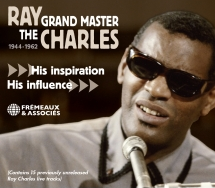
Ray Charles - The Grand Master His Inspiration / His Influence 1944-1962 |
- Our Catalog
- Philosophy
- Philosophers of the 20th century and today
- History of Philosophy (PUF)
- Counter-History and Brief Encyclopedia by Michel Onfray
- The philosophical work explained by Luc Ferry
- Ancient thought
- Thinkers of yesterday as seen by the philosophers of today
- Historical philosophical texts interpreted by great actors
- History
- Books (in French)
- Social science
- Historical words
- Audiobooks & Literature
- Our Catalog
- Jazz
- Blues
- Rock - Country - Cajun
- French song
- World music
- Africa
- France
- Québec / Canada
- Hawaï
- West Indies
- Caribbean
- Cuba & Afro-cubain
- Mexico
- South America
- Tango
- Brazil
- Tzigane / Gypsy
- Fado / Portugal
- Flamenco / Spain
- Yiddish / Israel
- China
- Tibet / Nepal
- Asia
- Indian Ocean / Madagascar
- Japan
- Indonesia
- Oceania
- India
- Bangladesh
- USSR / Communist songs
- World music / Miscellaneous
- Classical music
- Composers - Movie Soundtracks
- Sounds of nature
- Our Catalog
- Youth
- Philosophy
- News
- How to order ?
- Receive the catalog
- Manifesto
- Dictionnary
My Shopping Cart
Total (tax incl.)
€0.00
Subtotal
Free
Shipping
Total product(s)
0 items
Shipping
Free
Selected for you

Benefit a discount
on this product
Ecosystèmes : Enjeux scientifiques
Re-penser les rapports de l’homme à l’environnement. Un...
CD Version
€159.99
Digital Version
€111.94
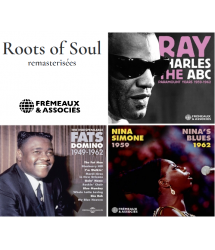
Roots of Soul - Remastered
RAY CHARLES, FATS DOMINO, NINA SIMONE
CD Version
€119.00
Digital Version
€79.95
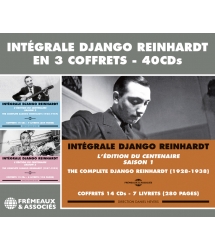
Django Reinhardt - The 40 CDs from the Complete (Season 1, 2 and 3)
THE COMPLETE WORKS 1928-1938THE COMPLETE WORKS...
CD Version
€199.00
Digital Version
€149.95
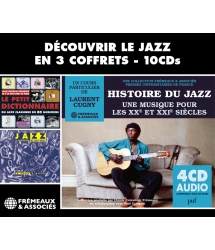
To discover Jazz (Includes an audiobook in French)
UN COURS PARTICULIER DE LAURENT CUGNYLA QUINTESSENCE DU JAZZ
CD Version
€89.00
Digital Version
€55.95
Selected for you
The leading publisher of musical heritage and the Sound Library



My Shopping Cart
Total (tax incl.)
€0.00
Subtotal
Free
Shipping
Total product(s)
0 items
Shipping
Free
Selected for you
Benefit a discount
on this product
Ecosystèmes : Enjeux scientifiques
Re-penser les rapports de l’homme à l’environnement. Un...
CD Version
€159.99
Digital Version
€111.94
Roots of Soul - Remastered
RAY CHARLES, FATS DOMINO, NINA SIMONE
CD Version
€119.00
Digital Version
€79.95
Django Reinhardt - The 40 CDs from the Complete (Season 1, 2 and 3)
THE COMPLETE WORKS 1928-1938THE COMPLETE WORKS...
CD Version
€199.00
Digital Version
€149.95
To discover Jazz (Includes an audiobook in French)
UN COURS PARTICULIER DE LAURENT CUGNYLA QUINTESSENCE DU JAZZ
CD Version
€89.00
Digital Version
€55.95
Selected for you
- Our Catalog
- Philosophy
- Philosophers of the 20th century and today
- History of Philosophy (PUF)
- Counter-History and Brief Encyclopedia by Michel Onfray
- The philosophical work explained by Luc Ferry
- Ancient thought
- Thinkers of yesterday as seen by the philosophers of today
- Historical philosophical texts interpreted by great actors
- History
- Books (in French)
- Social science
- Historical words
- Audiobooks & Literature
- Our Catalog
- Jazz
- Blues
- Rock - Country - Cajun
- French song
- World music
- Africa
- France
- Québec / Canada
- Hawaï
- West Indies
- Caribbean
- Cuba & Afro-cubain
- Mexico
- South America
- Tango
- Brazil
- Tzigane / Gypsy
- Fado / Portugal
- Flamenco / Spain
- Yiddish / Israel
- China
- Tibet / Nepal
- Asia
- Indian Ocean / Madagascar
- Japan
- Indonesia
- Oceania
- India
- Bangladesh
- USSR / Communist songs
- World music / Miscellaneous
- Classical music
- Composers - Movie Soundtracks
- Sounds of nature
- Our Catalog
- Youth
- Philosophy
- News
- How to order ?
- Receive the catalog
- Manifesto
- Dictionnary
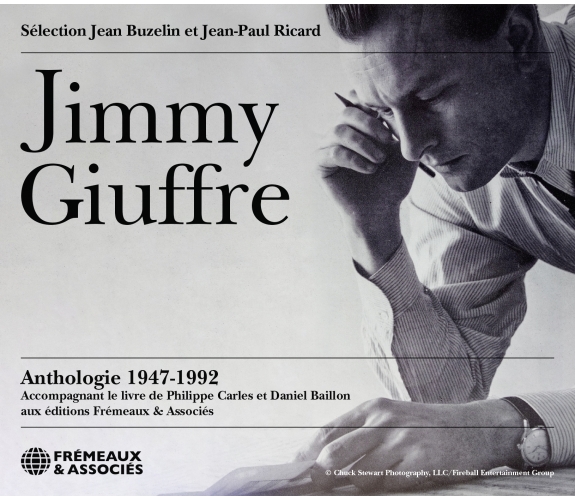
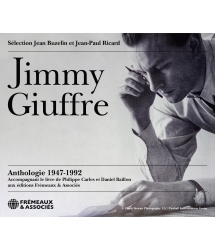
Jimmy Giuffre- Anthologie
Ref.:
FA5939
1947-1992
Ref.: FA5939
EAN : 3561302593920
Artistic Direction : Jean Buzelin et Jean-Paul Ricard
Label : FREMEAUX & ASSOCIES
Total duration of the pack : 2 hours 29 minutes
Nbre. CD : 2
Select a version :
Thanks to this pack, you get a 20.00 %
discount or €9.99
This product is already in your shopping cart
A digital version of this product is already in your shopping cart
Shipped within 24 to 48 hours.
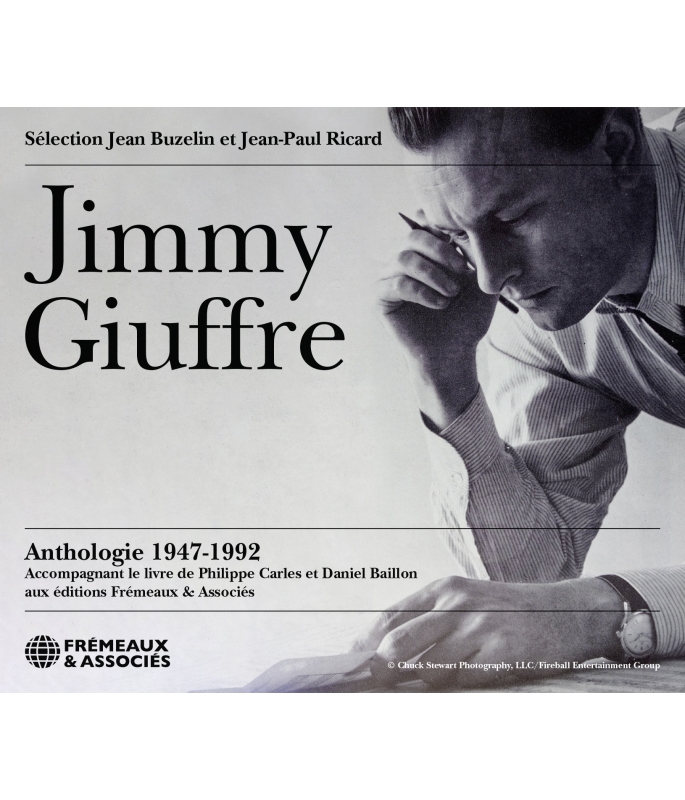
1947-1992
Presentation
A visionary composer, arranger, saxophonist and clarinetist, Jimmy Giuffre (1921–2008) occupies a unique place in modern jazz. Released alongside Pierre Carles and Daniel Baillon’s book Jimmy Joue Free, this 2-CD set traces the path of a musician who, long before free jazz, developed a personal language rooted in collective interaction and formal freedom. An essential anthology celebrating one of the twentieth century’s most innovative jazz pioneers.
Patrick Frémeaux
CD 1 (1947-1958) : WOODY HERMAN : FOUR BROTHERS. SHORTY ROGERS : FOUR MOTHERS. SHELLY MANNE : FUGUE. JIMMY GIUFFRE : FOUR BROTHERS • NUTTY PINE. SHELLY MANNE : FLIP • PAS DE TROIS • ABSTRACT N°1. JIMMY GIUFFRE : A RING TAIL MONKEY • FINGER SNAPPE • THE LEPRECHAUN • SO LOW • THE SIDE PIPERS • GOTTA DANCE • THE TRAIN AND THE RIVER • IT’S YOU • THE LONELY TIME • THE SWAMP PEOPLE • FOUR BROTHERS • PONY EXPRESS.
CD 2 (1959-1992) : JIMMY GIUFFRE : PRINCESS • TIME MACHINE • A DREAM • TIME ENOUGH • MOVEMENT 1 • JESUS MARIA • CRY, WANT • VENTURE • WHIRRR • SONIC • THE GAMUT • THREEWE • YGGDRASILL. JIMMY GIUFFRE/ANDRÉ JAUME : EIFFEL • DINKY TOYS 1 • COLL • WHISPERED MOMENTS • LITTLE DOG RUNNING.
SÉLECTION JEAN BUZELIN ET JEAN-PAUL RICARD
ACCOMPAGNANT LE LIVRE DE PHILIPPE CARLES ET DANIEL BAILLON AUX ÉDITIONS FRÉMEAUX & ASSOCIÉS
To Discover
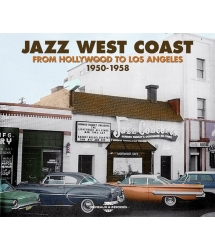
JAZZ WEST COAST
FROM HOLLYWOOD TO LOS ANGELES 1950 - 1958
CD Version
€29.99
Digital Version
€19.95
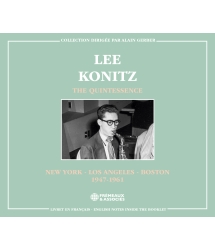
Lee Konitz - The Quintessence
New York - Los Angeles - Boston 1947-1961
CD Version
€29.99
Digital Version
€19.95
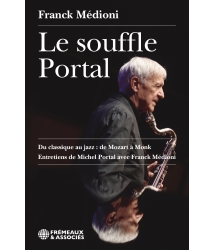
Le souffle Portal - Du classique au jazz : de Mozart à Monk
Entretiens de Michel Portal avec Franck Médioni
CD Version
€20.00
Digital Version
€13.99
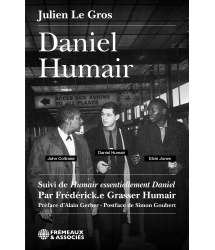
Daniel Humair
Suivi de Humair essentiellement Daniel - par...
CD Version
€28.00
Digital Version
€19.99
Eric Dolphy - The Quintessence
Los Angeles - New York – Copenhague 1949-1961
CD Version
€29.99
Digital Version
€19.95
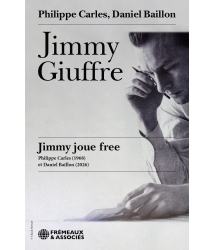
Jimmy Giuffre, Jimmy Joue Free
Un livre de Philippe Carles (1968), Daniel Baillon...
CD Version
€19.50
Digital Version
€12.99
Benefit a discount
on this product
Jimmy Giuffre : Livre + CD
Le livre et le coffret CD consacrés à Jimmy...
CD Version
€47.99
Digital Version
€30.99
To Discover
JAZZ WEST COAST
FROM HOLLYWOOD TO LOS ANGELES 1950 - 1958
CD Version
€29.99
Digital Version
€19.95
Lee Konitz - The Quintessence
New York - Los Angeles - Boston 1947-1961
CD Version
€29.99
Digital Version
€19.95
Le souffle Portal - Du classique au jazz : de Mozart à Monk
Entretiens de Michel Portal avec Franck Médioni
Paper Version
€20.00
Digital Version
€13.99
Daniel Humair
Suivi de Humair essentiellement Daniel - par Frédérick.E...
Paper Version
€28.00
Digital Version
€19.99
Eric Dolphy - The Quintessence
Los Angeles - New York – Copenhague 1949-1961
CD Version
€29.99
Digital Version
€19.95
Jimmy Giuffre, Jimmy Joue Free
Un livre de Philippe Carles (1968), Daniel Baillon (2026)
Paper Version
€19.50
Digital Version
€12.99
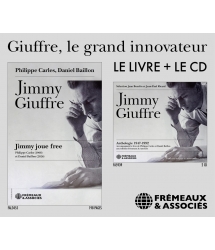
Benefit a discount
on this product
Jimmy Giuffre : Livre + CD
Le livre et le coffret CD consacrés à Jimmy Giuffre
CD Version
€47.99
Digital Version
€30.99
Press
« Philippe Carles, directeur de Jazz Magazine de 1971 à 2006, co directeur du Nouveau Dictionnaire du Jazz (collection Bouquins, édition Robert Laffont, 2011), est l'auteur d'un article intitulé " Jimmy joue free " paru dans le numéro de mai 1968 de Jazz Magazine. Cet article résumant la carrière et la création de Jimmy Giuffre de 1968 à 1921 (l'auteur remonte le temps) n'avait jamais été réédité depuis.Grâce aux éditions Frémeaux, cet article fondamental est réédité accompagné d'une étude de Daniel Baillon intitulé " Jimmy joue free 2 " sur la période suivante de 1968 à 2008, la carrière de Jimmy Giuffre s'arrêtant en 1993 à cause de la maladie de Parkinson.La musique parle d'elle même, selon une expression chère à Miles Davis. Le livre est donc accompagné d'une compilation en 2 CD de l'oeuvre de Jimmy Giuffre allant de 1947 à 1992, des Four Brothers composition qui le rendit immédiatement riche et célèbre jusqu'au dialogue d'oiseaux avec son disciple saxophoniste et clarinettiste français, marseillais même, André Jaume (1940).Comme Ornette Coleman, père du Free Jazz, Jimmy Giuffre était natif du Texas et ancré dans le Blues, le Folk, la Country Music. Lui aussi sut en sortir mais d'une façon plus discrète, moins tempêtueuse. Par définition, il existe plusieurs voies pour la Liberté. Jimmy joue free et Jimmy joue frais.(...)Grâce à Philippe Carles d'abord, à Daniel Baillon ensuite, vous saurez tout de l'oeuvre et de la vie de Jimmy Giuffre, de 1921 à 1968 puis au delà car sa mort en 2008 n'arrête pas son oeuvre. D'abord, parce que les enregistrements sont disponibles, ensuite parce que ses compositions sont toujours jouées. La discopgraphie complète du Maestro et de ses disciples se trouve à la fin du livre.C'est écrit avec plus de flamme par Philippe Carles, avec plus de précision par Daniel Baillon. L'ensemble se lit et s'écoute en parallèle. Au fait, Giuffre est un nom italien. Lors d'une tournée en Italie, Jimmy Giuffre découvrit qu'un homonyme, Capo de la Mafia, venait d'être arrêté par la police. Plus honorable, les éditions Giuffrè à Milan spécialisées dans le droit et la gestion. Une maison sérieuse achetée par la maison française Francis Lefebvre. Spéciale dédicace pour un fidèle lecteur, avocat d'affaires. Rien à ajouter. »Par Guillaume LAGREE – LE JARS JASE JAZZ
« Complément indissociable de l’ouvrage “Jimmy Joue Free” chroniqué ICI, ce coffret deux CDs illustre autant qu’il la restitue la trajectoire créative de ce franc-tireur de Giuffre, si farouchement attaché à sa vision défricheuse et libératrice qu’il fit front des contraintes commerciales, jusqu’à en payer le prix par dix années d’éloignement des studios. Depuis ses débuts auprès de Woody Herman (la toute première version enregistrée de son “Four Brothers” en 1947), suivie de “Fugue” en 1953 (extrait du LP “West Coast Sound”), “Nutty Pine” (de “Four Brothers”), “Flip” et “Pas De Trois” un an plus tard (de “The Three And The Two”), en passant par les trios remarquables qu’il forma à Los Angeles en 59 avec le guitariste Jim Hall et les contrebassistes Ralph Peña, Ray Brown et Red Mitchell, puis avec le pianiste Paul Bley et Steve Swallow de 1961 à 1963 sur la côte Est (tous dûment représentés sur le second CD), jusqu’à la plénitude de sa collaboration avec notre compatriote, le clarinettiste basse André Jaume, de 1987 à 1992, ce recueil n’en assume pas moins un hiatus d’un quart de siècle (probablement lié à des questions juridiques), au cours duquel Giuffre s’intéressa notamment à la musique électronique, et dirigea même un quartette électrique comprenant le claviériste Pete Levin, le bassiste Bob Nieske et le batteur Randy Kaye. Il n’empêche que dès “So Low” (jeu de mots désignant une plage qu’il interprète intégralement seul à la clarinette) et “The Side Pipers” (tous deux sur l’album “The Jimmy Giuffre Clarinet” de 1956, ainsi que l’orchestral “Movement 1” (avec le Südwestfunk Orchestra de Baden-Baden) en 1960, on distingue les prémisses fondateurs d’une démarche artistique où se croisent avant-garde et héritage baroque européen, selon une approche toutefois moins ouvertement fédérative que chez Dave Brubeck. L’occasion précieuse de consacrer une écoute nouvelle et empreinte de gratitude envers un créateur chez qui innovation ne rimait jamais avec hermétisme, et intelligence et érudition ne s’opposaient pas davantage à l’émotion. »Par Patrick DALLONGEVILLE - PARIS MOVE
Tracklist
-
PisteTitleMain artistAutorDurationRegistered in
-
1Four BrothersJimmy Giuffre, Woody HermanJimmy Giuffre00:03:211947
-
2Four MothersJimmy Giuffre, Shorty RogersJimmy Giuffre00:02:501951
-
3FugueJimmy Giuffre, Shelly ManneJimmy Giuffre00:02:471953
-
4Four BrothersJimmy GiuffreJimmy Giuffre00:03:141954
-
5Nutty PineJimmy GiuffreJimmy Giuffre00:03:121954
-
6FlipJimmy Giuffre, Shelly ManneShelly Manne00:02:581954
-
7Pas de troisJimmy Giuffre, Shelly ManneJimmy Giuffre00:04:361954
-
8Abstract n°1Jimmy Giuffre, Shelly ManneJimmy Giuffre00:03:351954
-
9A Ring Tail MonkeyJimmy GiuffreJimmy Giuffre00:02:341955
-
10Finger SnapperJimmy GiuffreJimmy Giuffre00:02:361955
-
11The LeprechaunJimmy GiuffreJimmy Giuffre00:06:351955
-
12So LowJimmy GiuffreJimmy Giuffre00:02:471956
-
13The Side PipersJimmy GiuffreJimmy Giuffre00:05:061956
-
14Gotta DanceJimmy GiuffreJimmy Giuffre00:02:311956
-
15The Train and the RiverJimmy GiuffreJimmy Giuffre00:03:331956
-
16It’s YouJimmy GiuffreMeredith Willson00:03:341958
-
17The Lonely TimeJimmy GiuffreJimmy Giuffre00:03:561958
-
18The Swamp PeopleJimmy GiuffreJimmy Giuffre00:05:351958
-
19Four BrothersJimmy GiuffreJimmy Giuffre00:03:231958
-
20Pony Express (Western Suite pt.1)Jimmy GiuffreJimmy Giuffre00:05:551958
-
PisteTitleMain artistAutorDurationRegistered in
-
1PrincessJimmy GiuffreJimmy Giuffre00:04:211959
-
2Time MachineJimmy GiuffreJimmy Giuffre00:04:401959
-
3A DreamJimmy GiuffreJimmy Giuffre00:02:081959
-
4Time EnoughJimmy GiuffreJimmy Giuffre00:02:431959
-
5Movement 1Jimmy GiuffreJimmy Giuffre00:06:241960
-
6Jesus MariaJimmy GiuffreCarla Bley00:06:161961
-
7Cry, WantJimmy GiuffreJimmy Giuffre00:05:121961
-
8VentureJimmy GiuffreJimmy Giuffre00:03:541961
-
9WhirrrJimmy GiuffreJimmy Giuffre00:04:511961
-
10SonicJimmy GiuffreJimmy Giuffre00:04:461961
-
11The GamutJimmy GiuffreJimmy Giuffre00:04:391961
-
12ThreeweJimmy GiuffreJimmy Giuffre00:04:131962
-
13YggdrasillJimmy GiuffreJimmy Giuffre00:02:331962
-
14EiffelJimmy GiuffreJimmy Giuffre00:04:491987
-
15Dinky Toys 1Jimmy GiuffreAndré Jaume00:03:031987
-
16CollJimmy GiuffreJimmy Giuffre00:03:181991
-
17Whispered MomentsJimmy GiuffreJimmy Giuffre00:02:451991
-
18Little Dog RunningJimmy GiuffreAndré Jaume00:04:191992
Booklet
Jimmy Giuffre
Jimmy joue free
Adapted from the French text by Jean-Paul Ricard
Before developing his theory of “implicit tempo” and opening new paths for musical experimentation, Jimmy Giuffre first gained recognition through a historic composition and arrangement, “Four Brothers,” written for Woody Herman’s orchestra. Ironically, Giuffre himself did not appear in the celebrated saxophone section featured on that recording. Born James Peter “Jimmy” Giuffre in Dallas, Texas, he joined Herman’s band shortly afterward, in 1949, drawing on experience gained with the ensembles of Boyd Raeburn, Gene Roland, Jimmy Dorsey, and Buddy Rich, as well as eight years of study with composer and teacher Wesley La Violette in Los Angeles.
It was on the American West Coast that Giuffre developed his artistic identity. From the early 1950s onward, he demonstrated a strong commitment to musical freedom and resisted being confined by conventional jazz practices. While remaining an accomplished professional musician—performing with Howard Rumsey’s Lighthouse All Stars, Shorty Rogers, and Shelly Manne—he simultaneously explored new musical directions that anticipated elements of what would later be called free jazz. These projects also allowed him to highlight the instrument with which he had first begun his musical journey: the clarinet.
The clarinet played a central role in Giuffre’s early recordings as a leader for Capitol Records in 1954 and 1955. Albums such as Four Brothers and Tangents in Jazz introduced many of the ideas that would define his music: unconventional instrumentation, flexible forms, and a frequent absence of piano. These choices became even more evident in 1956 with The Jimmy Giuffre Clarinet, which opens with a solo clarinet blues accompanied only by the sound of Giuffre’s foot keeping time.
Although he was a gifted arranger, Giuffre found his most distinctive voice in the trio format. His groups with guitarist Jim Hall and bassist Ralph Peña, and later with Hall and valve trombonist Bob Brookmeyer, became laboratories for his musical ideas. Drawing inspiration from his Texas roots, folk traditions, country music, and the vast landscapes of rural America, Giuffre created a sound world unlike anything else in modern jazz. One of the trio’s best-known pieces, The Train and the River, became especially famous after its performance at the Newport Jazz Festival was featured in Bert Stern’s film Jazz on a Summer’s Day.
Within these trios, Giuffre refined his belief that the choice of musicians mattered more than the choice of instruments. The absence of drums was not a rejection of rhythm; rather, he believed that each musician should develop an internal pulse and contribute it to the collective sound. For Giuffre, ensemble rhythm emerged from the combination of individual rhythms. This philosophy, combined with his interest in counterpoint and atonality, formed the basis of a personal musical theory that he later taught at the Lenox School of Jazz.
By the late 1950s, Giuffre continued to expand his musical horizons through recordings for Verve, while also creating sophisticated arrangements for artists such as Sonny Stitt, Herb Ellis, Anita O’Day, and Lee Konitz. His own work increasingly emphasized collective improvisation and interaction among musicians. At the same time, he pursued composition, producing works such as Piece for Clarinet and String Orchestra, reflecting his admiration for modern classical composers including Berg, Schoenberg, Varèse, and Debussy.
A major turning point came in 1961 with the formation of a new trio featuring pianist Paul Bley and bassist Steve Swallow. Their albums Fusion and Thesis are now regarded as masterpieces. Combining written passages with free improvisation, unison lines with intricate counterpoint, and structure with spontaneity, the trio achieved an unprecedented balance between freedom and form. Giuffre, performing exclusively on clarinet, explored new musical territory with remarkable confidence and subtlety.
This approach reached its fullest expression in Free Fall (1962), recorded for Columbia and often considered Giuffre’s most accomplished work. Yet its radical nature proved challenging for some listeners, and audiences were not always receptive to his increasingly abstract music.
After Free Fall, Giuffre largely disappeared from the recording scene for nearly a decade. During this period he devoted himself to teaching, composing, and participating in avant-garde artistic projects. In the 1970s he became interested in electronic music and synthesizers, working closely with keyboardist Pete Levin. New recordings followed, as did renewed collaborations with Paul Bley.
In the 1980s, influenced in part by the innovations of Weather Report, Giuffre led an electric quartet and continued to record extensively. He also developed a fruitful partnership with French saxophonist André Jaume, performing throughout Europe. In 1989, the historic trio with Bley and Swallow was reunited, resulting in a final series of valuable recordings and concerts.
As Parkinson’s disease gradually limited his activity, Giuffre withdrew from public life. He died on April 20, 2008. Yet his legacy remains profound. A visionary clarinetist, saxophonist, composer, and thinker, Jimmy Giuffre spent his entire career expanding the possibilities of jazz.
© Frémeaux & Associés 2026
CD 1 (1947-1958)
1. FOUR BROTHERS (Jimmy Giuffre) Columbia 38304
2. FOUR MOTHERS (Jimmy Giuffre) Capitol 15765
3. FUGUE (Jimmy Giuffre) Contemporary C3507
4. FOUR BROTHERS (Jimmy Giuffre) Capitol HH/T459
5. NUTTY PINE (Jimmy Giuffre) Capitol HH/T459
6. FLIP (Shelly Manne) Contemporary C2516
7. PAS DE TROIS (Jimmy Giuffre) Contemporary C2516
8. ABSTRACT N°1 (Jimmy Giuffre - Shelly Manne - Shorty Rogers) Contemporary C2516
9. A RING TAIL MONKEY (Jimmy Giuffre) Capitol HH/T459
- FINGER SNAPPER (Jimmy Giuffre) Capitol H/T634
- THE LEPRECHAUN (Jimmy Giuffre) Capitol H/T634
- SO LOW (Jimmy Giuffre) Atlantic LP1238
- THE SIDE PIPERS (Jimmy Giuffre) Atlantic LP1238
- GOTTA DANCE ( Jimmy Giuffre) Atlantic LP1254
- THE TRAIN AND THE RIVER (Jimmy Giuffre) Atlantic LP1254
- IT’S YOU (Meredith Willson) Atlantic LP1276
- THE LONELY TIME (Jimmy Giuffre) Atlantic LP1282
- THE SWAMP PEOPLE (Jimmy Giuffre) Atlantic LP1282
- FOUR BROTHERS (Jimmy Giuffre) Atlantic LP1295
- PONY EXPRESS (Western Suite pt.1) (Jimmy Giuffre) Atlantic LP1330
(1) Woody Herman & His Orchestra – “The Second Herd” : Bernie Glow, Stan Fishelson, Marty Markowitz, Shorty Rogers, Ernie Royal (tp), Earl Swope, Bob Swift, Oliver Wilson (tb), Woody Herman (as, cl), Sam Marowitz, Herbie Steward (as), Zoot Sims, Stan Getz (ts), Serge Chaloff (bs), Fred Otis (p), Gene Sargent (g), Walter Yoder (b), Don Lamond (dm), Jimmy Giuffre (arr). Hollywood (CA). 27/12/1947.
(2) Shorty Rogers & His Giants : Milton “Shorty” Rogers (tp), John Graas (fhn), Gene Englund (tu), Art Pepper (as), Jimmy Giuffre (ts, arr), Hampton Hawes (p), Don Bagley (b), Shelly Manne (dm). Los Angeles (CA), 08/10/1951.
(3) Shelly Manne & His Men : Bob Enevoldsen (vtb), Bud Shank (as), Bob Cooper (ts), Jimmy Giuffre (bs, arr), Marty Paich (p), Joe Mondragon (b), Shelly Manne (dm). LA, 20/07/1953. LP West Coast Sound.
(4-5) Jimmy Giuffre : Shorty Rogers (flhn), Jack Sheldon (tp), Bob Enevoldsen (vtb, b on 5), Jimmy Giuffre (cl, ts), Bud Shank (as), Ralph Pena (b), Shelly Manne (dm). LA, 15/04/1954. LP Four Brothers.
(6-8) Shelly Manne : Shorty Rogers (tp), Jimmy Giuffre (cl, ts, bs), Shelly Manne (dm). Hollywood (CA), 10/09/1954. LP The Three and the Two.
(9) Jimmy Giuffre : Jack Sheldon (tp), Jimmy Giuffre (ts), Ralph Pena (b), Artie Anton (dm). LA, 31/01/1955. LP Four Brothers.
(10-11) The Jimmy Giuffre Four : Same ; Giuffre (cl, bs). LA, 07/06/1955. LP Tangents of Jazz.
(12) The Jimmy Giuffre Clarinet : Jimmy Giuffre (cl solo). LA, 22/03/1956. LP The Jimmy Giuffre Clarinet.
(13) Jimmy Giuffre (cl), Buddy Collette (cl, fl), Harry Klee (bcl, fl), Bud Shank (as, alto fl), Jimmy Rowles (p), Shelly Manne (dm). Same date. LP The Jimmy Giuffre Clarinet.
(14-15) The Jimmy Giuffre Trio : Jimmy Giuffre (cl, ts, bs), Jim Hall (g), Ralph Pena (b). New York City, 02/12/1956. LP The Jimmy Giuffre 3.
(16) Jimmy Giuffre : Nick Travis, Phil Sunkel, Joe Wilder (tp), Jimmy Giuffre, Al Cohn, Ed Wasserman (ts), Sol Schlinger (bs), Wendell Marshall (b), Ed Shaughnessy (dm). NYC, 03/01/1958. LP The Music Man.
(17-18) The Jimmy Giuffre 3 : Bob Brookmeyer (vtb), Jimmy Giuffre (cl, bs), Jim Hall (g). NYC, 20-23/01/1958. LP Travlin’ Light.
(19) Jimmy Giuffre : Bob Brookmeyer (vtb, p), Jimmy Giuffre (ts x 4), Jim Hall (g). NYC, 01/09/1958. LP The Four Brothers Song.
(20) Jimmy Giuffre : Same ; Jimmy Giuffre (ts, bs). NYC, 03/12/1958. LP Western Suite.
CD 2 (1959-1962)
1. PRINCESS (Jimmy Giuffre) Verve MGV8307
2. TIME MACHINE (Jimmy Giuffre) Verve MGV8307
3. A DREAM (Jimmy Giuffre) Verve MGV8337
4. TIME ENOUGH (Jimmy Giuffre) Verve MGV8337
5. MOVEMENT 1 (Jimmy Giuffre) Verve MGV8395
6. JESUS MARIA (Carla Bley) Verve MGV8397
7. CRY, WANT (Jimmy Giuffre) Verve MGV8397
8. VENTURE (Jimmy Giuffre) Verve MGV8397
9. WHIRRR (Jimmy Giuffre) Verve MGV8402
- SONIC (Jimmy Giuffre) Verve MGV8402
- THE GAMUT (Jimmy Giuffre) Verve MGV8402
- THREEWE (Jimmy Giuffre) Columbia CL1964
- YGGDRASILL (Jimmy Giuffre) Columbia CL1964
(1987-1992)
- EIFFEL (Jimmy Giuffre) CELP C.6
- DINKY TOYS I (André Jaume) CELP C.6
- COLL (Jimmy Giuffre) CELP C.26
- WHISPERED MOMENTS (Jimmy Giuffre) CELP C.26
- LITTLE DOG RUNNING (André Jaume) CELP CEL42
(1-2) The Jimmy Giuffre 3 : Jimmy Giuffre (cl, ts), Jim Hall (g), Red Mitchell (b). Los Angeles, 01/1959. LP Seven Pieces.
(3-4) The Jimmy Giuffre 3 : Jimmy Giuffre (cl, ts), Jim Hall (g), Ray Brown (b). New York City, 07/08/1959. LP The Easy Way.
(5) Jimmy Giuffre : Jimmy Giuffre (cl), acc. by string group of the Südwestfunk Orchestra, Wolfram Röhrig (dir). Baden-Baden (D), 03/1960. LP Piece for clarinet and string orchestra.
(6-8) The Jimmy Giuffre 3 : Jimmy Giuffre (cl), Paul Bley (p), Steve Swallow (b). NYC, 27/01-01/03/1961. LP Fusion.
(9-11) The Jimmy Giuffre 3 : Same. NYC, 07-08/08/1961. LP Thesis.
(12) Jimmy Giuffre : Same. NYC, 07/10/1962. LP Free Fall.
(13) Jimmy Giuffre (cl solo). NYC, 01/11/1962. LP Free Fall.
(1987-1992)
(14-15) Jimmy Giuffre/André Jaume : Jimmy Giuffre (cl on 14, ss on 15), André Jaume (bcl on 14, ts on 15). Paris, 08/11/1987. CD Eiffel.
(16-17). Same. Jimmy Giuffre (cl on 16, ss on 17), André Jaume (bcl on 16, ts on 17). Southbury (Conn.), 06/09/1991. CD River Station.
(18) Same. Jimmy Giuffre (cl), André Jaume (bcl). Marseille, 06 or 07/12/1992. CD Jimmy Giuffre Talks & Plays.
Remerciements à André Jaume
Disques originaux : collection Jean-Paul Ricard.
Toute la collection Classical and contemporary jazz
View all products
Santos Chillemi & Compagnie
Live at the Leipzig Opera, 1992
CD Version
€19.99
Digital Version
€9.95
John Williams - Intégrale 1957-1962
Jazz et musiques de films
CD Version
€29.99
Digital Version
€19.95
Jimmy Giuffre- Anthologie
1947-1992
CD Version
€29.99
Digital Version
€19.95
O Sinto
Sébastien Kauffmann
CD Version
€19.99
Digital Version
€9.95