
 |
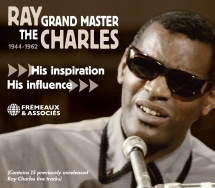
Ray Charles - The Grand Master His Inspiration / His Influence 1944-1962 |
- Our Catalog
- Philosophy
- Philosophers of the 20th century and today
- History of Philosophy (PUF)
- Counter-History and Brief Encyclopedia by Michel Onfray
- The philosophical work explained by Luc Ferry
- Ancient thought
- Thinkers of yesterday as seen by the philosophers of today
- Historical philosophical texts interpreted by great actors
- History
- Books (in French)
- Social science
- Historical words
- Audiobooks & Literature
- Our Catalog
- Jazz
- Blues
- Rock - Country - Cajun
- French song
- World music
- Africa
- France
- Québec / Canada
- Hawaï
- West Indies
- Caribbean
- Cuba & Afro-cubain
- Mexico
- South America
- Tango
- Brazil
- Tzigane / Gypsy
- Fado / Portugal
- Flamenco / Spain
- Yiddish / Israel
- China
- Tibet / Nepal
- Asia
- Indian Ocean / Madagascar
- Japan
- Indonesia
- Oceania
- India
- Bangladesh
- USSR / Communist songs
- World music / Miscellaneous
- Classical music
- Composers - Movie Soundtracks
- Sounds of nature
- Our Catalog
- Youth
- Philosophy
- News
- How to order ?
- Receive the catalog
- Manifesto
- Dictionnary
My Shopping Cart
Total (tax incl.)
€0.00
Subtotal
Free
Shipping
Total product(s)
0 items
Shipping
Free
Selected for you
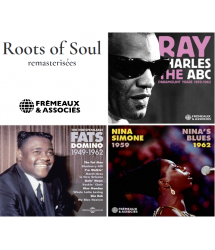
Roots of Soul - Remastered
RAY CHARLES, FATS DOMINO, NINA SIMONE
CD Version
€119.00
Digital Version
€79.95
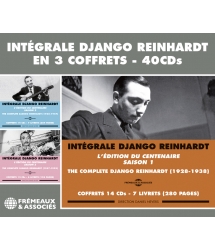
Django Reinhardt - The 40 CDs from the Complete (Season 1, 2 and 3)
THE COMPLETE WORKS 1928-1938THE COMPLETE WORKS...
CD Version
€199.00
Digital Version
€149.95
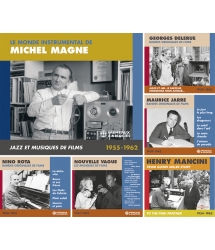
Composers - The 6 CD sets offer
Michel Magne, Nino Rota, Georges Delerue, Maurice Jarre,...
CD Version
€134.00
Digital Version
€99.95
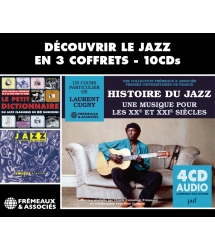
To discover Jazz (Includes an audiobook in French)
UN COURS PARTICULIER DE LAURENT CUGNYLA QUINTESSENCE DU JAZZ
CD Version
€89.00
Digital Version
€55.95
Selected for you
The leading publisher of musical heritage and the Sound Library



My Shopping Cart
Total (tax incl.)
€0.00
Subtotal
Free
Shipping
Total product(s)
0 items
Shipping
Free
Selected for you
Roots of Soul - Remastered
RAY CHARLES, FATS DOMINO, NINA SIMONE
CD Version
€119.00
Digital Version
€79.95
Django Reinhardt - The 40 CDs from the Complete (Season 1, 2 and 3)
THE COMPLETE WORKS 1928-1938THE COMPLETE WORKS...
CD Version
€199.00
Digital Version
€149.95
Composers - The 6 CD sets offer
Michel Magne, Nino Rota, Georges Delerue, Maurice Jarre,...
CD Version
€134.00
Digital Version
€99.95
To discover Jazz (Includes an audiobook in French)
UN COURS PARTICULIER DE LAURENT CUGNYLA QUINTESSENCE DU JAZZ
CD Version
€89.00
Digital Version
€55.95
Selected for you
- Our Catalog
- Philosophy
- Philosophers of the 20th century and today
- History of Philosophy (PUF)
- Counter-History and Brief Encyclopedia by Michel Onfray
- The philosophical work explained by Luc Ferry
- Ancient thought
- Thinkers of yesterday as seen by the philosophers of today
- Historical philosophical texts interpreted by great actors
- History
- Books (in French)
- Social science
- Historical words
- Audiobooks & Literature
- Our Catalog
- Jazz
- Blues
- Rock - Country - Cajun
- French song
- World music
- Africa
- France
- Québec / Canada
- Hawaï
- West Indies
- Caribbean
- Cuba & Afro-cubain
- Mexico
- South America
- Tango
- Brazil
- Tzigane / Gypsy
- Fado / Portugal
- Flamenco / Spain
- Yiddish / Israel
- China
- Tibet / Nepal
- Asia
- Indian Ocean / Madagascar
- Japan
- Indonesia
- Oceania
- India
- Bangladesh
- USSR / Communist songs
- World music / Miscellaneous
- Classical music
- Composers - Movie Soundtracks
- Sounds of nature
- Our Catalog
- Youth
- Philosophy
- News
- How to order ?
- Receive the catalog
- Manifesto
- Dictionnary
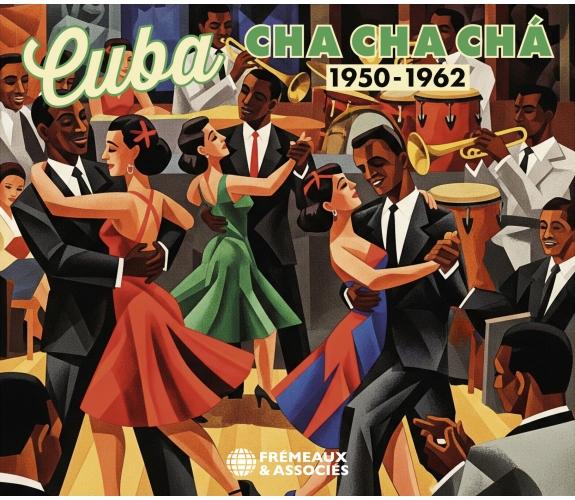
Cuba - cha cha chá 1950-1962
Ref.:
FA5925
René Touzet • Celia Cruz • Mongo Santamaría • Tito Puente,…
Ref.: FA5925
EAN : 3561302592527
Artistic Direction : BRUNO BLUM
Label : FREMEAUX & ASSOCIES
Total duration of the pack : 2 hours 11 minutes
Nbre. CD : 2
Select a version :
Thanks to this pack, you get a 20.00 %
discount or €9.99
This product is already in your shopping cart
A digital version of this product is already in your shopping cart
Shipped within 24 to 48 hours.
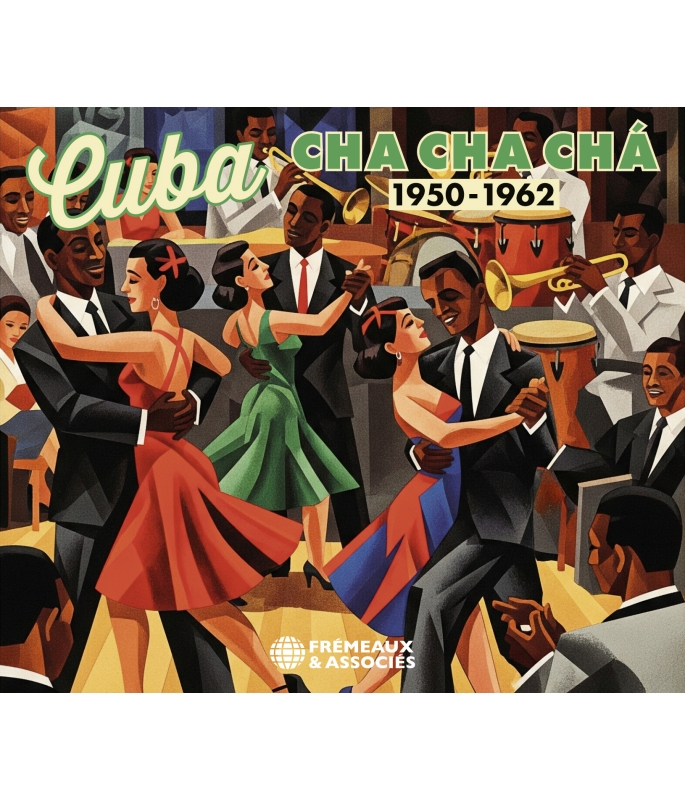
René Touzet • Celia Cruz • Mongo Santamaría • Tito Puente,…
Presentation
Derived from Cuban danzón, in turn cha-cha-chá upsurged in the wake of 1950s mambo and turned out even more popular. A fabulous, danceable, influential, international music, it produced the indispensable original version of Santana’s famous hit “Oye Como Va” for example, as well as “Chanchullo”, the Cuban piece that inspired it (both included here). Bruno Blum recounts the birth of cha-cha-chá and comments on it — a peak in Cuban music, before the 1959 revolution that led so many Cuban musicians fleeing to the USA. The golden age of cha-cha-chá is typical of exchanges between Cuban and American musicians such as Tito Puente, who soon made this style their own. It is, however, the authentic, original Cuban sound that is prioritised here.
Patrick FRÉMEAUX
DISC 1 – FROM DANZÓN, BOLERO AND MAMBO TO CHA CHA CHÁ : ¿QUE TE PARECE CHOLITO? - BENY MORÉ/PÉREZ PRADO • NO SÉ LO QUE LE PASA - CELIA CRUZ • MIGUEL - CONJUNTO CASINO • LA VERDE PALMA REAL - ORQUESTA AMÉRICA • EL CHA CHA CHÁ DE LOS PARQUEADORES - FAJARDO Y SU ESTRELLAS. THE GOLDEN AGE OF CHA CHA CHÁ : NEGRO MI CHA CHA CHÁ - FACUNDO RIVERO • CHA CHA CHÁ BAR - JULIO GUTIÉRREZ • DE LA RUMBA AL CHA CHA CHÁ - BENY MORÉ • ST. JAMES INFIRMARY - PÉREZ PRADO • MUÑECAS DEL CHA CHA CHÁ - CELIA CRUZ • CHA CHA CHÁ - BENY MORÉ • YERBERO MODERNO - CELIA CRUZ • EL LOCO CHA CHÁ - RENÉ TOUZET • EL RITMO DEL CHA CHA CHÁ - CUARTETO CARLOS FAXAS • CHA CHÁ GÜERE - CELIA CRUZ • LAS PEPILLAS DEL CHA CHA CHÁ - CUARTETO CARLOS FAXAS • EL SABROSON - CUARTETO CARLOS FAXAS • TODOS BAILAN MI CHA CHA CHÁ - RUBEN GONZALES • MI AMOR BUENAS NOCHES - CELIA CRUZ & CARLOS ARGENTINO • TRES BESITOS - EL CONJUNTO CASINO • DOS ALMAS - EL CONJUNTO CASINO • LOS TRES VIOLINES - ORQUESTA AMÉRICA DEL 55.
DISC 2 – CHA CHA CHÁ - WORLD MUSIC : CHANCHULLO [OYE CÓMO VA] - ANTONIO ARCAÑO Y SUS MARAVILLAS • LA QUIJA - EL CONJUNTO CASINO • GOZA MI TROMPETA – CACHAO • NO TE QUEDES MIRANDO - CELIO GONZÁLEZ • QUE MALA FUE - SEXTETO LA PLAYA • LOS RITMOS CAMBIAN - CELIA CRUZ • SHOOBIE DOO CHA CHÁ - LUIS BARRETO • SANGANDONGO - SEXTETO LA PLATA • ASI QUIERO MORIR - CELIA CRUZ • CHA CHÁ DE LOS POLLOS - WALFREDO DE LOS REYES • MI CHIQUITA QUIERE BEMBE - TITO PUENTE • SEPARALA TAMBIEN - ORQUESTA ARAGON • CHACHÁGUERE - PÍO LEYVA • LA MALANGA - EL CONJUNTO CASINO • CHA CHÁ ROCK - MONGO SANTAMARÍA • LA RUÑIDERA - LA PLATA SEXTETTE • MISS PATTI CHA CHÁ - MONGO SANTAMARÍA • CUBITA CUBERA - EL CONJUNTO CASINO • THE CATSKILL CHA CHÁ - SEXTETO LA PLATA • THE HOLLYWOOD CHA CHÁ - SEXTETO LA PLATA • ZAMBULLO - SEXTETO LA PLAYA • OYE CÓMO VA - TITO PUENTE.
DIRECTION COLLECTION : BRUNO BLUM
To Discover
CUBA SON - LES ENREGISTREMENTS FONDATEURS DU SON AFRO-CUBAIN 1926-1962
THE AFRO-CUBAN FOUNDING RECORDINGS BEFORE AND AFTER...
CD Version
€29.99
Digital Version
€19.95
CUBA JAZZ
JAM SESSIONS - DESCARGAS 1956-1961
CD Version
€29.99
Digital Version
€19.95
SANTERÍA, MYSTIC MUSIC FROM CUBA, 1939-1962
FOLK TRANCE POSSESSION - FON - YORÙBÁ - IGBO - BANTU...
CD Version
€29.99
Digital Version
€19.95
Benefit a discount
on this product
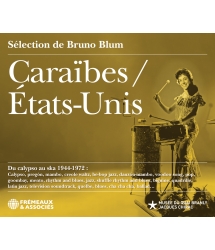
Caraïbes - Etats-Unis : Livre + CD
Le livre et le coffret CD Caraïbes-Etats-Unis,...
CD Version
€51.99
Digital Version
€35.95
To Discover
CUBA SON - LES ENREGISTREMENTS FONDATEURS DU SON AFRO-CUBAIN 1926-1962
THE AFRO-CUBAN FOUNDING RECORDINGS BEFORE AND AFTER THE...
CD Version
€29.99
Digital Version
€19.95
CUBA JAZZ
JAM SESSIONS - DESCARGAS 1956-1961
CD Version
€29.99
Digital Version
€19.95
SANTERÍA, MYSTIC MUSIC FROM CUBA, 1939-1962
FOLK TRANCE POSSESSION - FON - YORÙBÁ - IGBO - BANTU -
CD Version
€29.99
Digital Version
€19.95
Benefit a discount
on this product
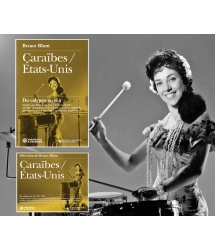
Caraïbes - Etats-Unis : Livre + CD
Le livre et le coffret CD Caraïbes-Etats-Unis, réalisés...
CD Version
€51.99
Digital Version
€35.95
Press
“Thirty years on from Buena Vista Social Club, vintage Cuban music still fascinates. This two CD release has three self-explanatory parts: From Danzón, Bolero And Mambo To Cha Cha Chá, The Golden Age Of Cha Cha Chá, and Cha Cha Chá – World Music, the latter taking up all of the second disc and looking at the impact of Cuban music internationally (mainly in America) following Cuba’s 1959 revolution. In the UK, strict-tempo ballroom dancing has perhaps prevented the music from being taken too seriously, but listen to the Beny Moré/ Pérez Prado opener, the percussion-heavy ‘¿Que Te Parece Cholito?’, combining older Danzón and the new mambo; by Celia Cruz’s ‘Cha Chá Güere’, things are getting really hot! Some readers may recognise the riff of ‘El Loco Cha Chá’, recorded by Havana-born René Touzet in 1956 and later appropriated for ‘Louie Louie’; also, ‘Chanchullo’ by Antonio Arcaño Y Sus Maravillas is the foundation for Santana’s much later ‘Oye Como Va’. Puerto Rican American Tito Puente’s 1962 version (an example of the international side), the direct inspiration, closes this attractive set.”By Norman DARWEN - RnR
« Mais où (et surtout comment) va-t-il donc pêcher tout ça? Musicologue émérite et averti, l’éminent Bruno Blum poursuit son inlassable exploration des racines de nos courants musicaux actuels. Directeur de collections chez Frémeaux & Co, il aligne déjà à son palmarès pas moins de 80 coffrets anthologiques, ainsi que quelques ouvrages faisant autorité (“Bob Marley & The Wailers 1967-1972/ Soul Revolution”, avec Roger Steffens et Leroy Jodie Pierson) chez les mêmes (chroniqué ICI), ou encore “Le Reggae” et “Le Rap Est Né En Jamaïque” au Castor Astral, tandis qu’il a récemment traduit dans notre langue “Et le Diable A Surgi – La Vraie Vie De Robert Johnson” de Bruce Conforth et Gayle Dean Wardlow, lui aussi chroniqué ICI). Après les récents “Roots Of Mambo” 1930-1950″, “Cuba In America 1939-1962” et “Caraïbes/ États-Unis – Du Calypso Au Ska” (ce dernier chroniqué ICI), c’est à la genèse d’un autre craze issue de La Havane qu’il consacre ce double CD (augmenté d’un copieux livret). Depuis les “Que Te Parece Cholito?” de Perez Prado et Beny Moré en 1950 et “No Sele Que Le Pasa” de Celia Cruz (tous deux encore fortement imprégnés de mambo, la vogue locale ayant précédé le cha-cha-chà) jusqu’au “Miss Pati Cha-Chà” de Mongo Santamaria en 1960, et au fameux “Oye Como Va” que finalisa Tito Puente en 1962 (d’après le “Chanchullo” originel de Cachao qu’avaient créé cinq ans plus tôt Arcaño y sus Maravillas), repris neuf ans plus tard par Santana avec le succès mondial que l’on sait, Blum déploie son exposé en 44 titres, interprétés dans leur jus épicé par des artistes aussi fameux que Réné Touzet, Julio Gutiérez, Orquesta América, El Conjunto Casino, Cachao, Ruben Gonzalez, Sexteto La Playa, Walfredo De Los Reyes et Orquesta Aragon. Le didactique “De La Rumba Al Cha-Cha-Chà” de Beny Moré côtoie ici l’irrésistible adaptation cubana du standard jazz “St. James Infirmary” par Perez Prado. Dans les années d’après-guerre qui précédèrent la révolution castriste (et le fiasco de la Baie des Cochons), le cha-cha-chà personnifia l’entente plus que cordiale qui présidait alors entre un Cuba gangréné par la mafia et son vaste voisin impérialiste (dont les élites en tout genre adoraient venir s’encanailler dans les casinos locaux, aux rythmes exotiques des Caraïbes). En dépit des embargos subséquents (et de-par l’exode qui en suivit), l’influence cubaine n’en persista pas moins à s’instiller parmi les musiques nord-américaines. À ce titre, il suffit d’écouter ici le “El Loco Cha-Chà” de René Touzet & His Orchestra, dont l’intro fit davantage qu’inspirer le “Louie Louie” de Richard Berry, et dont une foultitude de garage bands ne manquèrent ensuite de faire leur miel (parmi lesquels les Kinks débutants, jusqu’aux Stooges et autres Flamin’ Groovies). Remarquablement restaurés et mastérisés, ces deux CDs proposent donc un trip vers une période où le monde libre s’émancipait au son chaloupé de cuivres juteux et de percussions débridées, préfigurant ainsi la world-music qui déferlerait quelque temps plus tard. Caliente! »
Par Patrick DALLONGEVILLE – PARIS MOVE
“¡Gozada total para el baile y mucho «asucar»! Ya había otros dobles recopilatorios en el sello como «Cuba Son», Cuba Jazz» o «Cuba Santería». Más recientemente y con obligado paso por Orpheo también teníamos el «Caräibes – Etats-Unis» en el que había muy buena representación de la isla, cada vez más abandonada a su suerte, con Celia Cruz, Israel «Cachao» López, Pérez Prado o Tito Puente entre otros.
Todos ellos repitenen este nuevo doble recopilatorio con más de 2 horas de la mejor música cubana de siempre y centrada mayormente en el rico y bailable género del Cha Cha Chá. Un estilo derivado del danzón y el mambo cubanos que surgió en la década de los 50 cuando todavía se daba la relación musical entre cubanos y estadounidenses (o latinos que ya vivían allí).
El primer compacto lleva el título “From Danzón, Bolero And Mambo To Cha Cha Chá” y arranca con el brutal Beny Moré, acompañado por Pérez Prado y ese mítico y pegadizo ‘¿Qué Te Parece, Cholito?’. Un Beny Moré que repite con varios destacados temas más, pero el nombre que se lleva la palma es el de la gran Celia Cruz. Está claro que el crecimiento de este estilo y su difusión internacional tuvo mucho que ver con la gran versión que hizo Santana del ‘Oye Como Va’ de Tito Puente, temazo que no podía faltar aquí con su versión original para cerrar el rico y muy bailable doble compacto. Pero hay bastantes temas e intérpretes destacados más. Es el caso del clásico ‘St. James Infirmary’, por Pérez Prado; el ‘Yerbero Moderno’ o el ‘Los Ritmos Cambian’ (entre varios más, de Celia Cruz; el genial ‘Chanchullo (Oye Como Va)’ de Angtonio Arcaño, que abre el segundo compacto (titulado “Cha Cha Chá – World Music”); ‘Goza Mi Trompeta’ del brutal soplador Cachao; o ‘Mi Chiquita Quiere Bembre’ de Tito Puente. Además Mongo Santamaría, Pío Leyva o la legendaria Orquesta Aragón. ¡Genial y muy bailable panorámica!"
Por Txema MAÑERU - ORPHEO
Tracklist
-
PisteTitleMain artistAutorDurationRegistered in
-
1Que Te Parece Cholito?Beny Moré & Pérez PradoUlpiano Herrera00:03:111950
-
2No Sé Lo Que Le PasaCelia CruzJesus Gúerra00:03:031953
-
3MiguelConjunto CasinoRamon Cabrera00:02:541954
-
4La Verde Palma RealOrquesta AméricaNinon Mondéjar00:02:541955
-
5El Cha Cha Chá De Los ParqueadoresFajardo y Su EstrellasJosé Antonio Fajardo00:02:581955
-
6Negro Mi Cha Cha CháFacundo RiveroFacundo Rivero00:03:261955
-
7Cha Cha Chá BarJulio GutiérrezRoberto Collazo Peña aka bobby Collazo00:03:041955
-
8De La Rumba Al Cha Cha CháBeny MoréBartolomé Maximiliano Moré Gutiérrez aka Beny Moré00:02:271955
-
9St. James InfirmaryPérez PradoDonald Matthew Redman aka Don Redman00:02:521955
-
10Muñecas Del Cha Cha CháCelia CruzOscar Buffardique00:02:511955
-
11Cha Cha CháBeny MoréErnesto Duarte Brito aka Ernesto Duarte00:03:271955
-
12Yerbero ModernoCelia CruzNéstor Mili00:02:551955
-
13El Loco Cha CháRené TouzetRozendo Ruiz Quevedo aka Rozendo Ruiz, Jr.00:03:031955
-
14El Ritmo Del Cha Cha CháCuarteto Carlos FaxasJosé Antonio Mendez00:02:581955
-
15Cha Chá GüereCelia CruzLuis Reyes Bacallao aka Luis Reyes00:02:371956
-
16Las Pepillas Del Cha Cha CháCuarteto Carlos FaxasCésar Portillo de la Luz00:03:041956
-
17El SabrosonCuarteto Carlos FaxasCésar Portillo de la Luz00:03:151956
-
18Todos Bailan Mi Cha Cha CháRuben GonzalesAntonio Sánchez Reyes00:02:561957
-
19Mi Amor Buenas NochesCelia Cruz & Carlos ArgentinoRoberto Fuentes00:02:261956
-
20Tres BesitosEl Conjunto CasinoWalfrido Guevara Navarro aka Walfrido Guevara00:03:061957
-
21Dos AlmasEl Conjunto CasinoDon Fabian00:02:531957
-
22Los Tres ViolinesOrquesta América Del 55Antonio Sánchez Reyes aka Antonio Sánchez00:03:001957
-
PisteTitleMain artistAutorDurationRegistered in
-
1Chanchullo (Oye Cómo Va)Antonio Arcaño y Sus MaravillasIsrael López aka Cachao00:02:521957
-
2La QuijaEl Conjunto CasinoJorge Zamora Montalvo aka Jorge Zamora00:03:091957
-
3Goza Mi TrompetaCachaoOsvaldo Estivill00:03:001957
-
4No Te Quedes MirandoCelio GonzálezHumberto Jauma Peñalver aka Humberto Jauma00:02:411957
-
5Que Mala FueSexteto La PlayaChivirico Dávila aka Rafael Dávila00:03:081957
-
6Los Ritmos CambianCelia CruzJustiniano Barreto Blanco aka Justí Barreto00:02:561958
-
7Shoobie Doo Cha CháLuis BarretoLuis Barreto00:02:531958
-
8SangandongoSexteto La PlataIgnacio Arsenio Travieso Scull aka Arsenio Rodríguez00:02:271958
-
9Así Quiero MorirCelia CruzOneida Andrada00:02:071958
-
10Cha Chá De Los PollosWalfredo de Los ReyesErnesto Antonio Puente Jr. aka Tito Puente00:02:461958
-
11Mi Chiquita Quiere BembeTito PuenteErnesto Antonio Puente Jr. aka Tito Puente00:03:571958
-
12Separala TambiénOrquesta AragonJosé Vivanco Sánchez Hecheverría as José «Pepe» Sánchez00:02:441959
-
13ChacháguerePío LeyvaSeverino Ramos Betancourt aka Severino Ramos00:01:591960
-
14La MalangaEl Conjunto CasinoRosendo Hernández Padrón aka Rosendo Rosell00:02:591960
-
15Cha Chá RockMongo SantamaríaRamón Santamaría Rodríguez aka Mongo Santamaría00:03:491960
-
16La RuñideraLa Plata SextetteAlejandro Rodriguez00:02:291960
-
17Miss Patti Cha CháMongo SantamaríaRamón Santamaría Rodríguez aka Mongo Santamaría00:04:181960
-
18Cubita CuberaEl Conjunto CasinoRosendo Hernández Padrón aka Rosendo Rosell00:03:301960
-
19The Catskill Cha CháSexteto La PlataRafael Hernández Marín aka Rafael Hernández00:02:591962
-
20The Hollywood Cha CháSexteto La PlataCharles Ira Fox aka Charlie Fox00:02:101962
-
21ZambulloSexteto La PlayaJustiniano Barreto Blanco aka Justí Barreto00:02:541962
-
22Oye Cómo VaTito PuenteErnesto Antonio Puente Jr. aka Tito Puente00:04:321962
Booklet
CUBA - CHA CHA CHÁ 1950-1962
By Bruno Blum
The great 1951 Cuban mambo trend opened the American market up for authentic Cuban music as well as its very professional American versions [10] . Cha-cha-chá stepped into the breach around 1954. A music conceived to get amateurs dancing, it conquered Cuba as well as a newly converted American audience entertained by this fresh, exotic and erotic fashion that suggested new horizons. More danceable than soppy, sentimental bolero songs, and less formal than old time danzón born in the 19th century, which was far less banging and popping than the percussion-laden, fabulous mambo, cha-chá plunges its roots in Afro-Cuban son and its various extrapolations. It went through an international trend that hit Western European cities (such as Paris where the American orchestra Benny Bennett et Son Orchestre de Musique Latine rocked local dancehalls), South America and the Caribbean, all the way to West Africa, where crowds were very much fond of it. It churned out hundreds of quality tunes before the next Cuban trend, the pachanga , took over in the early 1960s.
CHA-CHA-CHÁ
Cha-cha-chá is believed to have been created around 1950 by Enrique Jorrín, who played violin in Ninón Mondéjar’s Orquesta América until 1954. He added a brief vocal chorus riff sung by the players of the instruments, which stood out and distinguished it from the traditional danzón , a very popular genre between the 1880s and the 1920s. His 1948 arrangement of the Mexican song “Nunca” took him to the next step, and he composed “La Engañadora” in 1951, which turned out to be the first official, bonafide cha-cha-chá. The new style was meant to be easily danced to by anyone, with its obvious beat, without too much intricate syncopation (which is typical of mambo). It took its name from the sound dancers’ feet made.
1951 is also the year when mambo, also a very rhythmic style, began to conquer the USA, mainly thanks to the influential Cuban musician Pérez Prado , who created the genre and used Beny Moré as a singer at first. To be precise, cha-chá was derived from danzón and mambo merging; as can be heard on ¿Que Te Parece Cholito? by Beny Moré with Pérez Prado, as early as 1950. It can be difficult deciding whether this is early mambo or cha-cha-chá amidst the percussion deluge and the obsessive pulse found in both styles. What is for sure is that after a year or two both ways of rocking integrated and cha-chá started overshadowing mambo a bit as early as 1953. In turn it defined itself better, matured, asserted and imposed itself somehow. Like mambo, cha-chá fed on a multitude of Cuban styles and rhythms such as son montuno from the eastern end of the island, (which materialised in Celia Cruz ’ No Se Lo Que Se Pasa , tagged ‘mambo’ although it is really pretty close to son montuno , as well as her other tunes here, Muñecas del Cha Cha Chá and Asi Quiero Morir ).
It was influenced by bolero, guaracha and more styles found scattered here. A bolero-chá fusion, somewhere between a slow love song and dance compelling cha-chá, can be heard on Mi Amor Buenas Noches , a duet between Celia Cruz and Carlos Argentino (an Argentinian singer who, like her, was often backed by La Sonora Matancera ). There are two more “bolero-chás” here, named Dos Almas and Los Tres Violinee and even a “bolero ritmico”, No Te Quedes Mirando by Celio Gonzales. On De La Rumba Al Cha Cha Chá , percussions used in the western end of the island, including Havana, where local music is named rumba (spelled rhumba in the USA, where it often suggests all of Cuban music) inspired Beny Moré to an outstanding percussion arrangement close to ritual, santería music [11] . On this recording, he runs through the names of various Cuban music styles before stating that he prefers cha-cha-chá to them all, a recurring theme in Cuban songs.
CARIBBEAN IN AMERICA
In turn, the international popularity of mambo encouraged cha-chá composers to try and conquer the immense U.S. market. Attempts to seduce the USA multiplied, using discreet invitations such as naming songs Shoobie Doo Cha Chá , The Hollywood Cha Ch á and Cha Chá Rock included here. Arranging American standards such as St. James Infirmary in cha-chá style also multiplied — just as for mambo. Some names were Americanised: Orquesta América ; Sexteto La Playa became The La Playa Sextette — and inversely, cha-cha-chá inspired the United States. For example, the René Touzet El Loco Cha Chá (1956) intro became the basis of an American rock standard, “Louie Louie” (1957) by Richard Berry & the Pharoahs [12] .
When Puerto Rican-American Tito Puente plagiarised the Cuban cha-chá Chanchullo (track #1, disc 2), which was written by Cachao and presented as a danzón-mambo by Antonio Arcaño y Sus Maravillas , it became Oye Cómo Va (final track on disc 2). The song became an international hit record for Santana, who cut a “latino rock” version of it in 1971 (for which he got a Grammy in 2002). As rock and roller Eddie Cochran recorded some Cuban rhythms (“I’ve Waited So Long”, 1958 [13] ) and Ray Charles used a Cuban rhythm, too, on his worldwide hit “What’d I Say” [14] , the golden age of 1950s cha-cha-chá widely contributed to an American trend of the time labeled exotica . It included music by Martin Denny and Arthur Lyman, Harry Belafonte, up to the folk revival sounds of Pete Seeger, Cuban mambo, Afro-Cuban jazz, not forgetting the growing popularity with the White youth of blues and rock ‘n roll, mixed-race musics par excellence. The doorway to African-American and African-Caribbean music was opening up. The pre-war, jazz orchestra dancehall legacy found in hot spots like the famous Savoy Hotel was beginning to widen throughout the country [15] .
This prolific, multicultural stream was also expressing a change happening in the new American youth mentality. The new booming teenagers had already embodied this mutation a few years before a young, progressive president was elected (John Fitzgerald Kennedy, who tried to topple the Cuban revolutionary regime in 1961, on Eisenhower’s advice).
As Adolf Eichmann’s trial unfolded in 1961, this was also the time when America and the world really became aware of the Shoah, aka the Holocaust; a new momentum, a radical wind of modernity and freedom was blowing, drawing a line after the dark years of World War II, a sense of moving on, leaving behind the austere military president, Eisenhower, and beginning to end racial segregation, heralding the wind of change that blew hard in the 1960s.
On the other hand, the constant migrations of Caribbean people, and this includes musicians, towards urban centers in Florida, Louisiana, Texas, Georgia, California, Michigan, New York and Ontario was nothing to be proud of. Puerto Ricans were the main migrants going for the continent, followed closely by Cubans, Dominicans, Jamaicans and Haitians.
By 2025, around thirteen million American citizens originated in the Caribbean diaspora in every sense, from Guyana to Cuba and all the way to Belize. The cause was always economics, not to mention dictatorships such as Cuba’s. One important consequence of this exodus was a strong cultural and artistic Caribbean presence in the USA, which is what we are mostly interested in here, because those tropical cultures mainly asserted themselves through music. As we have seen in several CD sets devoted to Caribbean music in this series, Dominican merengue strongly established itself in New York City because of Trujillo’s despotism and musicians fleeing.
Haitians (and their konpa direk style, which prompted various derivative, popular sounds in twenty-first century Caribbean music) had begun to migrate from the Caribbean area (including to French-speaking Louisiana, Trinidad, Martinique etc.) as early as the revolution that freed them around 1800, and even more after WWI. Puerto Ricans made the most out of the US protectorate (1898) which enabled them to travel and work on the continent without a hitch. Many Jamaicans were happy to move to Great Britain when their island went independent in 1962, but the Jamaican diaspora has gone over the million mark in the US since then. Compelling Caribbean music styles — especially Cuban ones — promoted by well-organised, sound record companies began to boom in both Americas.
CUBA IN AMERICA
There were some Cuban music groups in the USA as early as the 1930s (Machito, etc.) but to Cubans in the 1950s, the stranglehold of the American mafia on urban centers, tourism, casinos, hotel trade, prostitution, drugs, entertainment — and politics — favoured an all-round entente cordiale with the American giant and its dollars on the one hand, and on the other, it greatly helped to export the popular mambo, followed by the cha-cha-chá. In the post-war years, Cuba lived a honeymoon with the very powerful United States, the victors of WWII. Civil aviation was booming and American tourists could not spend time in Cuba without trying mambo and cha-cha-chá. American and Caribbean dancefloors thrived to the sound of Cuban hit records like Facundo Rivero ’s irresistible Negro Mi Cha Cha Chá or Julio Gutiérrez ’ Cha Cha Chá Bar . This musical flow extended to hispanic neighbourhoods in the USA such as Spanish Harlem and Havana-on-Hudson in New York.
This significant economic and cultural rapprochement ended abruptly with the advent of the Cuban revolution (January 1959), which President Eisenhower took a dim view of. The final break-up came with the major Bay of the Pigs botched military invasion (a counter-revolutionary, Cubano-American attack on Cuba in April, 1961), which was followed by the John Kennedy-Fidel Castro arm wrestle: The Cuban Lider Maximo had let the Soviet Union set up nuclear missiles on his territory and Kennedy demanded that they were dismantled, resulting in extreme tension with Nikita Krushchev’s USSR.
Notwithstanding the insular exodus that followed, the Cuban presence and Spanish-speaking at large (Colombia, Mexico, Dominican Republic, Puerto Rico, etc.) in the United States never ceased and big names like Celia Cruz , Pérez Prado, Mongo Santamaría and, later, Gloria Estefan enjoyed brilliant careers in the USA. The significant influence of Cuban music on US music (jazz, rhythm and blues) in the mid-twentieth century is the subject of an exquisite box set in this series [16] .
This influence is also shown in our Roots of Funk set [17] . Not minimising this brain drain, some top notch musicians did stay, too. Orquesta Aragon , Pío Leyva (the “ king of son montuno” who mastered all styles, here on Chacháguere ) or Beny Moré , an undisputed Cuban superstar in all styles, chose to remain in Cuba with the support of the communist authorities [18] . In Cuba, like in many newly independent, ex-African colonies now getting closer to Moscow (which covetted them) a kind of fall back on political/nationalist ideas of identity encouraged a return to more traditional roots, or at least to local music. For example, old time danzón left a strong mark on Orquesta Aragon ’s 1959 cha-chá, which includes traditional violins and flute.
FROM CHA-CHA-CHÁ TO SALSA
Inversely, this was the heyday of American versions of Caribbean music. Jamaican mento had its moment in 1956 when Harry Belafonte’s Calypso album (reissued in this series) was recorded with a top professional orchestra in New York’s RCA Studios; the original sound of those same famous songs can be discovered in our Jamaica-Mento 1951-1958 set in this series.
Various American artists then marketed songs in this Jamaican style. Along the same lines, the mambo-cha-chá trend fed Cuban-styled American orchestras such as La Plata Sextette (New York Puerto Ricans who introduced the electric guitar in mambo and cha-chá) who strutted around as if they owned the place. Spanish-American Xavier Cugat and the excellent Tito Puente won much of the new market with highly professional, high quality, hard working, fecund and well organised orchestras. Making sure they respected the genuine Cuban aesthetics, they nevertheless brought in such a professional dimension, with a rich (too rich?) groundbreaking stereo sound (a new technology in 1958) that, just like the idiosyncratic Pérez Prado , who was always one of a kind, somewhat drifted away from the less perfect Havana sound.
But Cuban musicians were perhaps more original, and certainly closer to their Cuban roots, as can be appreciated here with beyond compare trumpet players like Alejandro Vivar aka El Negro and Armendo Armenteros on Goza Mi Trompeta , a “ descarga jazz [19] ” extrapolation of the local hit La Quija by Conjunto Casino . Both can be compared as both tracks are found, one next to the other, on Disc 2.
The original version of Oye Cómo Va was cut by his writer, Puerto Rican-American mambo giant Tito Puente , who recorded prolifically with some of the greatest Cuban musicians. Puente had made his own, to near-perfection, the Cuban musical language. He, so to speak, plagiarised, seized upon, how can we put it, adopted, phagocytised and assimilated it. For example, Disc 2 kicks off with Antonio Arcaño y Sus Maravillas ’ Chunchillo (“the rip off”), which had been recorded five years before, in 1957. By the way, Arcaño had been one of the great precursors of mambo (his founding 1950 song “Mambo” can be heard on Cuba-Mambo 1949-1962 in this series). The difference is clear between “Chunchillo” and “Oye Cómo Va”, two versions of an almost identical composition: one done in Havana, one in New York. A chunk of Oye Cómo Va was also borrowed from Sergio Calzado’s “Te Enseñaré”, which was originally recorded in 1960 by Estrellas Cubanas.
As from 1957, Cuban music evolved towards pachanga, a new, even more internationally-minded phase, as it mainly developed in New York, far away from the Cuban communist regime. It showed much interplay with Puerto Rican musicians, such as flautist Johnny Pacheco. The tune Que Mala Fue was presented as a pachanga as early as 1957. Pachanga finally morphed into salsa, a genre where “latin” musics progressively blended, integrating Puerto Rican (plena, bomba, etc.), Colombian (cumbia), Dominican (merengue), Mexican, etc. up to Cuban reggaeton, which in the year 2000 incorporated Jamaican DJs rap in its matrix. More generally speaking, a sizeable number of music stars, with at least a part-Caribbean genealogy, contributed significantly to African-American music and its by-products.
Let us mention Bob Marley, Burning Spear, Peter Tosh, DJ Kool Herc, Gloria Estefan, Alicia Keys, Rihanna, Jennifer Lopez, Notorious B.I.G., Busta Rhymes, Special Ed, Chub Rock, Heavy D, Bushwick Bill of the Geto Boys, Salt-n-Pepa, LL Cool J, Buju Banton, Kassav, Joey Starr of NTM and many others.
Bruno Blum
With thanks to Chris Carter for proof-reading
© Frémeaux & Associés 2026
CUBA - CHA CHA CH Á 1950-1962
More cha-cha-chá music is available on Anthologie des musiques de danse du monde vol. 2, disc 6 Cha-Cha-Chá in this series [FA 5342].
K DISC 1 – FROM DANZÓN, BOLERO AND MAMBO TO CHA CHA CHÁ
- ¿QUE TE PARECE CHOLITO? [mambo] - Pérez Prado y Su Orquesta con Beny Moré
(Ulpiano Herrera)
Bartolomé Maximiliano Moré Gutiérrez as Beny Moré-v. RCA Victor 51-5173, 1950.
- NO SÉ LO QUE LE PASA [mambo] - Celia Cruz Con La Sonora Matancera
(Jesus Gúerra)
Úrsula Hilaria Celia Caridad de la Santísima Trinidad Cruz Alfonso as Celia Cruz-v.
Seeco (Colombia) 7355 B, 1953.
- MIGUEL - Conjunto Casino
(Ramon Cabrera)
José Gundín aka El Fine, Miguel Román, Alberto Armenteros, Mario
-tp; saxes, p, perc, congas, bongos, v [20] .
Panart (Cuba) LP-312, 1954.
- LA VERDE PALMA REAL - Orquesta América
(Ninon Mondéjar)
Anacario Cipriano Mondéjar Soto as Ninón Mondéjar-leader. Produced by Ramón Sabat. Panart (Cuba) 45-1707, 1955.
- EL CHA CHA CHÁ DE LOS PARQUEADORES - Fajardo y Su Estrellas
(José Antonio Fajardo)
Panart (Cuba) LP 3004, 1955.
THE GOLDEN AGE OF CHA CHA CHÁ
- NEGRO MI CHA CHA CHÁ - Facundo Rivero y su Quarteto
(Facundo Rivero )
Elba Montalvo-lead v; Carmita Lastra, Abelardo “Ebano” Rivero as Ebano Rivero, Jesus Leyte-v; Facundo Rivero-p, leader; b, perc, congas. RCA LPM 1081, USA, 1955.
- CHA CHA CHÁ BAR - Julio Gutiérrez y Su Orquesta
(Roberto Collazo Peña aka bobby Collazo, Julio César Gutiérrez Cainas aka Julio Gutiérrez, Osvaldo Estivill Díaz aka Osvaldo Estivill)
With Gilberto Aldanas, Orlando Noriega, Orlanda Morales y Lazaro Pérez-v. Produced by Ramón Sabat. Panart (Cuba) LP 327, 1955.
- DE LA RUMBA AL CHA CHA CHÁ - Beny Moré
(Bartolomé Maximiliano Moré Gutiérrez aka Beny Moré)
Bartolomé Maximiliano Moré Gutiérrez as Beny Moré-v.
RCA Victor 51-6871, 1955.
- ST. JAMES INFIRMARY - Pérez Prado and his Orchestra
(Donald Matthew Redman aka Don Redman aka Joe Primrose, Isadore Minsky aka Irving Harold Mills aka Joe Primrose)
4 sx ; 6 tp ; 3 tb ; french horn, ac bass, 7 perc. Produced by Herman Diaz, Jr. & Jack Lewis. Hollywood, Ca., 1955. RCA Victor LPM-1101.
- MUÑECAS DEL CHA CHA CHÁ - Celia Cruz Con La Sonora
(Oscar Buffardique)
Úrsula Hilaria Celia Caridad de la Santísima Trinidad Cruz Alfonso as Celia Cruz-v. Seeco (Cuba) 7585, 1955.
- CHA CHA CHÁ - Beny Moré With Ernesto Duarte And His Orchestra
(Ernesto Duarte Brito aka Ernesto Duarte)
Bartolomé Maximiliano Moré Gutiérrez as Beny Moré-v. RCA Victor, LPM 1081, 1955.
- YERBERO MODERNO [pregon cha cha chá) - Celia Cruz con La Sonora Matancera
(Néstor Mili)
Úrsula Hilaria Celia Caridad de la Santísima Trinidad Cruz Alfonso as Celia Cruz-v.
- El Loco Cha Ch Á - René Touzet and his Orchestra
(Rozendo Ruiz Quevedo aka Rozendo Ruiz, Jr.)
René Touzet y Monte as René Touzet-p, arr; Orchestra.
Produced by Gene Norman. GNP 113x. Hollywood, 1955.
- EL RITMO DEL CHA CHA CHÁ - Cuarteto Carlos Faxas con Julio Gutierrez y Su Orquesta
(José Antonio Mendez)
Gilberto Aldanas, Orlando Noriega, Orlanda Morales y Lazaro Pérez-v.
Panart (Cuba) LP 327, 1955.
- CHA ChÁ GÜERE - Celia Cruz Con La Sonora Matancera
(Luis Reyes Bacallao aka Luis Reyes, Severino Ramos Betancourt aka Severino Ramos)
Úrsula Hilaria Celia Caridad de la Santísima Trinidad Cruz Alfonso as Celia Cruz-v. Seeco 7626, 1956.
- LAS PEPILLAS DEL CHA CHA CHÁ - Cuarteto Carlos Faxas con Julio Gutierrez y Su Orquesta
(César Portillo de la Luz)
Gilberto Aldanas, Orlando Noriega, Orlanda Morales y Lazaro Pérez-v. Produced by Ramón Sabat. Panart (Cuba) LD-3002, 1956.
- EL SABROSON - Cuarteto Carlos Faxas con Julio Gutierrez y Su Orquesta
(César Portillo de la Luz)
Same as above.
- TODOS BAILAN MI CHA CHA CH Á - Ruben Gonzalez con Orquesta America Del 55
(Antonio Sánchez Reyes)
Rubén González-leader; Tony Raimat-v; « Cheo » Junco-v, clave; Juanito Ramos-perc; Gustavo Tamayo-güiro; Antonio Sánchez aka Musiquita-vn; Ignacio Berroa-p; Julio Salas-congas; Manuel Monteja aka Camagüey-ac b; Pascualito Hernández-timbales. Produced by Ramón Sabat. Panart (Cuba) 1957.
- MI AMOR BUENAS NOCHES [bolero cha cha chá] - Celia Cruz y Carlos Argentino con La Sonora Matancera
(Roberto Fuentes)
Úrsula Hilaria Celia Caridad de la Santísima Trinidad Cruz Alfonso as Celia Cruz-v; Israel Vitensztein Vurm as Carlos Argentino-v. Seeco (Cuba) 7673, 1956.
- TRES BESITOS – El Conjunto Casino
(Walfrido Guevara Navarro aka Walfrido Guevara)
Produced by Ramón Sabat. Panart (Cuba)
LD 2006, 1957.
- DOS ALMAS – El Conjunto Casino
(Don Fabian)
Produced by Ramón Sabat. Panart (Cuba) LD 2006, 1957.
- LOS TRES VIOLINES - Orquesta América Del 55
(Antonio Sánchez Reyes aka Antonio Sánchez)
Same as 18. Panart 45-2506, 1957 or 1958.
K DISC 2 – CHA CHA CHÁ - WORLD MUSIC
- CHANCHULLO [Oye Como Va] - Antonio Arcaño y Sus Maravillas
(Israel López aka Cachao)
Antonio Arcaño Betancourt-dir.; Eulogio Ortiz-fl. Gema (Cuba) G 1003 B, 1957.
- LA QUIJA - El Conjunto Casino
(Jorge Zamora Montalvo aka Jorge Zamora)
Produced by Ramón Sabat. Panart (Cuba) LD 2006, 1957.
- GOZA MI TROMPETA - Cachao y su Combo
(Osvaldo Estivill)
Alejandro Vivar aka El Negro, Armendo Armenteros-tp; Israel López Valdés aka Cachao-music direction, b; Federico Arístides Soto Alejo aka Tata Güines or Ricardo Abreu aka Los Papines-congas; Guillermo Barreto-timbales. Radio Progreso Studios, La Habana, Cuba, 1957-1959.
Also available on Cuba Jazz-Descarga Jam sessions 1956-1961 FA5722.
- NO TE QUEDES MIRANDO [bolero ritmico] - Celio González con La Sonora Matancera
(Humberto Jauma Peñalver aka Humberto Jauma)
Celio González-v. Seeco (Cuba) 7676, 1957.
- QUE MALA FUE [Mambo-Pachanga] - Sexteto La Playa
(Chivirico Dávila aka Rafael Dávila)
Vitin Aviles-v ; La Playa Sisters-v ; Pablo Alicea as Payo-g; Marie Alicea-v, maracas; Paul Alicea-timbales; Frank Sánchez-g; Ray Mantilla-perc; tp, tb, ac b, congas. Havana. Mardi Gras 1051-X45, 1957.
- LOS RITMOS CAMBIAN - Celia Cruz con La Sonora Matancera
(Justiniano Barreto Blanco aka Justí Barreto)
Úrsula Hilaria Celia Caridad de la Santísima Trinidad Cruz Alfonso as Celia Cruz-v; Seeco-45-7810, 1958.
- SHOOBIE DOO CHA CHÁ - Luis Barreto y Su Orquesta
(Luis Barreto)
Luis Barreto-ac b, leader, arr. Seeco SCLP 9096, circa 1958.
- SANGANDONGO - Sexteto La Plata
(Ignacio Arsenio Travieso Scull aka Arsenio Rodríguez)
Feliciano (possibly José Luis Feliciano Vega as « Cheo » Feliciano)-v; Reila Ressy-v; Paquito Sanchez Padilla as Frankie Sanchez-g. Seeco (France) 45-561, 1958.
- ASI QUIERO MORIR [cha chá mambo] - Celia Cruz con La Sonora Matancera
(Oneida Andrada)
Úrsula Hilaria Celia Caridad de la Santísima Trinidad Cruz Alfonso as Celia Cruz-v. Seeco SCLP 9171, 1958.
- CHA CHÁ DE LOS POLLOS - Walfredo de Los Reyes and his All Stars Band
(Ernesto Antonio Puente Jr. aka Tito Puente)
Jesus Caunedo-as; Luis Escalante-tp; Luis; Julio Guerrero-fl; Paquito Etcheverria-p; Rodriguez aka Pellejo or Israel Lopez as Cachao-ac b Walfredo de Los Reyes-d; Los Papines-congas [ tumbadora ]. La Habana, Cuba, 1957-1959. Producciones Gema (Cuba) LPG-1150, 1961.
- MI CHIQUITA QUIERE BEMBE [cha cha chá bembé) - Tito Puente and his Orchestra
(Ernesto Antonio Puente Jr. aka Tito Puente)
RCA Victor LSP-1692, 1958.
- SEPARALA TAMBIEN - Orquesta Aragon
(José Vivanco Sánchez Hecheverría as José «Pepe» Sánchez)
RCA Victor LPD-502, 1959.
- CHACHÁGUERE [montuno cha chá] - Pío Leyva
(Severino Ramos Betancourt aka Severino Ramos)
Wilfredo Leyva aka Pío Leyva - v. Maype US-131, 1960.
- LA MALANGA [charanga] – El Conjunto Casino
(Rosendo Hernández Padrón aka Rosendo Rosell)
Roberto Espí, v, leader; Andrés Perfecto Eleuterio Goldino Confesor Echevarría Callava as Niño Rivera-tres. Velvet (Cuba) VE 1700, 1960.
- CHA CHÁ ROCK - Mongo Santamaría
(Ramón Santamaría Rodríguez aka Mongo Santamaría)
Mongo Santamaría-quinto drum, leader. Fantasy 3302, 1960.
- LA RUÑIDERA - La Plata Sextette
(Alejandro Rodriguez)
Produced by Joe Cain. Seeco CELP 4690, 1960.
- MISS PATTI CHA CHÁ - Mongo Santamaría
(Ramón Santamaría Rodríguez aka Mongo Santamaría)
Mongo Santamaría-quinto drum, leader. Fantasy 3302, 1960.
- CUBITA CUBERA - El Conjunto Casino
(Rosendo Hernández Padrón aka Rosendo Rosell)
Velvet (Cuba) VE 1700, 1960.
- THE CATSKILL CHA CHÁ - Sexteto La Plata
(M. Sanchez- Rafael Hernández Marín aka Rafael Hernández)
Seeco SS-4, 1962.
- THE HOLLYWOOD CHA CH Á - Sexteto La Plata
(Charles Ira Fox aka Charlie Fox)
Seeco SS-4, 1962.
- ZAMBULLO - Sexteto La Playa
(Justiniano Barreto Blanco aka Justí Barreto)
Vitin Aviles-v ; La Playa Sisters-v ; Pablo Alicea as Payo-g; Marie Alicea-v, maracas; Paul Alicea-timbales; Frank Sánchez-g; Ray Mantilla-perc; tp, tb, ac b, congas. Havana.
Mardi Gras 1053-X45, circa 1962.
- OYE CÓMO VA - Tito Puente
(Ernesto Antonio Puente Jr. aka Tito Puente)
Pedro Manuel Calzado as Rudy Calzado-lead v ; Santos Colón-chorus; Yayo el Indio-chorus; Chirivico Dávila-chorus Ernesto Antonio Puente Jr as Tito Puente: bv, timbales, leader; Jimmy Frisaura-tp; Pedro Boulong as Puchi Boulong-tp; Pat Russo-tp; Barry Rogers-tb; Shep Pullman-bs; Rafael Palau as Tata Palau-ts: Jesús Caunedo-ts; Al Abreu-ts; Pete Fanelli-as; Johnny Pacheco-fl; Gil López-p; Pupi Legarreta-vln; Bobby Rodríguez: ac b; Juan Cadavieco as Papi Cadavieco-congas; José Mangual Sr.-bongos;
Tico SLP-1086, 1962.
[1] . Lire le livret et écouter Cuba-Mambo 1949-1962 et Mambo 1951-1958 (Anthologie des musiques de danse du monde) dans cette collection.
[2] . Lire le livret et écouter Cuba Santeria 1939-1962 – Mystic Music From Cuba - Folk Trance Possession dans cette collection.
[3] . Lire le livret et écouter The Indispensable Eddie Cochran 1955-1960 dans cette collection.
[4] . Lire le livret et écouter Caribbean in America 1915-1962 paru dans cette collection.
[5] . Lire le livret et écouter The Savoy Ballroom – House Bands 1931-1955 paru dans cette collection.
[6] . Lire le livret et écouter Cuba in America - Blues, Habanera, Swing, Rumba, Rock, Mambo & Jazz 1939-1962 dans cette collection.
[7] . Lire le livret et écouter Roots of Funk 1939-1962 dans cette collection.
[8] . Lire le livret et écouter la Rétrospective Officielle des musiques cubaines 1981-1997 dans cette collection.
[9] . Lire le livret et écouter Cuba Jazz- Jam Sessions 1956-1961 dans cette collection.
[10] . Read the booklet and listen to Cuba-Mambo 1949-1962 et Mambo 1951-1958 (Anthologie des musiques de danse du monde) in this series.
[11] . Read the booklet and listen to Cuba Santeria 1939-1962 – Mystic Music From Cuba - Folk Trance Possession in this series.
[12] . Richard Berry’s original version of “Louie Louie” can be found on The Indispensable Doo Wop – Vocal Groups 1934-1962 in this series.
[13] . Read the booklet and listen to The Indispensable Eddie Cochran 1955-1960 in this series.
[14] . Read the booklet and listen to Caribbean in America 1915-1962 in this series.
[15] . Read the booklet and listen to The Savoy Ballroom – House Bands 1931-1955 in this series.
[16] . Read the booklet and listen to Cuba in America - Blues, Habanera, Swing, Rumba, Rock, Mambo & Jazz 1939-1962 in this series.
[17] . Read the booklet and listen to Roots of Funk 1939-1962 in this series.
[18] . Read the booklet and listen to la Rétrospective Officielle des musiques cubaines 1981-1997 in this series.
[19] . Lire le livret et écouter Cuba Jazz- Jam Sessions 1956-1961 in this series.
[20] . https://es.wikipedia.org/wiki/Conjunto_Casino
Toute la collection Cuba & Afro-cubain
View all products
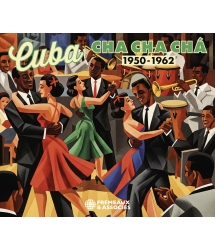
Cuba - cha cha chá 1950-1962
René Touzet • Celia Cruz • Mongo Santamaría • Tito Puente,…
CD Version
€29.99
Digital Version
€19.95
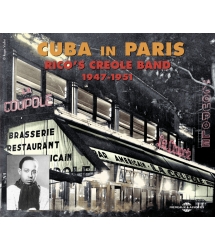
CUBA IN PARIS
RICO' S CREOL BAND 1947 - 1951
CD Version
€29.99
Digital Version
€19.95
FELIX VALVERT
LES ANNEES CUBAINES 1944 - 1948
CD Version
€19.99
Digital Version
€9.95
BAL A LA HAVANE
CUBA 1929-1937
CD Version
€29.99
Digital Version
€19.95